
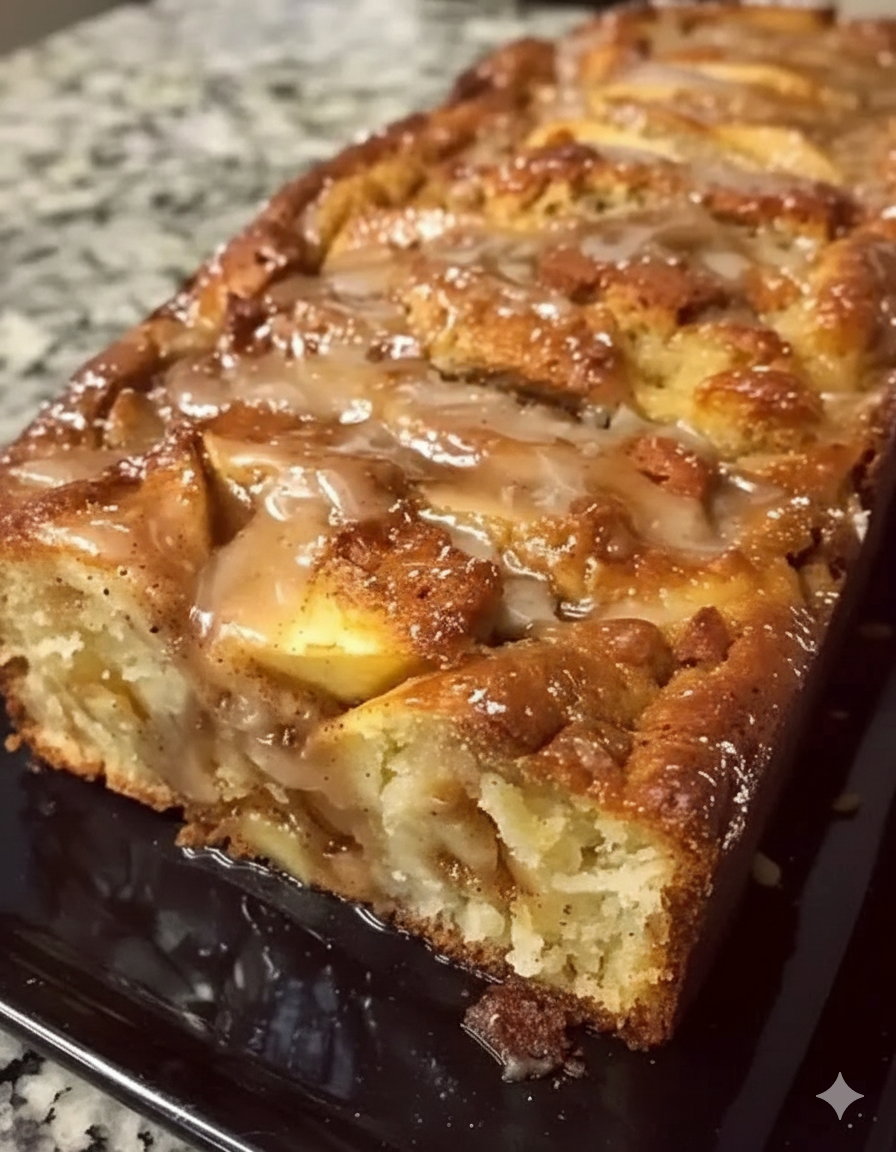
The Ultimate Guide to Cinnamon Swirl Apple Fritter Bread: A Recipe for Comfort and Nostalgia
Introduction: A Bakery Treat Meets Home Baking
There are few aromas as universally comforting as cinnamon, warm butter, and baking apples—the scent of home, of holidays, and of pure, sweet nostalgia. Our Cinnamon Swirl Apple Fritter Bread captures the magic of a deep-fried, decadent apple fritter and transforms it into an easy, moist, and utterly irresistible loaf perfect for breakfast, brunch, or a late-night dessert. This recipe isn’t just about mixing ingredients; it’s about recreating a beloved bakery experience right in your kitchen, delivering a crumb so tender and a cinnamon swirl so pronounced that every slice feels like a special occasion.
This bread is a celebration of simple pleasures. It delivers a tender, buttery pound cake base, ribbons of dark cinnamon sugar running through the center, and chunks of soft, sweet apples scattered throughout. And because it bakes up in a loaf pan, it’s far less messy and intimidating than frying actual fritters, yet it retains all the signature flavor and texture.
Part I: The Heart of the Loaf—Understanding the Ingredients
To truly master this bread, we must appreciate the role of each component. Achieving that perfectly moist, springy crumb and intense flavor requires careful consideration of every ingredient choice, from the apple variety to the state of your butter.
The Apple Component: Choosing the Right Fruit
The apples are arguably the most crucial feature, bringing natural sweetness, moisture, and texture. While many recipes recommend a single variety, the best approach is often a blend. We need an apple that holds its shape under heat and one that breaks down slightly to lend tenderness.
- Best Holding Apples (The Structure): Opt for firm, slightly tart varieties like Granny Smith, Honeycrisp, or Fuji. These retain their chunkiness, providing delightful bursts of texture against the soft bread.
- Best Softening Apples (The Moisture): Varieties like Gala or Golden Delicious soften more easily, infusing the surrounding batter with moisture and apple essence.
- Preparation Deep Dive: The apples must be peeled and diced into small, uniform pieces (no larger than 1/2 inch cubes). Uneven pieces will cook inconsistently. Furthermore, tossing the diced apples immediately in a small amount of the cinnamon mixture prevents browning and ensures every piece is coated in flavor before it hits the batter.
Fats and Sweeteners: The Building Blocks of Moisture
Our recipe calls for a delicate balance of fat and sugar, executed through the classic creaming method. - Unsalted Butter, Softened: Butter provides flavor and tenderness. The term “softened” is critical. It must be cool room temperature—soft enough to easily dent, but not greasy or melting. This perfect state allows the butter to trap air when beaten with sugar, which gives the bread its lift and tender crumb. We use a generous half cup (one stick) of unsalted butter to ensure a rich, pound cake-like texture.
- Granulated Sugar vs. Brown Sugar: We utilize both for distinct purposes. The granulated sugar in the bread batter works with the butter to create that foundational aerated structure. The light brown sugar is reserved entirely for the cinnamon swirl. Brown sugar contains molasses, which imparts a deeper, richer caramelized flavor and holds moisture, preventing the cinnamon ribbon from drying out during baking.
- Vanilla Extract: Always use pure vanilla extract. In simple baked goods, the flavor of the vanilla is prominent, and synthetic substitutes will be noticeable.
Leavening, Flour, and Liquid: Achieving the Perfect Crumb
This bread relies on both baking soda and baking powder to ensure it rises beautifully around the heavy apple and cinnamon additions. - All-Purpose Flour: We use standard all-purpose flour. The key is to measure it accurately using the spoon-and-level method (lightly spooning flour into the measuring cup and leveling off the top). Over-measuring the flour is the number one cause of dry, dense baked goods.
- Baking Powder and Baking Soda: Baking powder provides the main rise, while the baking soda reacts with the slight acidity in the buttermilk and apples to give an extra boost and tenderizing effect.
- Buttermilk: Buttermilk is the preferred liquid. Its slight acidity breaks down gluten strands, resulting in an incredibly tender, moist crumb that is essential for this type of bread. If you don’t have buttermilk, a suitable substitute is 1/2 cup of milk mixed with 1/2 teaspoon of white vinegar or lemon juice, allowed to sit for 5 minutes before using.
Part II: Mastering the Technique—The Art of the Swirl
The signature element of this loaf is the striking, fragrant cinnamon swirl. It’s simple, but achieving a beautiful ribbon of spice requires careful layering.
Step 1: The Creaming Method and Batter Formation
The process begins by properly creaming the softened butter and granulated sugar until they are light and fluffy—about 3 to 4 minutes on medium-high speed. This creates the essential aeration. Following this, the eggs are added one at a time, ensuring each is fully incorporated before adding the next. This prevents the batter from curdling and keeps the mixture emulsified.
Next, the dry and wet ingredients (flour mixture and buttermilk) are incorporated alternately. Always begin and end with the flour mixture. This technique, sometimes called the “three-additions” method, ensures the batter comes together smoothly without overworking the gluten. You must mix only until just combined; stop as soon as the last streak of flour disappears. Over-mixing is the enemy of tenderness.
Step 2: Preparing the Cinnamon Swirl Mixture
The swirl is a simple combination of light brown sugar and ground cinnamon. Use high-quality, freshly ground cinnamon for the most aromatic result. The ratio is approximately 1/3 cup of brown sugar to 1 teaspoon of cinnamon, ensuring a deeply colored, sweet, and powerful ribbon of flavor.
Step 3: The Layering Process
The fritter bread structure is created in the loaf pan: - Bottom Layer: Pour half of the prepared vanilla batter into the greased and floured (or parchment-lined) 9×5 inch loaf pan.
- The Swirl: Sprinkle half of the cinnamon-brown sugar mixture evenly over the batter.
- The Apples: Scatter half of the diced, cinnamon-tossed apples over the sugar layer.
- The Remaining Batter: Carefully dollop and spread the remaining batter over the cinnamon and apples. Use a gentle hand to prevent the layers from completely mixing.
- The Top Layer: Finish with the remaining cinnamon sugar and apples scattered over the top.
- Creating the Swirl: Using a butter knife or skewer, gently run it through the batter in an ‘S’ motion a couple of times. Do not over-swirl! The goal is a defined ribbon, not a marbled cake.
Part III: Baking and Finishing Touches
The final phase involves proper oven management and the glorious glaze that truly makes this bread taste like a fritter.
The Bake: Low and Slow
This bread is thick and dense, requiring a longer, slower bake time (around 60 to 75 minutes) at a standard oven temperature of 350°F (175°C). Because of the high sugar and fat content, the top will brown relatively quickly. To prevent burning the top before the center is cooked, be prepared to tent the loaf with aluminum foil after about 35-40 minutes. The loaf is done when a wooden skewer or cake tester inserted into the deepest part of the center comes out with only a few moist crumbs attached—not wet batter.
The Essential Glaze: The Fritter Finish
A fritter is never complete without its sugary glaze. Once the bread is out of the oven, it must cool slightly (about 15-20 minutes) before glazing. - Glaze Ingredients: A simple mixture of powdered sugar, milk (or heavy cream for a richer result), and a touch of vanilla extract is all you need.
- The Pour: Place the slightly cooled loaf on a wire rack set over a baking sheet (to catch drips). Whisk the glaze until it is smooth and pourable, then drizzle it generously over the top of the bread. The glaze will set into a crisp, sugary coating, mirroring the crackle of a freshly fried fritter.
Part IV: Variations, Troubleshooting, and Storage
Troubleshooting Common Issues - Bread is Dome-Shaped and Cracked Excessively: This usually means the oven temperature was too high, causing the outside to set before the inside rose. Ensure your oven temperature is accurate and tent with foil earlier.
- Bread Sinks in the Middle: This often results from under-baking or over-mixing the batter. Always test for doneness with a skewer and mix the batter gently.
- Cinnamon Swirl Settles to the Bottom: The batter was likely too thin (too much liquid or not enough flour). Ensure you measure your dry ingredients correctly and that your butter/sugar mixture was properly aerated. Chilling the batter briefly (15 minutes) before layering can also help.
Flavor and Preparation Variations - Maple Pecan Fritter Bread: Substitute maple extract for vanilla in the batter and use finely chopped pecans instead of or in addition to some of the apples. Glaze with a maple syrup-based icing.
- Pumpkin Spice Twist: Add 1/2 teaspoon of pumpkin pie spice blend to the flour mixture for a fall-ready loaf.
- Gluten-Free Option: This recipe can be made gluten-free by substituting the all-purpose flour with a high-quality, 1-to-1 gluten-free baking blend that includes xanthan gum.
Storage and Serving
This bread is best served slightly warm, but it stores beautifully. Keep it tightly wrapped at room temperature for up to 4 days. You can refresh a slice by toasting it lightly or warming it in the microwave for 10-15 seconds. It also freezes well: slice the cooled, unglazed loaf, wrap the slices tightly in plastic wrap, and place them in a freezer bag for up to 3 months. Thaw individual slices as needed.
The Full Recipe for Cinnamon Swirl Apple Fritter Bread
Ingredients for the Bread - 2/3 cup granulated sugar
- 1/2 cup (1 stick) unsalted butter, softened
- 2 large eggs, room temperature
- 1 teaspoon pure vanilla extract
- 2 cups all-purpose flour, spooned and leveled
- 1 teaspoon baking powder
- 1/2 teaspoon baking soda
- 1/2 teaspoon salt
- 1/2 cup buttermilk (or milk + 1/2 tsp vinegar/lemon juice)
- 2 medium apples (a blend of Granny Smith and Gala recommended), peeled, cored, and diced (about 1.5 cups)
Ingredients for the Cinnamon Swirl - 1/3 cup light brown sugar, packed
- 1 teaspoon ground cinnamon
Ingredients for the Glaze - 1 cup powdered sugar, sifted
- 3-4 tablespoons milk or heavy cream
- 1/4 teaspoon vanilla extract
Instructions - Prep: Preheat oven to 350^\circ F (175^\circ C). Grease and flour a 9×5-inch loaf pan, or line it with parchment paper leaving an overhang for easy removal.
- Cinnamon Swirl Mix: In a small bowl, whisk together the brown sugar and cinnamon. In a separate bowl, toss the diced apples with 1 tablespoon of the cinnamon-sugar mix. Set aside.
- Cream Butter and Sugar: In a large bowl or stand mixer, beat the softened butter and granulated sugar until light and fluffy (3-4 minutes). Beat in the eggs one at a time, followed by the vanilla extract. Scrape down the sides of the bowl.
- Alternate Ingredients: In a medium bowl, whisk together the flour, baking powder, baking soda, and salt. Add one-third of the flour mixture to the wet ingredients and mix on low until just combined. Add half of the buttermilk and mix. Repeat with the second third of the flour, the remaining buttermilk, and finish with the remaining flour. Mix only until just combined.
- Layer: Pour half of the batter into the prepared loaf pan. Sprinkle half of the remaining cinnamon-sugar mixture evenly over the batter. Scatter half of the apples over the sugar. Carefully spread the remaining batter over the top. Sprinkle the last of the cinnamon-sugar and apples on top.
- Swirl and Bake: Using a knife or skewer, gently cut through the batter a few times to create a light swirl. Bake for 60-75 minutes, or until a skewer comes out clean. If the top browns too quickly, tent loosely with foil after about 40 minutes.
- Cool and Glaze: Let the bread cool in the pan for 15 minutes, then lift it out and transfer it to a wire rack. Whisk the glaze ingredients until smooth. Drizzle generously over the warm (not hot) bread. Slice and serve!
Would you like me to refine a specific section of this guide (like the troubleshooting or the variations) or perhaps generate a few suggested social media captions to promote this recipe?