
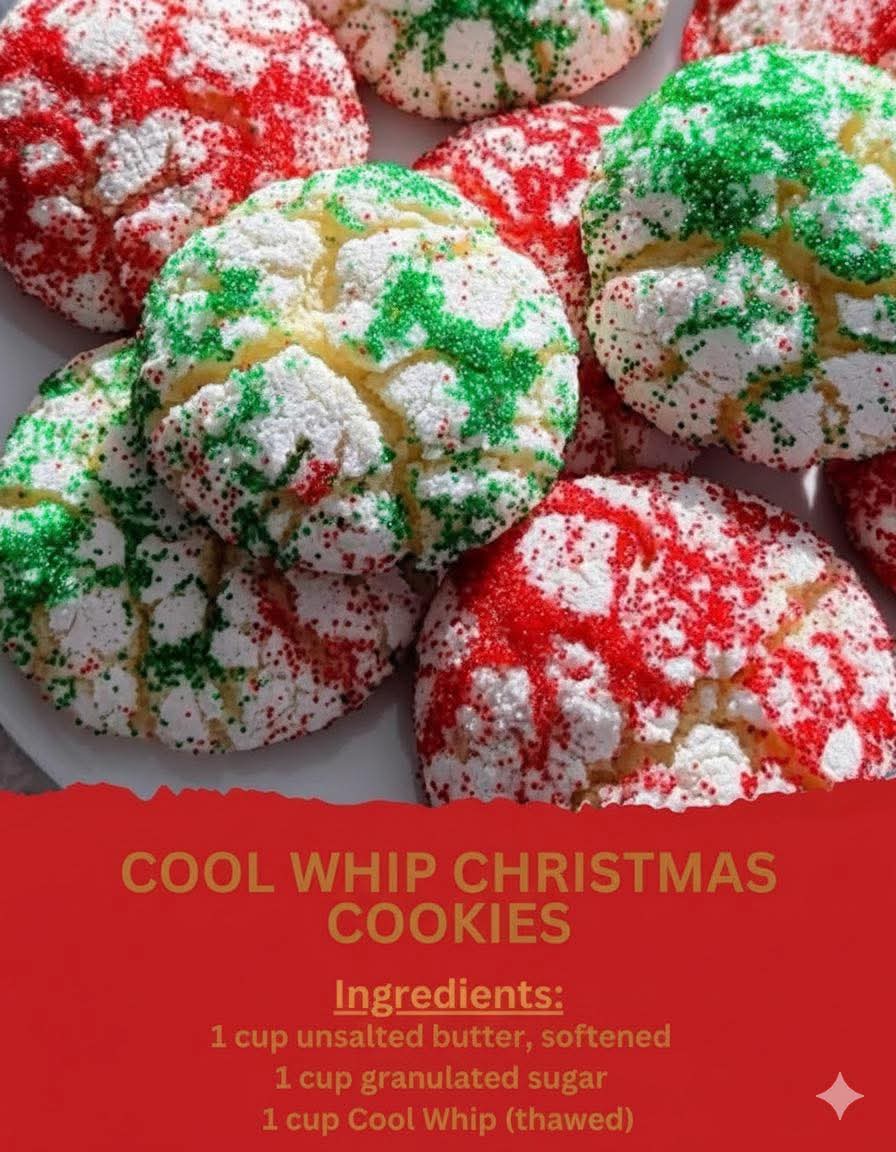
The Definitive Guide to Cool Whip Christmas Cookies: Achieving Unparalleled Lightness and Festive Cheer
I. Introduction: A Modern Twist on Classic Holiday Baking
The holiday cookie tradition is steeped in warmth, nostalgia, and the comforting aroma of butter and sugar. While many recipes rely on heavy cream or sour cream for richness, this particular formula for Cool Whip Christmas Cookies offers a brilliantly simple and modern solution to achieving an irresistibly light, melt-in-your-mouth texture. By incorporating thawed Cool Whip—that iconic, airy whipped topping—we introduce a unique balance of fat, sweetness, and stable aeration directly into the dough, resulting in a cookie that is both tender and incredibly easy to handle.
This detailed guide goes beyond the simple steps. We will delve into the science of the “no-chill” factor, explore the history of Cool Whip’s role in dessert making, and provide advanced techniques for mastering the perfect crumb. Whether you are a novice baker or a seasoned professional, understanding the mechanics of this recipe ensures every batch is a celebration of festive flavor and structural perfection. This final product is a triumph of modern baking science, yielding a cookie that is light years ahead in tenderness compared to its traditional counterparts.
II. The Science of the Cool Whip Factor: Why It Works
The inclusion of Cool Whip (whipped topping) is the unique signature of this recipe. Understanding its composition explains why it yields such spectacular results compared to traditional butter-based sugar cookies. It’s not just an ingredient; it’s a baking mechanism that changes the very structure of the dough.
Cool Whip Composition and Emulsification
Cool Whip is a highly stable emulsion, primarily composed of water, high-fructose corn syrup, vegetable oil (often hydrogenated coconut and palm kernel oils), and various stabilizing agents. When it is thawed and incorporated into the dough, it brings several key advantages to the structural development of the cookie:
First, the vegetable oils in Cool Whip are already well-emulsified. They blend effortlessly with the butter and sugar, creating a highly stable batter structure right from the start. This stable, homogenized fat distribution helps prevent the cookies from spreading excessively during baking, resulting in a neater, thicker final product that holds its decorated shape beautifully.
Second, Cool Whip contains built-in aeration. While the air pockets introduced during the creaming of butter and sugar are important, the stable air structure from the Cool Whip provides additional lift and lightness, contributing significantly to the soft, tender crumb. This is the source of the “melt-in-your-mouth” quality.
Third, the stabilizers in Cool Whip bind moisture effectively. Unlike using milk or plain water, which can cause the flour to develop excessive gluten and make the dough sticky or tough, the stabilized moisture in the whipped topping releases steadily during baking. This controlled release ensures the cookies remain moist without becoming overly wet or dense, achieving an optimal balance for a tender cookie.
The Butter and Sugar Synergy
This recipe uses a blend of both granulated sugar and powdered sugar (confectioners’ sugar) in the creaming process, maximizing both structure and softness:
Granulated sugar provides the initial structural lift. Its sharp crystals cut into the softened butter, creating the air pockets necessary for the cookie to rise. Powdered sugar, on the other hand, is the great softener. It contains a small amount of cornstarch. When added to the mix, this cornstarch inhibits excessive gluten development from the flour. This action, combined with the stable fat from the Cool Whip, ensures a more tender, softer final product, which is essential for a high-quality holiday cookie.
III. The Ingredient Deep Dive: Selection and Preparation
Precision in the state and quality of ingredients is paramount for a high-performing cookie dough. Each component is chosen for its specific role in creating the ideal texture and flavor profile.
- Fats: Butter and Cool Whip
We begin with one cup of unsalted butter. It must be unsalted to allow the baker control over the salt content, ensuring the flavor is balanced. The temperature of the butter is critical—it must be perfectly softened, which means cool to the touch but yielding easily to gentle pressure. If the butter is too cold, it will not trap air efficiently during creaming, leading to a dense cookie. If it is melted or too warm, the emulsion will break, resulting in a greasy bottom layer and excessive spreading.
The Cool Whip, one cup of it, must be fully thawed. This is non-negotiable. It needs to be incorporated smoothly into the batter. Do not substitute with homemade whipped cream. Homemade whipped cream lacks the necessary stabilizers and will introduce too much variable moisture and air, leading to a dough that is inconsistent and difficult to handle. The commercial stability of the whipped topping is key to the recipe’s reliability. - The Sweeteners
The combination of the two sugars provides both the structural integrity and the final tenderness we seek. One cup of granulated sugar is used to create the initial airy network with the butter. The half cup of powdered sugar is added for its cornstarch component, which tenderizes the cookie. For best results, whisk or sift the powdered sugar before use to remove any clumps and ensure seamless blending into the creamed butter. - The Dry Components
The three cups of all-purpose flour require accurate measurement. The golden rule of baking—the spoon-and-level method—must be strictly followed. Scooping directly from the bag compacts the flour, leading to an over-measurement that absorbs too much moisture from the Cool Whip. This results in a dry, stiff, and ultimately crumbly dough.
We use half a teaspoon of baking powder, which acts as the chemical leavener, providing a final, reliable lift that complements the air introduced during creaming. The quarter teaspoon of salt is absolutely essential. It acts as a flavor counterpoint, balancing the intense sweetness of the sugars and the whipped topping, allowing the rich, buttery flavor of the dough to shine through. - Vanilla Extract
Since the Cool Whip has a mild flavor and the dough is generally light, the one teaspoon of pure vanilla extract is prominent. Use a high-quality pure vanilla extract; imitation extracts will introduce a synthetic flavor that contrasts poorly with the clean, buttery profile of the cookie.
IV. Step-by-Step Technical Mastery
Achieving the perfect, light, and festive cookie requires strict adherence to these mixing and baking phases.
A. Phase One: The Creaming and Emulsification
The preheating of the oven to 350^\circ F (175^\circ C) is the first step. The cookie sheet should be prepared with parchment paper to prevent sticking and aid in easy removal.
The creaming process is initiated by beating the softened butter until it is fluffy. Then, the granulated and powdered sugars are added gradually. This step requires patience and time. Beat this mixture on medium-high speed for a full three to five minutes. This extended creaming time is crucial for trapping the air that gives the cookies their initial lift and signature tenderness. The resulting mixture must be visibly lighter, nearly white, and airy.
Next, the Cool Whip and vanilla extract are introduced. Reduce the mixer speed to low and mix only until combined. The mixture will look slightly looser than a typical sugar cookie dough, which is a normal consequence of the Cool Whip’s composition. Avoid over-mixing at this stage, as you risk breaking the established emulsion.
B. Phase Two: The Dough Formation and Handling
In a separate bowl, the flour, baking powder, and salt are whisked together to ensure the leavening and salt are evenly distributed.
The dry ingredients are then incorporated into the wet mixture in three separate additions, with the mixer on the lowest speed. The rule here is absolute: Mix only until the last streak of flour disappears. The moment you see no more dry flour, stop the mixer. Over-mixing activates the gluten, resulting in a tough, chewy cookie, which defeats the purpose of the light Cool Whip base. The final dough should be soft and manageable, not sticky.
The optional chill, while not strictly necessary for dough stability due to the Cool Whip, is highly recommended as a best practice. Chilling the dough for 30 minutes firms up the butter, which prevents spreading and ensures the cookies hold their round, thick shape perfectly.
Uniformity is achieved by using a small cookie scoop (about 1 tablespoon) to portion the dough. This ensures consistent sizing and guarantees that all cookies bake in the same amount of time. The scoops are then rolled into neat, round balls and placed on the prepared baking sheet.
C. Phase Three: The Bake and Finishing Touches
The final shaping is achieved by flattening each dough ball slightly with the bottom of a glass or your hand. This helps the cookie bake evenly and ensures a consistent thickness, preventing raw centers.
The decoration must happen before baking. Gently pressing the red and green sprinkles or colored sugar into the flattened dough balls ensures the festive decorations adhere properly during the oven process and set beautifully into the surface.
The baking window is critical: 12 to 14 minutes at 350^\circ F (175^\circ C). Given the white color of the dough, you must watch for subtle visual cues: the edges should be lightly set, but the center should still look pale and slightly soft. Because of the white color of the dough, you should never wait for browning. Pull them out when they look almost done. The residual heat on the baking sheet will carry over and complete the baking process without drying the cookie out.
Finally, the cooling protocol dictates that the cookies must rest on the baking sheet for a full 5 minutes before transferring to a wire rack. These cookies are extremely delicate when hot, and moving them too soon can cause them to break or collapse. They must cool completely on the rack to allow the structure to fully set before packaging or serving.
V. Troubleshooting, Variations, and Storage
Even with the stability provided by the Cool Whip, certain issues can arise, but they are all traceable to mixing technique or temperature control.
A common issue is the cookies spreading too much. This is almost always caused by butter that was too warm or dough that was not chilled. Ensuring the butter is cool room temperature and following the optional 30-minute chill will prevent this. Another problem is a dry, crumbly texture. This results from adding too much flour (due to incorrect scooping) or over-baking. Always use the spoon-and-level method for flour and adhere strictly to the 12-14 minute baking time. If the texture is tough or chewy, it means the dough was over-mixed after the flour was added, causing excessive gluten development. The solution is simple: stop the mixer the moment the last streak of flour is gone.
The simple vanilla base is perfect for customization, making this a versatile holiday recipe:
For a Peppermint Twist, add half a teaspoon of peppermint extract and fold in a quarter cup of crushed candy canes into the dough. For an Almond Joy variation, substitute vanilla extract with one teaspoon of almond extract and fold in a quarter cup of toasted, sliced almonds along with miniature chocolate chips. A small amount of citrus zest, such as lemon or orange, added to the wet ingredients offers a bright, refreshing holiday flavor.
For storage, the baked and cooled cookies should be kept in an airtight container at room temperature for up to 5 days. The dough itself freezes exceptionally well. Wrap the unbaked, shaped dough balls tightly in plastic wrap, then place them in a freezer bag for up to 3 months. They can be baked directly from the freezer, adding a couple of minutes to the baking time.
This comprehensive approach ensures not only successful baking but also a deeper appreciation for the simple brilliance of the Cool Whip Christmas Cookie.