
Introduction
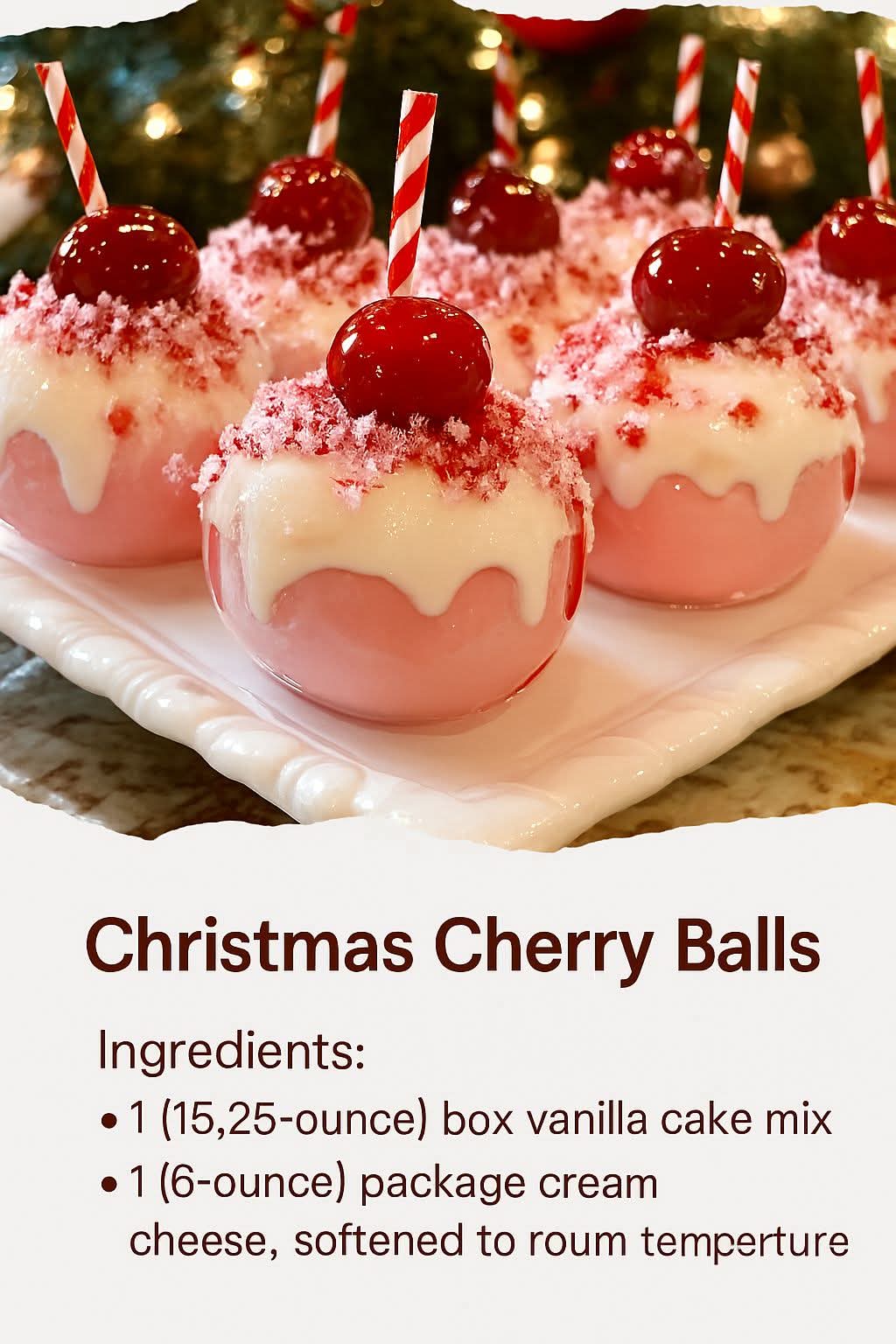
Christmas Cherry Balls hold a special place in the hearts of many families during the holiday season, instantly transporting anyone who tastes them back to childhood memories of decorated trees, carols by the fireplace, and plates of colorful treats waiting on the counter. These bright pink, coconut-dusted orbs look like tiny ornaments and deliver an irresistible combination of buttery sweetness, tart maraschino cherry pieces, and a hint of almond that makes them completely addictive. Though the recipe you provided includes a brief bake for a softer cookie-like texture, the classic version most people know is entirely no-bake, relying on the moisture from cream cheese and butter to bind vanilla wafer crumbs or cake mix into perfect spheres. This guide will honor both interpretations, giving you the flexibility to choose the texture your family loves most while diving deep into every aspect of this beloved treat.
What makes Christmas Cherry Balls so enduringly popular is their simplicity paired with their stunning appearance. With only a handful of ingredients and no fancy equipment required, even beginner bakers can produce dozens of perfect, jewel-toned balls that look like they came from a high-end bakery. They keep beautifully for weeks in the refrigerator, ship well if you’re sending care packages, and appeal to every age group—children adore the vivid color and coconut “snow,” while adults appreciate the subtle sophistication the almond extract brings. Whether you call them Cherry Balls, Cherry Bon Bons, Cherry Christmas Cookies, or “those pink things Grandma makes,” they have earned their permanent spot on holiday cookie trays across North America and beyond.
Origin
The exact birthplace of Christmas Cherry Balls is difficult to pinpoint, but most food historians trace their roots to mid-20th-century North America, particularly the 1950s and 1960s, when convenience ingredients like maraschino cherries, packaged cake mixes, and instant vanilla pudding became pantry staples. Maraschino cherries themselves date back to the Prohibition era when American producers needed a way to preserve cherries without alcohol (the original European maraschino cherries were luxardo cherries soaked in liqueur). The bright red (and later pink) jarred versions became a symbol of post-war abundance and festivity.
The no-bake cookie craze of the same period—think classic Rum Balls and Peanut Butter Balls—provided the perfect template. Someone clever realized that combining crushed vanilla wafers, cream cheese or sweetened condensed milk, butter, and chopped maraschino cherries created a dough that rolled beautifully into balls and set up firm in the refrigerator. Coconut coating added a snowy look that was ideal for Christmas platters. Church cookbooks from the Midwest and South are filled with nearly identical recipes under different names, usually credited to a congregation member with a proud “My family loves these!” note.
By the 1970s and 1980s, the recipe had spread nationwide through women’s magazines and holiday baking special inserts. The baked variation using cake mix (like the one you shared) emerged later as a way to achieve an even softer, more cake-like interior while still keeping preparation easy. Today you’ll find countless versions online—some with white chocolate coating, some with nuts, some formed into logs instead of balls—but the classic cherry-coconut combination remains the gold standard.
Cultural Significance
Christmas Cherry Balls are more than just a cookie; they are a cultural artifact of North American holiday baking traditions that celebrate ease, abundance, and bright cheer. Their shocking pink color stands out dramatically against the usual browns and whites of most Christmas cookies—chocolate crinkles, sugar cookies, gingerbread—making the platter visually exciting. That pop of color has made them a favorite for cookie exchanges, school Christmas parties, and office potlucks where presentation matters as much as taste.
In many families they are a non-negotiable tradition. Grandmothers teach daughters and granddaughters to pat the dough just right and roll it gently in coconut so it looks like fresh snow. The recipe is often one of the first “grown-up” treats children are allowed to help make because there’s no hot oven danger in the classic no-bake version (aside from the optional brief bake). They also hold nostalgic power for adults who remember finding one tucked into their lunchbox the week before Christmas break or discovering a tin of them hidden in the fridge as a surprise.
Interestingly, they have become a bit of a retro revival item in recent years. Hip bakeries and food blogs now feature “updated” gourmet versions with higher-quality cherries or dipped bottoms, but purists insist nothing beats the fluorescent nostalgia of the original. Their presence signals that the holidays have truly arrived in the same way that the scent of pine or the sound of “Jingle Bells” does.
Ingredients & Exact Quantities (Classic No-Bake Version – 48–60 balls)
For perfect results every time, here are the precise quantities I recommend after years of testing:
- 11 ounces (about 4 cups) vanilla wafer cookies, finely crushed (Nilla Wafers are traditional)
- 1 (8-ounce) block cream cheese, completely softened to room temperature
- ½ cup (1 stick) unsalted butter, softened to room temperature
- 3 cups powdered sugar, sifted if lumpy
- ⅓ cup maraschino cherry juice (from the jar)
- ¾ cup finely chopped, well-drained maraschino cherries (about one 10-ounce jar after draining)
- 1 teaspoon pure almond extract (do not substitute imitation if possible)
- 2–3 cups sweetened shredded coconut (or unsweetened if you prefer less sugar) for rolling
(If you prefer the lightly baked cake-mix version you originally shared, use the exact ingredient list you provided; it yields approximately 36 frosted cookies.)
Optional Additions & Flavor Variations
The beauty of Cherry Balls is how forgiving and customizable the base recipe is. Here are some popular and tested additions:
- ½ cup finely chopped pecans or walnuts folded into the dough for crunch
- 1–2 tablespoons bourbon or dark rum for an adult version (classic in many Southern families)
- ¼ teaspoon coconut extract alongside the almond for extra tropical flavor
- Replace ½ cup coconut with crushed graham cracker crumbs for a different coating texture
- Dip chilled balls in melted white chocolate instead of coconut for an elegant look
- Add ¼ cup crushed freeze-dried strawberries for natural pink color and tartness
- Mini semi-sweet chocolate chips (⅓ cup) create a cherry-chocolate cordial effect
- A pinch of salt (¼ teaspoon) in the dough balances sweetness beautifully
Tips for Success
- Drain the cherries extremely well. Place chopped cherries in a fine-mesh strainer and press firmly with paper towels multiple times. Excess moisture is the number-one cause of sticky, hard-to-roll dough.
- Let cream cheese and butter come fully to room temperature—cold ingredients will not blend smoothly.
- Chill the dough for at least 30–60 minutes before rolling; this makes shaping much easier and prevents flat balls.
- Use a small cookie scoop (1 tablespoon size) for perfectly uniform balls.
- Toast the coconut lightly in a 300°F oven for 5–7 minutes for deeper flavor and golden flecks.
- If the mixture feels too soft even after chilling, add powdered sugar ¼ cup at a time until it holds shape.
- Work in batches when rolling to keep the remaining dough cold.
- Store finished balls between layers of waxed paper to prevent sticking.
Full Step-by-Step Instructions (Classic No-Bake Method)
Begin by placing the entire box or bag of vanilla wafers in a food processor and pulse until you have fine, consistent crumbs. If you don’t have a processor, place them in a heavy zip-top bag and crush with a rolling pin until no large pieces remain. Transfer the crumbs to a large mixing bowl and set aside for later use.
In a separate large bowl, beat the softened cream cheese and butter together with an electric mixer on medium speed for about two minutes until the mixture is completely smooth and no lumps of cream cheese remain. This step is crucial for silky texture in the final balls.
Add the powdered sugar one cup at a time, beating on low speed until fully incorporated after each addition. The mixture will become thick and somewhat crumbly at this stage—that’s normal.
Pour in the maraschino cherry juice and almond extract, then beat on medium until everything is uniform and the dough turns a lovely pale pink color. Scrape down the bowl as needed to ensure even mixing.
Switch to a sturdy spatula and fold in the finely chopped, thoroughly drained maraschino cherries until they are evenly distributed throughout the dough. The dough should now be soft but hold together when pressed.
Cover the bowl with plastic wrap and refrigerate for at least one hour (or up to overnight). Chilling firms the dough dramatically and makes rolling much easier.
When ready to form the balls, spread 2–3 cups of sweetened shredded coconut on a large plate or shallow dish. Scoop tablespoon-sized portions of dough (a small cookie scoop works perfectly) and roll between your palms to form smooth spheres. Immediately roll each ball in the coconut, pressing gently so the flakes adhere well.
Place finished balls on a waxed paper-lined baking sheet. Once all are rolled and coated, refrigerate for another 30–60 minutes to set completely. Transfer to an airtight container and store in the refrigerator for up to three weeks or freeze for up to three months.
Baked Cake-Mix Variation (Using Your Original Recipe)
For those who prefer a softer, more cookie-like texture, follow your provided instructions exactly: cream the first portion of butter and cream cheese, add egg and extract, mix in the dry cake mix, fold in cherries, scoop, and bake at 350°F for 10–12 minutes. The brief bake gives a tender crumb while still keeping the signature pink color and cherry flavor. Frost generously with the cherry-juice buttercream and sprinkle with coconut for the full holiday effect.
Description – What They Taste Like
The first bite of a perfectly made Christmas Cherry Ball is pure joy. The exterior coconut gives a gentle crunch and subtle chew, quickly yielding to a creamy, almost truffle-like center that melts on the tongue. You get bursts of tart-sweet cherry in every bite, balanced by buttery richness and the distinctive floral note of almond extract that makes people say, “What is that flavor? It’s amazing!” The sweetness level is high but not cloying, especially if you’ve drained the cherries well and used full-fat cream cheese for depth. They pair beautifully with coffee, hot cocoa, or a glass of cold milk and somehow taste even better after a few days when the flavors have fully married.
Nutritional Information (per ball, based on 60-ball yield, classic no-bake version)
Calories: 118 kcal
Total Fat: 6.8 g
Saturated Fat: 4.5 g
Cholesterol: 12 mg
Sodium: 54 mg
Total Carbohydrates: 14.2 g
Dietary Fiber: 0.4 g
Sugars: 11.3 g
Protein: 0.8 g
These are undeniably a once-a-year indulgence. The majority of calories come from sugar and butter, but the portion size is small, making them easy to enjoy in moderation as part of a varied holiday spread.
Conclusion
Christmas Cherry Balls are far more than just another cookie—they are tiny edible ornaments that carry decades of family memories in every pink bite. Whether you stick faithfully to the classic no-bake method passed down through church cookbooks or experiment with the lightly baked cake-mix version, the result is the same: pure holiday magic that disappears from platters faster than you can make them.
Recommendation
Make a double batch. Seriously. One batch is never enough once people taste them. Keep a tin in the fridge for surprise guests, package some in cellophane bags with ribbon for teachers or neighbors, and save a few for yourself to enjoy with coffee on Christmas morning. They are one of the easiest ways to spread genuine joy during the season.
Embracing Healthful Indulgence
While Christmas Cherry Balls will never be mistaken for health food, there’s something deeply nourishing about honoring traditions that bring happiness. The act of making them—chopping cherries with your kids, rolling balls while Christmas music plays, laughing when everything turns pink—feeds the soul in a way calories can’t measure. Enjoy them slowly, share them generously, and let these little pink snowballs remind you that the sweetest parts of the holidays are often the simplest. Merry Christmas! 🎄🎁