
Introduction
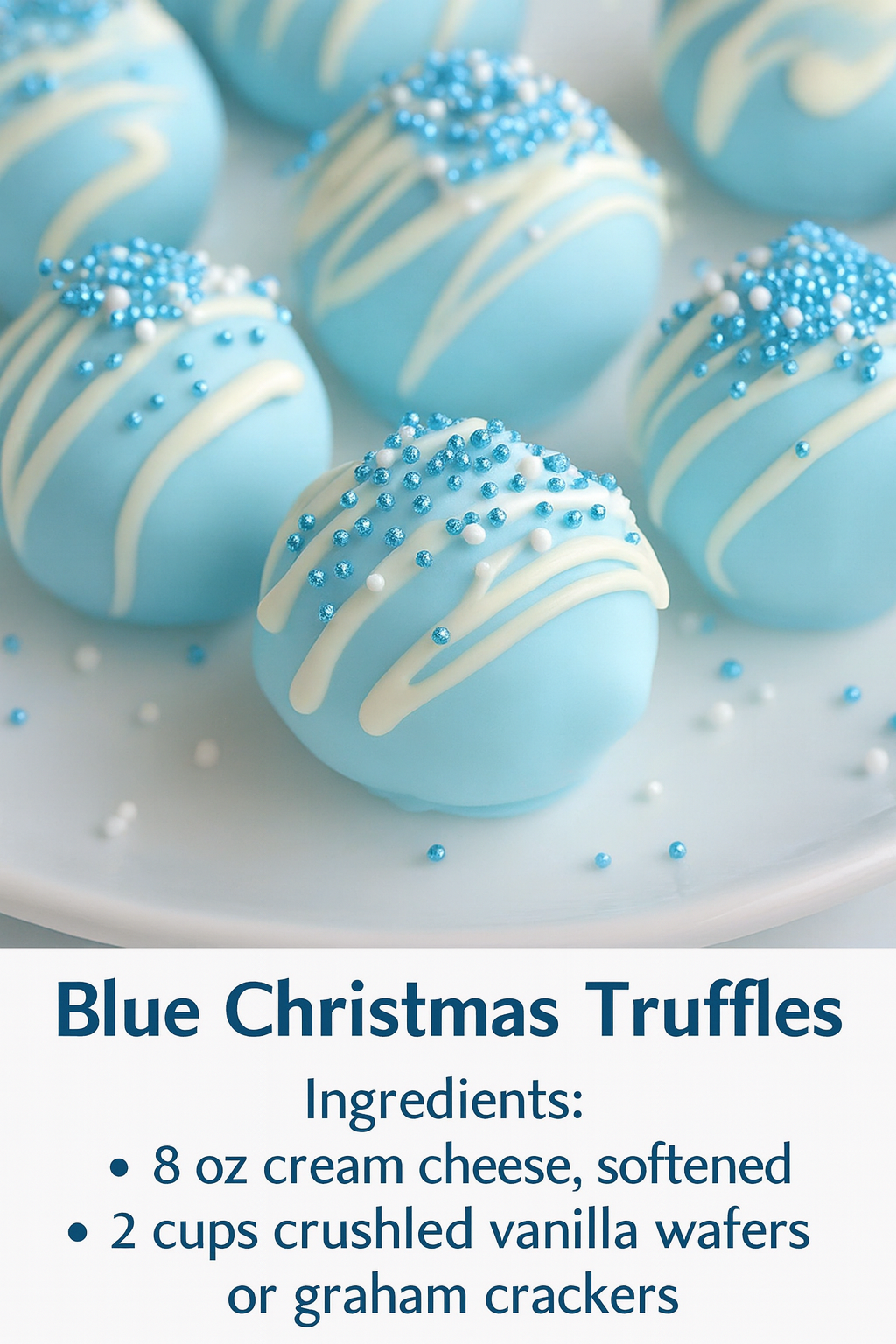
The holiday season has a unique way of awakening our senses, filling homes with the scent of evergreen, the sound of carols, and the irresistible allure of sweet treats shared with loved ones. Among the countless cookies, cakes, and candies that grace Christmas tables, there exists a modern classic that captures both elegance and whimsy in a single bite: Blue Christmas Truffles. These creamy, no-bake confections combine the richness of cream cheese-cake-like filling with a snowy white chocolate shell and a playful pop of winter-blue color that instantly evokes icy wonderlands and twinkling midnight skies.
What makes Blue Christmas Truffles so special is their perfect balance of indulgence and simplicity. They require no oven, no complicated techniques, and only a handful of pantry-friendly ingredients—yet the result looks and tastes like something from an upscale confectionery. The striking blue hue, achieved safely with gel food coloring, transforms an ordinary truffle into a conversation-starting centerpiece for holiday dessert boards, gift boxes, or even wedding and baby-shower favors during the winter months.
In a world where Christmas desserts often lean heavily on gingerbread, peppermint, or chocolate-peppermint combinations, these truffles offer a refreshing departure. They are subtly vanilla-forward, luxuriously creamy, and just sweet enough without overwhelming the palate. Whether you’re hosting a glamorous New Year’s Eve party, putting together neighbor gifts, or simply craving something festive on a quiet December night, Blue Christmas Truffles deliver pure holiday magic in under two hours from start to finish.
Origin and Cultural Significance
While traditional chocolate truffles trace their lineage to early 20th-century France (named for their resemblance to the prized black truffle fungus), the cream-cheese-based, no-bake truffle is a distinctly American invention that exploded in popularity during the mid-20th century. Southern “cookie balls” or “bourbon balls” made with crushed vanilla wafers laid the foundation, but the addition of cream cheese—popularized by the famous Oreo truffle recipe in the early 2000s—created an entirely new category of effortless, crowd-pleasing sweets.
The “Blue Christmas” variation appears to have emerged around 2015–2017 on food blogs and Pinterest as part of the larger trend toward color-themed holiday treats. The sudden rise of galaxy-inspired desserts, mermaid parties, and Frozen-themed birthday parties created a demand for vibrant blue foods that were still sophisticated enough for adult palates. Bloggers began experimenting with blue velvet cake balls and sapphire-hued macarons, but the simplicity and stability of the cream-cheese truffle made it the perfect canvas.
Culturally, the color blue during Christmas carries deep symbolism. While red and green dominate Western holiday aesthetics, blue has always represented the quiet majesty of winter nights, the Star of Bethlehem, and Hanukkah celebrations occurring around the same season. In Scandinavian countries, blue is a traditional Christmas color alongside white and silver, evoking snow and ice. In modern pop culture, Elvis Presley’s melancholic yet iconic “Blue Christmas” (1957) cemented the phrase in holiday lexicon, giving these truffles an additional layer of nostalgic charm—perfect for playing while you roll and dip.
Today, Blue Christmas Truffles have become a staple on TikTok and Instagram dessert reels, with creators adding edible glitter, silver dragées, or even tiny fondant snowflakes to heighten the enchantment. They represent the joyful evolution of holiday baking: less about rigid tradition, more about creativity, inclusivity, and sharing beauty in bite-sized form.
Ingredients Quantity (Classic Recipe – Makes about 30–35 truffles)
- 8 oz (226 g) full-fat cream cheese, softened to room temperature
- 2 cups (about 220–240 g) finely crushed vanilla wafers OR graham cracker crumbs
- 1 cup (120 g) powdered sugar, sifted if lumpy
- ½ teaspoon pure vanilla extract (or vanilla bean paste for extra specks)
- Blue gel food coloring (AmeriColor Royal Blue or Sky Blue recommended – start with 4–6 drops)
- 1 cup (180 g) good-quality white chocolate chips or chopped white baking chocolate
- Edible blue sprinkles, blue sanding sugar, or edible glitter for decoration
Note: Using real white chocolate (containing cocoa butter) rather than candy melts yields a smoother, more luxurious coating that snaps beautifully when bitten.
Optional Additions and Flavor Variations
The base recipe is incredibly forgiving and welcomes creativity:
- ¼ teaspoon almond extract + ¼ teaspoon vanilla for a cherry-almond hint
- 2 tablespoons freeze-dried blueberry or raspberry powder for natural flavor and softer blue tone
- 1–2 tablespoons Baileys Irish Cream, Kahlúa, or bourbon for an adults-only version
- Zest of one lemon or orange for a bright citrus lift
- ⅓ cup finely chopped toasted pecans or pistachios mixed into the dough
- Swap ½ cup of the white chocolate coating for blue candy melts to create an ombre effect
- Add ¼ teaspoon peppermint extract and crushed candy canes on top for a winter-mint twist
- Use vegan cream cheese, plant-based white chocolate, and gluten-free vanilla wafers for dietary accommodations
The possibilities are nearly endless, yet the classic vanilla-blue version remains the most universally adored.
Tips for Success
- Crush the cookies or wafers very finely—food processor is best—to avoid grainy texture.
- Soften cream cheese fully; cold cream cheese leads to lumpy dough.
- Use gel or oil-based food coloring only; liquid watercolor will seize the mixture.
- Chill the rolled balls for at least 1 hour (or 20 minutes in freezer) before dipping—this prevents them from falling apart in warm chocolate.
- Keep melted white chocolate between 100–110 °F (38–43 °C); too hot and it will melt the truffle centers.
- Tap the dipping fork gently against the bowl edge to remove excess chocolate for a thin, elegant shell.
- Work in small batches when decorating—sprinkles stick best while chocolate is still wet.
- Store finished truffles in the refrigerator but serve at room temperature for creamiest texture.
- Make up to 5 days ahead; flavor actually improves after 24 hours.
- If white chocolate seizes, stir in 1 teaspoon neutral oil or paramount crystals until smooth again.
Step-by-Step Instructions (with detailed explanation)
- Prepare the Truffle Mixture
In a large mixing bowl or stand mixer fitted with paddle attachment, beat the softened cream cheese on medium speed for 1–2 minutes until completely smooth and no lumps disappear. Scrape down the bowl. Gradually add the crushed vanilla wafers, powdered sugar, and vanilla extract. Mix on low speed until the mixture resembles wet sand, then increase to medium until a soft dough forms. It should hold together when squeezed but not be sticky. - Color the Mixture
Add blue gel food coloring one drop at a time, mixing thoroughly after each addition. Gel color intensifies as it sits, so err on the side of slightly lighter than desired—you can always add more. Aim for anything from soft powder blue to deep sapphire, depending on mood. Knead with gloved hands or spatula to ensure even distribution. - Shape the Truffles
Using a small cookie scoop or tablespoon, portion the dough and roll between palms into smooth 1-inch balls. Slight flattening of the bottom helps them sit nicely later. Place on a parchment- or wax-paper-lined baking sheet. Refrigerate 1 hour or freeze 20 minutes until firm. - Melt the White Chocolate
Place white chocolate in a narrow, deep microwave-safe bowl. Heat in 30-second intervals at 50 % power, stirring well after each, until only a few lumps remain—residual heat will melt them. Alternatively, use a double boiler. Ideal working temperature is 100–110 °F. - Coat the Truffles
Remove only 6–8 chilled truffle balls from refrigerator at a time. Drop one ball into the melted chocolate, use a fork to roll it around until coated, then lift and gently tap fork against bowl edge to remove excess. Slide truffle back onto lined sheet using a toothpick or second fork. Repeat. - Decorate Immediately
While the coating is still wet, shower each truffle with edible blue sprinkles, sanding sugar, or a pinch of edible glitter. For extra sparkle, lightly dust with luster dust using a dry brush after the chocolate sets. - Set the Truffles
Allow truffles to set at cool room temperature (about 30 minutes) or speed the process in the refrigerator for 15 minutes. Once firm, transfer to an airtight container. - Storage
Keep refrigerated in a single layer for up to 2 weeks or freeze up to 2 months (thaw overnight in fridge before serving).
Description and Sensory Experience
Biting into a Blue Christmas Truffle is pure winter enchantment. The thin white chocolate shell cracks delicately, giving way to an ultra-creamy, almost cheesecake-like center that melts on the tongue. The vanilla wafer base provides the faintest buttery crunch in the background, while the cream cheese lends a subtle tang that prevents the sweetness from becoming cloying. The blue color is purely visual magic—no artificial taste whatsoever.
Visually, they resemble tiny snow-dusted planets or ornaments plucked from an icy tree. When arranged on a silver platter with a few strategically placed edible pearls or silver dragées, the effect is breathtaking. The contrast between snowy white chocolate and vibrant blue sprinkles captures the quiet splendor of a moonlit December night.
Nutritional Information (per truffle, based on 32 truffles)
- Calories: 118 kcal
- Total Fat: 7 g
- Saturated Fat: 4 g
- Carbohydrates: 13 g
- Sugars: 10 g
- Protein: 1 g
- Sodium: 65 mg
(Values are approximate and vary slightly depending on exact brands and optional additions.)
Conclusion and Recommendation
Blue Christmas Truffles are more than just a dessert—they are tiny edible gifts that spread joy with every bite. They require minimal effort yet deliver maximum visual and flavorful impact, making them ideal for busy holiday schedules. Whether you keep the recipe classic or experiment with flavors, the result is always the same: delighted smiles and empty platters.
I wholeheartedly recommend making a double batch—one for gifting in clear cello bags tied with silver ribbon, and one (or two) for hiding in the back of your own fridge. Pair them with champagne on New Year’s Eve, hot cocoa on Christmas morning, or simply enjoy one with coffee while wrapping presents. They embody the spirit of the season: beautiful, indulgent, and made to be shared.
Embracing Healthful Indulgence
While these truffles are undeniably a treat, they can fit beautifully into a balanced lifestyle. Using full-fat cream cheese provides satiety, preventing the need to overeat, and the portion-controlled size encourages mindful enjoyment. For lighter versions, reduced-fat cream cheese works surprisingly well, cutting about 20 calories per truffle with minimal texture difference. Choosing high-quality white chocolate with higher cocoa butter content actually improves mouthfeel and satisfaction.
Ultimately, the holidays are about celebration, and food plays a central role in that joy. Blue Christmas Truffles remind us that indulgence and beauty can coexist with simplicity and intention. So go ahead—dive into that gorgeous blue dough, roll it with love, and savor every creamy, sparkling bite. You’ve earned a little Christmas magic.
Happy holidays, and may your season be as sweet and brilliant as these truffles! 🎄💙✨