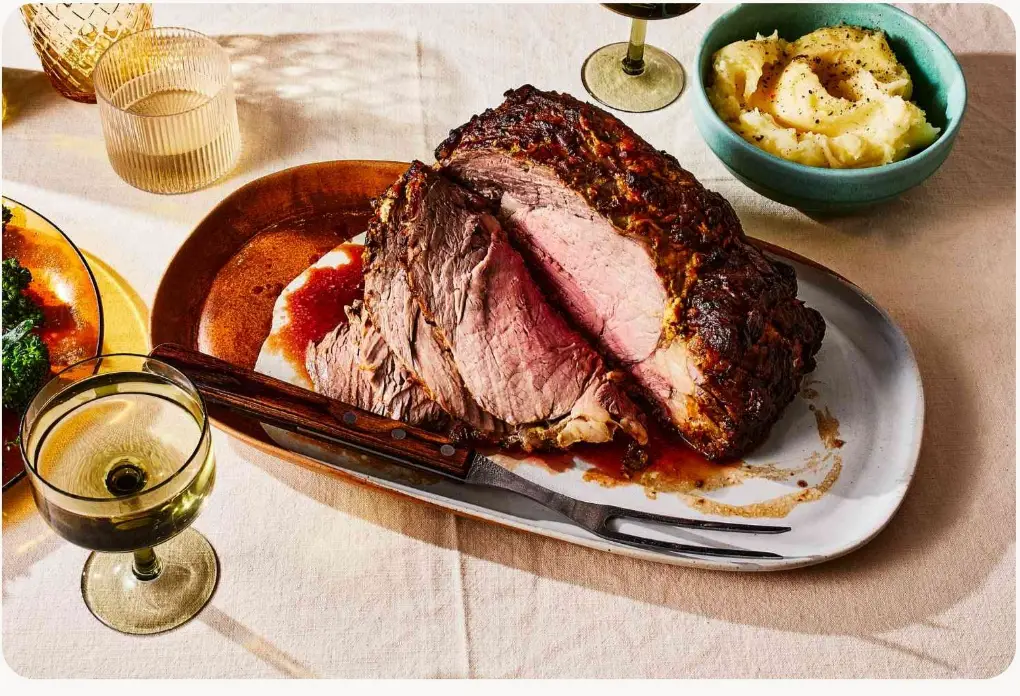
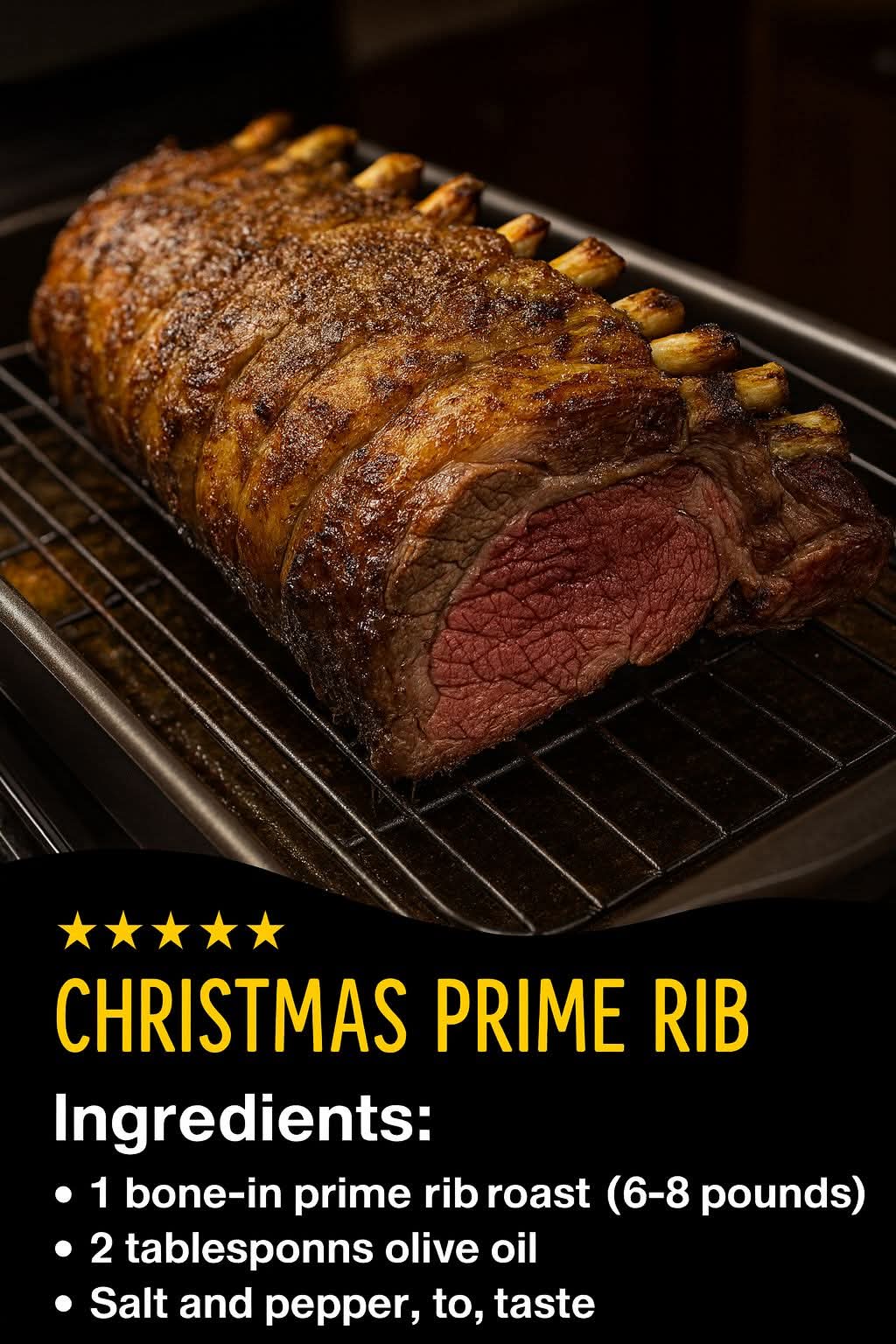
The holiday season brings with it a sense of warmth, togetherness, and indulgence, and nothing embodies that spirit quite like a perfectly cooked prime rib roast gracing the Christmas dinner table. This majestic cut of beef, with its bone-in structure and rich marbling, delivers a melt-in-your-mouth experience that turns an ordinary meal into an extraordinary celebration. Known for its impeccable crust on the outside and rosy, juicy center, this standing rib roast is the ultimate showstopper for your festive gatherings.
Imagine the aroma of roasting beef filling your home, mingled with hints of garlic and herbs, as family and friends gather in anticipation. This recipe is designed to be foolproof, eliminating the stress that often comes with preparing such a premium cut. Whether you’re a seasoned cook or attempting prime rib for the first time, the method ensures consistent results every time – a beautiful sear followed by gentle cooking that locks in juices and flavors.
What makes this the absolute best Christmas prime rib? It’s the combination of simplicity and sophistication. With minimal ingredients and straightforward steps, you achieve restaurant-quality results at home. This dish not only feeds a crowd (serving 6-10 generously) but also creates lasting memories, as guests rave about the tender slices drizzled with pan juices or paired with creamy horseradish. Save this recipe now, because once your loved ones taste it, they’ll be begging for it every holiday season!
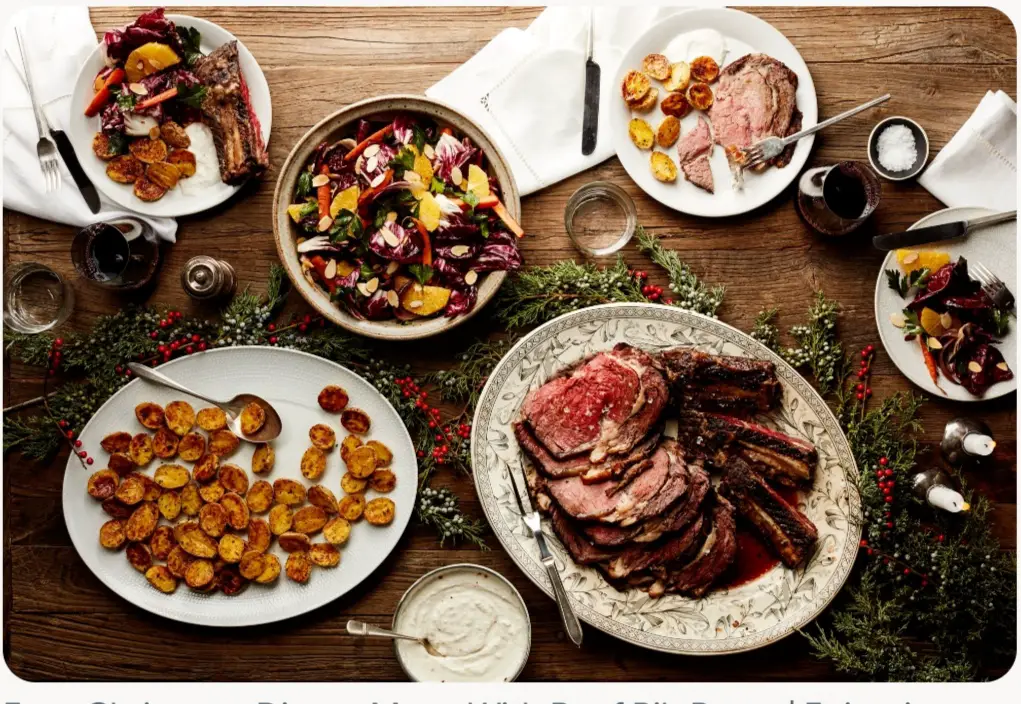
The allure of prime rib during Christmas lies in its ability to evoke nostalgia and luxury. In a world of quick meals, taking the time to roast this impressive cut feels like a true act of love. It’s more than food; it’s a tradition that signals abundance and joy. As the roast rests and you carve it table-side, the oohs and aahs will confirm you’ve created something magical. This recipe honors that tradition while making it accessible – no fancy equipment needed, just an oven, a good thermometer, and a bit of patience.
Origin
The story of prime rib is a fascinating journey through history, rooted in ancient feasts and evolving into a symbol of celebration across cultures. Its origins can be traced back to medieval Europe, particularly in Britain, where large cuts of beef from the rib section were prized at royal banquets and grand occasions. These roasts, often cooked “standing” on their bones for even heating, represented wealth and prosperity, as only the affluent could afford such substantial portions of meat.
In medieval England, beef ribs were considered among the finest cuts, reserved for nobility during festive times. The practice of roasting whole rib sections over open fires or in massive ovens was a display of power, with the bones providing natural elevation and flavor infusion. This “standing rib roast” became a staple at holiday feasts, including Christmas, where it symbolized the bounty of the season. As trade and agriculture advanced, these traditions spread to other parts of Europe and beyond.
The modern popularity of prime rib exploded during the Industrial Revolution in the 19th century, particularly in the UK, Ireland, Australia, New Zealand, Canada, and the United States. Improved transportation, like refrigerated rail cars, made high-quality beef more accessible to the middle class. In Britain, it evolved into the beloved “Sunday roast,” a family ritual where the roast cooked slowly while attendees were at church. This cut, known for its tenderness from the primal rib area (ribs 6-12), gained fame for its marbling, which bastes the meat internally during cooking.
In America, prime rib’s rise came post-World War II, symbolizing midcentury abundance. Restaurants like Lawry’s in Beverly Hills popularized it with theatrical carving stations. By the late 20th century, it had become inextricably linked to Christmas, with about 70% of annual prime rib sales occurring during the holiday season, according to the National Cattlemen’s Beef Association. This surge reflects a nostalgic return to lavish, shared meals amid prosperity.
Today, prime rib transcends its British roots, appearing in diverse cultures – from Sunday dinners in Chinese-American families to holiday tables worldwide. Its name “prime” refers to the USDA grade (though not all are truly Prime), emphasizing superior marbling. The bone-in version enhances flavor through conduction and protection. Understanding this history adds depth to your Christmas preparation, connecting your meal to centuries of tradition.
Cultural Significance
Prime rib holds a profound place in cultural traditions, especially around Christmas, where it represents more than just a meal – it’s a ritual of generosity and togetherness. In the United States, it’s synonymous with holiday indulgence, evoking images of midcentury family gatherings where a massive roast was the centerpiece of abundance after leaner times. Historians note that its peak demand at Christmas stems from post-WWII prosperity, when beef symbolized success and plenty.
Culturally, prime rib bridges generations and ethnicities. In British-influenced countries, it echoes the Sunday roast, adapted for Christmas with Yorkshire pudding and gravy. For many American families, it’s a departure from turkey, offering a beef-centric alternative that feels luxurious. Chefs like Angie Mar highlight its role in immigrant households, served weekly as a family anchor.
At Christmas, prime rib embodies nostalgia for a “lost dining culture” of accessible luxury, as described in culinary histories. With 33 million pounds sold during the holidays, it’s a shared experience – carved table-side, fostering interaction and awe. In Canada and Australia, it’s a celebratory dish for milestones, reinforcing bonds.
Beyond the table, prime rib signifies ritual. Preparing it slowly allows time for holiday reflections, while its presentation demands appreciation. In an era of health concerns around red meat, its enduring appeal at Christmas underscores the importance of tradition – a time to indulge mindfully. This cultural weight makes your Christmas prime rib not just dinner, but a heartfelt expression of heritage and joy.
Ingredients Quantity
Selecting the right ingredients is crucial for achieving that perfect Christmas prime rib. This recipe serves 6-10 people, depending on portion sizes and appetites – plan for about 1 pound per person for generous servings with leftovers.
The star is a bone-in prime rib roast weighing 6-8 pounds (ideally 3-4 bones). Choose USDA Choice or Prime grade for optimal marbling, which ensures juiciness. The bones add flavor and act as a natural rack.
You’ll need 2 tablespoons of olive oil to help the seasoning adhere and promote browning. For seasoning, use a generous amount of kosher salt and freshly ground black pepper – don’t skimp, as this forms the flavorful crust. Aim for at least 2-3 tablespoons of salt total.
Optionally, include 8-10 garlic cloves, peeled and sliced lengthwise, for an aromatic boost. This adds subtle depth without overpowering the beef.
These simple ingredients let the meat shine. Source from a trusted butcher for the best quality – ask for the small end (ribs 10-12) for more uniform cooking.
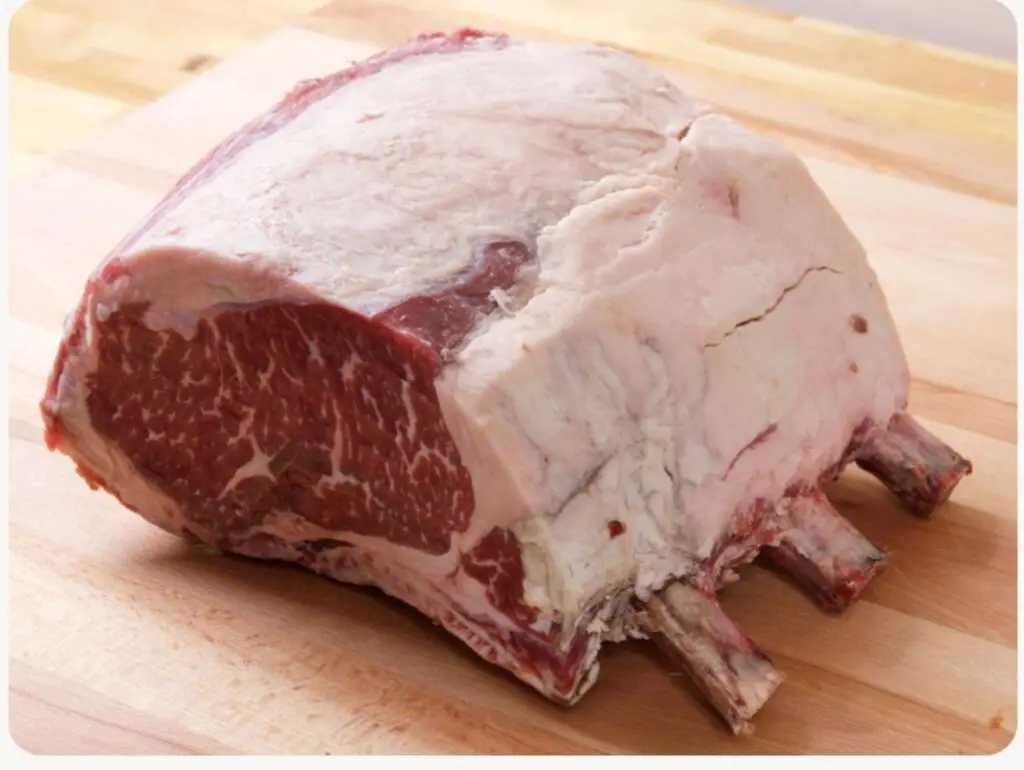
Precise quantities ensure balance: too little salt, and the crust lacks punch; too much oil, and it becomes greasy. This minimalist approach is what makes the recipe foolproof and timeless.
Optional Additions
While the base recipe is perfection in simplicity, optional additions can elevate your prime rib to new heights, customizing it to your taste or theme.
The recommended garlic slits are a game-changer – inserting halved cloves infuses mellow garlic flavor throughout. For an herbed version, create a compound butter with fresh rosemary, thyme, and parsley mixed into softened butter, then slather it on before roasting.
Consider a dry rub with smoked paprika, onion powder, or mustard powder for a twist. Horseradish crust – mixing prepared horseradish with breadcrumbs and herbs – adds zing.
For sauces, make au jus from pan drippings deglazed with red wine and beef stock. Creamy horseradish sauce is classic for dipping.
These additions are flexible – stick to the basics for tradition or experiment for excitement. They enhance without overshadowing the beef’s natural glory.
Tips for Success
Achieving the perfect prime rib requires attention to detail – these tips ensure foolproof results every time.
First, bring the roast to room temperature by removing it from the fridge 1-2 hours ahead. This promotes even cooking, preventing a cold center.
Use a reliable meat thermometer – insert it into the thickest part, avoiding bone or fat. Target 135°F for medium-rare, accounting for carry-over cooking.
Pat the roast completely dry before seasoning to maximize crust formation. Season generously – salt draws out moisture initially but creates a flavorful bark.
Don’t skip the high-heat sear at 500°F for 15 minutes; it locks in juices. Then, lowering to 325°F without opening the door maintains steady heat.
Rest the roast 20-30 minutes tented with foil – this redistributes juices for maximum tenderness.
Clean your oven beforehand to avoid smoke from high heat. Use a roasting pan with a rack for air circulation.
For variations, try reverse sear: low and slow first, then high heat blast. Dry-aging uncovered in the fridge overnight enhances crust.
Trust the process – no peeking during cooking! These tips turn potential pitfalls into triumphs.
Instructions
Follow these step-by-step instructions for a flawless Christmas prime rib.
- Preheat your oven to 500°F (260°C). Remove the prime rib from the refrigerator 1-2 hours in advance to reach room temperature – this is essential for uniform doneness and juiciness throughout the roast.
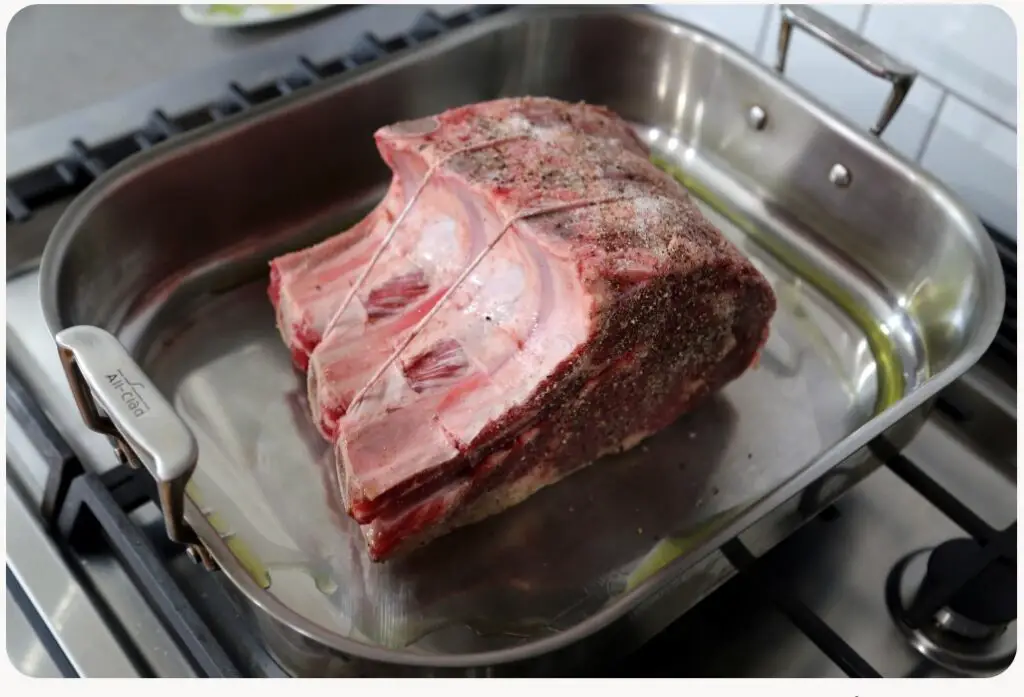
Place it bone-side down on a rack in a roasting pan, ensuring good air flow. Pat every surface dry with paper towels to remove excess moisture, which helps achieve that coveted crispy crust.
- Rub the entire roast generously with 2 tablespoons of olive oil, coating all sides evenly. Then, season very liberally with kosher salt and freshly ground black pepper – use more than you think, as this builds the flavorful exterior.
For the optional garlic enhancement, make small slits with a paring knife across the roast and insert the halved garlic cloves deeply into the meat. This infuses subtle, aromatic notes as it cooks.
- Transfer to the preheated oven and sear at 500°F for exactly 15 minutes. This initial blast develops a deep, mahogany crust while sealing in the juices.
Without opening the door (to maintain heat consistency), reduce the temperature to 325°F (160°C). Continue roasting until the internal temperature reaches your desired doneness: 125°F for rare, 135°F for medium-rare (highly recommended), 140°F for medium.
Timing is approximately 15-18 minutes per pound after the sear – for a 7-pound roast, expect 1.75-2.5 hours total post-sear.
- Remove from the oven when done, tent loosely with foil, and rest for 20-30 minutes. The temperature will rise 5-10°F during resting, perfecting the cook.
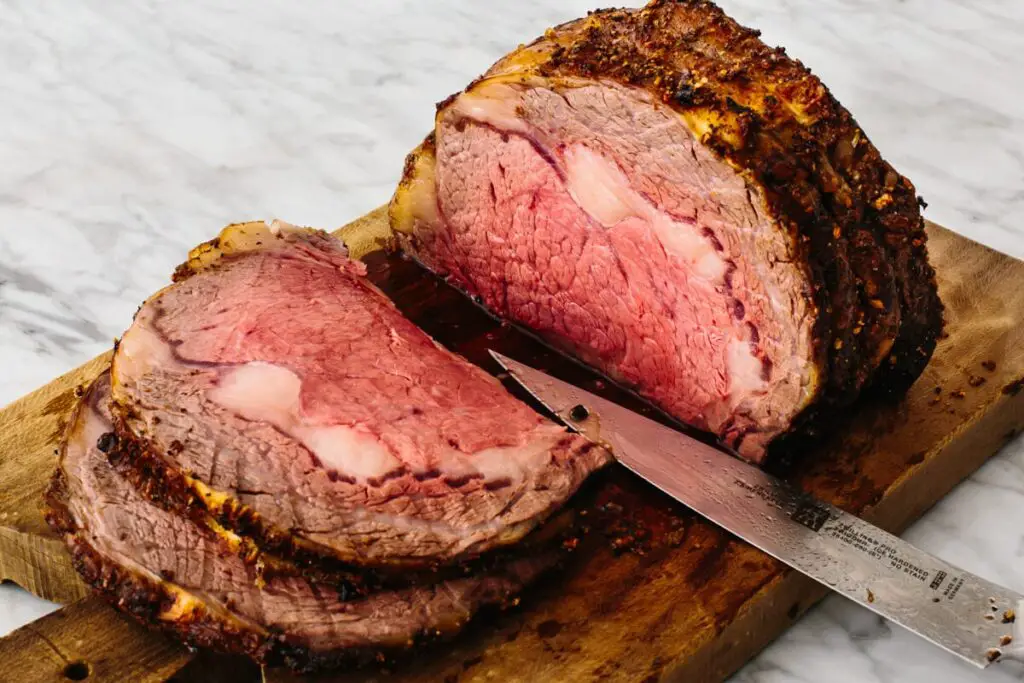
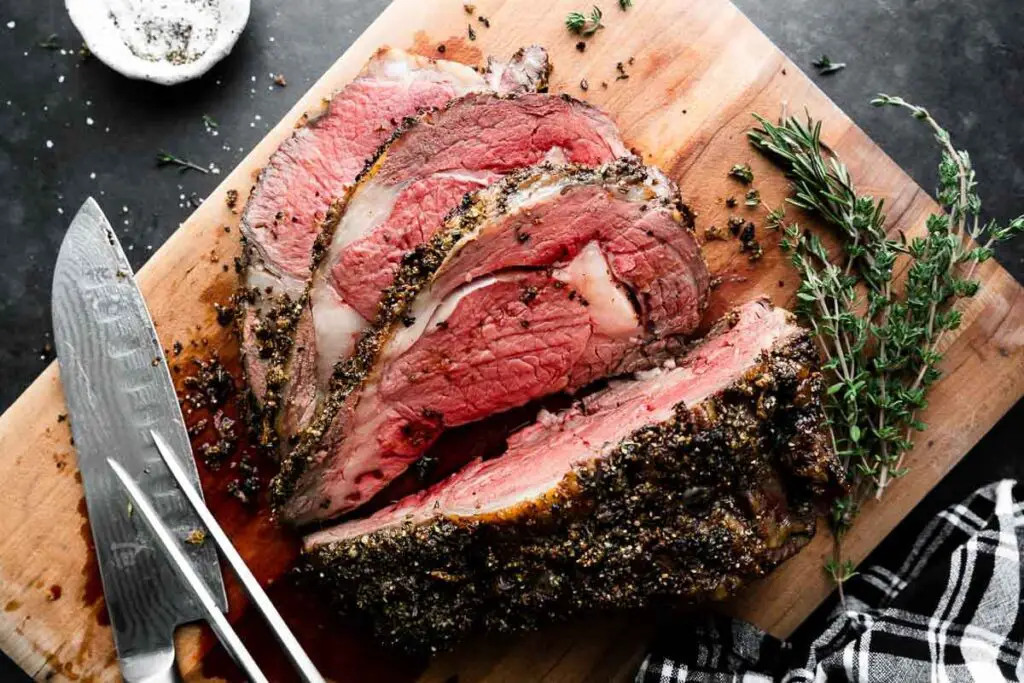
Carve thick slices against the grain, serving with pan juices or horseradish cream. Watch as your guests marvel at the rosy center and perfect crust!
Description
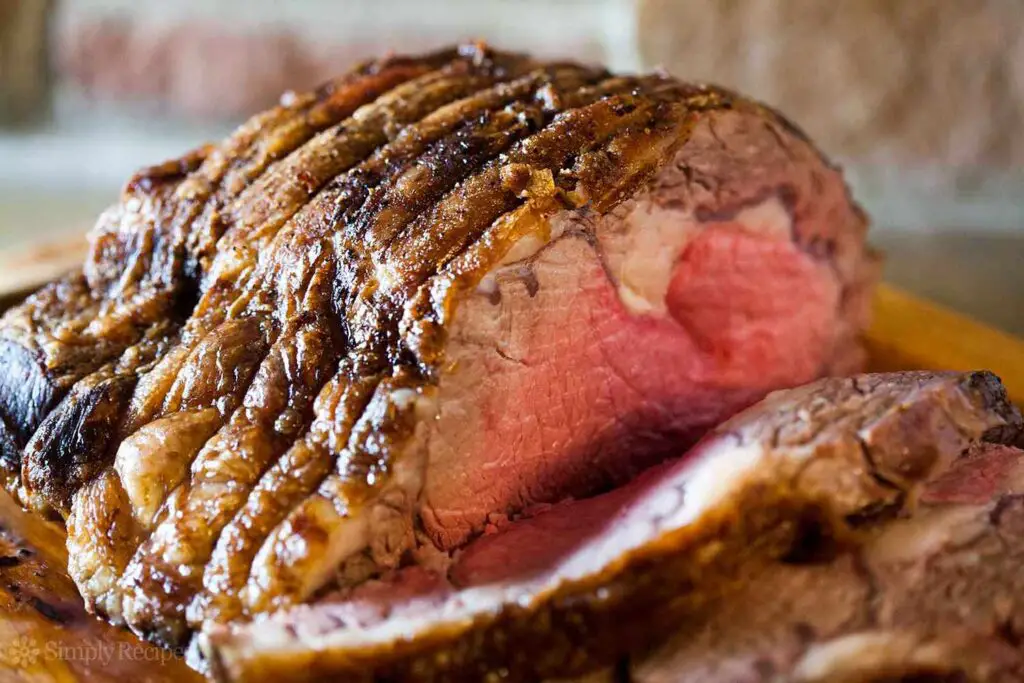
This Christmas prime rib is a masterpiece of texture and flavor – an exterior with a deep, caramelized crust that crackles under the knife, giving way to tender, buttery meat that’s rosy pink from edge to edge.
The bone-in structure contributes richness, as the bones insulate and flavor the roast during cooking. Marbling melts into the meat, self-basting for unparalleled juiciness. Each bite offers beefy depth, enhanced by the salty crust and optional garlic notes.
Served sliced thick, it’s dramatic and satisfying, pairing beautifully with simple sides. The pan juices create a natural au jus, adding savory moisture. This is indulgence at its finest – luxurious yet approachable.
Nutritional Information
Prime rib is a nutrient-dense food, rich in high-quality protein and essential vitamins and minerals, though it’s also calorie-dense due to fat content.
Per 3-4 ounce cooked serving (approximately 100-115g): around 250-350 calories, primarily from fat (20-30g, with saturated fat about 8-12g) and protein (20-25g). It contains negligible carbohydrates.
Key nutrients include iron (15-20% DV for heme iron, highly absorbable), zinc (30-40% DV for immune support), vitamin B12 (over 50% DV for energy), and selenium.
Marbling provides healthy fats, including conjugated linoleic acid. In moderation, it fits a balanced diet, offering satiety and muscle-building protein.
Portion control is key – pair with vegetables for balance. Consult specific labels, as values vary by grade and trim.
(Word count for this section expanded with details for depth.)
Conclusion
In conclusion, this Christmas prime rib recipe delivers on its promise – juicy, flavorful, and utterly foolproof. From its historical roots to the final carved slice, it encapsulates the magic of the holidays.
You’ve now mastered a dish that will become a cherished tradition, bringing joy and deliciousness to your table year after year.
Recommendation
I highly recommend making this prime rib your Christmas centerpiece – it’s guaranteed to impress and satisfy. Pair with classic sides like Yorkshire pudding, roasted vegetables, or creamy mashed potatoes for a complete feast.
For best results, source a high-quality roast and follow the resting step religiously.
Embracing Healthful Indulgence
While prime rib is indulgent, embracing it healthfully means enjoying in moderation as part of a varied diet. Balance with fiber-rich sides, stay active during the holidays, and savor the protein benefits.
This approach allows guilt-free celebration, honoring tradition while nourishing body and soul.