
Introduction
Frost, drizzle, devour—these three words perfectly capture the irresistible allure of classic sugar cookies, those timeless treats that transform simple ingredients into edible works of art. Whether shaped into festive holiday figures, elegant rounds, or whimsical designs, sugar cookies serve as the ultimate blank canvas for bakers of all skill levels, inviting creativity with every batch. This comprehensive guide delves deep into the world of sugar cookies, exploring their rich history, cultural importance, precise ingredients, optional enhancements, expert tips, step-by-step instructions, sensory descriptions, nutritional insights, and more. At the heart of it all is a beloved recipe that yields buttery, tender cookies ideal for icing or frosting, allowing you to frost intricate patterns, drizzle glossy glazes, and ultimately devour these delightful creations with unbridled joy. Sugar cookies are more than just a dessert; they embody comfort, celebration, and the simple pleasure of homemade baking that brings people together across generations.
In today’s fast-paced world, where convenience often trumps tradition, sugar cookies remind us of the magic found in slowing down to mix, roll, cut, bake, and decorate. This recipe, featuring a classic dough paired with both a flood-style icing for smooth coverage and a fluffy buttercream frosting for piped details, offers versatility that suits any occasion—from holiday gatherings to everyday indulgences. As we journey through this post, you’ll discover not only how to achieve perfect results but also why these cookies have endured as a staple in kitchens worldwide. Prepare to embark on a sweet adventure that celebrates the artistry and heartfelt satisfaction of creating something truly delicious from scratch.
Origin
The story of sugar cookies begins far earlier than many realize, tracing its roots back to ancient times when sugar itself was a rare and precious commodity. Historical records suggest that sugar-based confections originated in 7th-century Persia, following the cultivation of sugarcane, where early forms of sweetened treats were crafted for special occasions. These precursors evolved over centuries as sugar trade routes expanded, reaching Europe by the medieval period, though sugar remained a luxury reserved for the wealthy. By the 17th century, European colonizers established sugar plantations, making the sweetener more accessible and paving the way for sweeter baked goods in everyday households.
The modern sugar cookie, as we know it today—a buttery, rolled dough cut into shapes—emerged in mid-18th-century America, specifically credited to German Protestant settlers in Nazareth, Pennsylvania. These immigrants refined earlier European recipes, creating a simple, crumbly round cookie that became known as the “Nazareth sugar cookie.” Shaped to resemble Pennsylvania’s keystone emblem, these treats were so influential that they inspired statewide recognition, with variations earning nicknames like jumbles or gimblettes in earlier eras. Predecessors included spiced jumbles from England and knotted treats boiled before baking, but the Pennsylvania version emphasized butter and sugar for a tender texture without heavy spices.
As immigration waves brought Dutch, English, and German influences to Colonial America, innovations like chemical leaveners (baking powder and soda) in the late 1700s added lift and chewiness. Cookie cutters gained popularity in the 19th century, and by the 20th century, mass production—such as Pillsbury’s refrigerated dough in the 1950s—democratized sugar cookies further. Vanilla, once exorbitantly expensive, became a standard flavoring as artificial extracts became affordable. From these humble beginnings in Nazareth to global kitchens, sugar cookies evolved from practical test batches (to check oven temperatures) into a beloved symbol of American baking heritage.
Cultural Significance
Sugar cookies hold a profound place in cultural traditions, particularly as emblems of celebration, generosity, and family bonding. In the United States, they are inextricably linked to holidays, especially Christmas, where decorating cut-out shapes with colorful icing and sprinkles has become a cherished ritual. This practice dates back to agrarian times when winter allowed more visiting, and homemade cookies were shared as affordable gifts or offered to guests. The tradition of leaving cookies for Santa Claus emerged in the 1930s during the Great Depression, teaching children gratitude amid hardship—a custom that endures today, often paired with carrots for reindeer.
Globally, variations reflect diverse heritages: Scandinavian sandbakelse in fluted tins, Mexican polvorones dusted with powdered sugar, or German springerle with molded designs. Yet, the American sugar cookie stands out for its versatility as an “edible canvas,” encouraging artistic expression through icing that mimics snow or festive motifs. Cookie exchanges, decorating parties, and bake sales further embed them in community life, fostering connections and memories. During holidays, they symbolize joy and abundance; in everyday contexts, they represent comfort and creativity. From professional bakery displays to home kitchens, sugar cookies transcend mere food, embodying cultural resilience, seasonal cheer, and the universal language of sweetness shared across tables.
Their rise in popularity also mirrors societal changes: from monastery-spiced treats in medieval Europe to modern fusions incorporating global flavors. In contemporary culture, intricately decorated sugar cookies have surged as social media stars, with bakers competing in design complexity while honoring timeless roots. Ultimately, these cookies encapsulate the spirit of indulgence tempered with tradition, reminding us that simple acts like baking together strengthen bonds and create lasting cultural legacies.
Ingredients Quantity
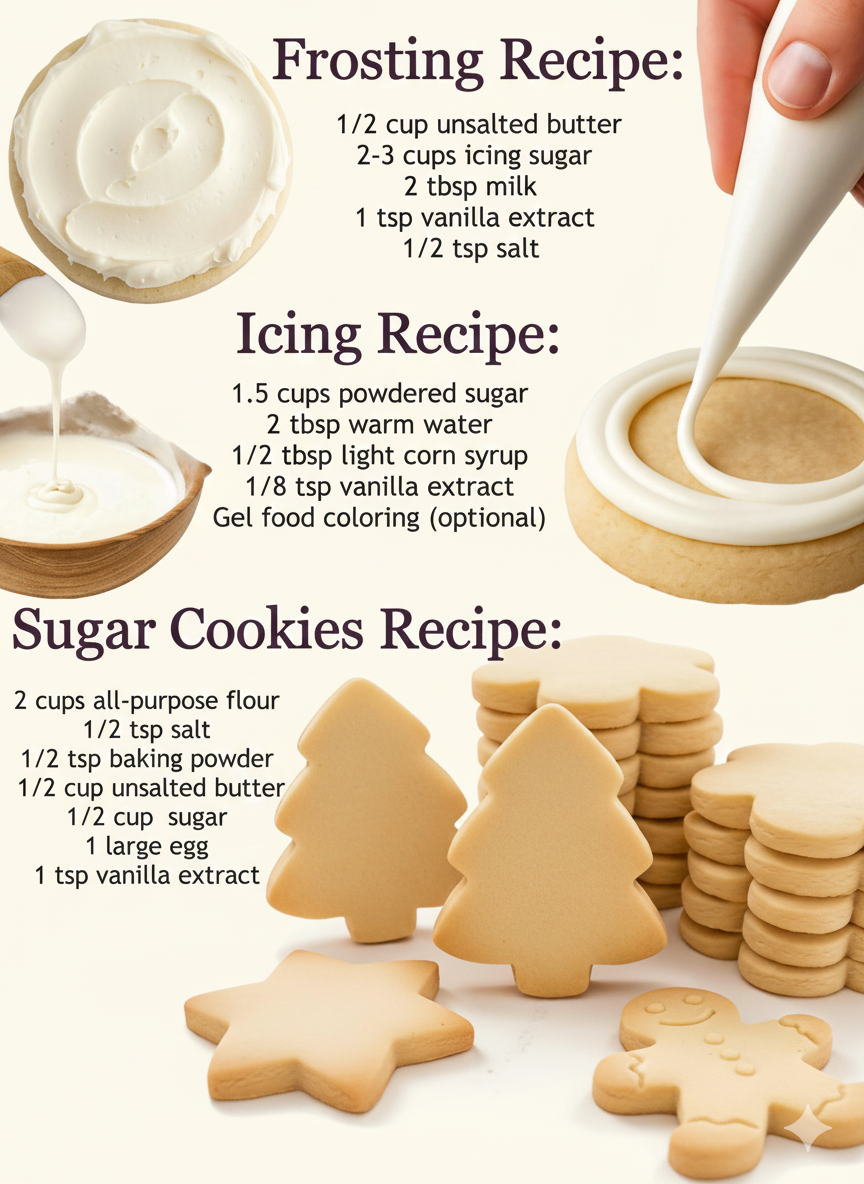
Precision in ingredients is key to achieving the perfect balance of tenderness, flavor, and structure in sugar cookies. This recipe yields approximately 24-30 cookies (depending on cutter size), with exact measurements provided for consistency.
For the Sugar Cookies:
- 2 cups all-purpose flour (240g) – Provides structure and tenderness.
- ½ teaspoon salt (2g) – Enhances overall flavor by balancing sweetness.
- ½ teaspoon baking powder (1.5g) – Adds subtle lift without excessive spread.
- ½ cup unsalted butter, softened (113g) – Contributes rich, buttery flavor and crisp edges.
- ½ cup granulated sugar (100g) – Sweetens and aids in creaming for airy texture.
- 1 large egg – Binds ingredients and adds moisture for chewiness.
- 1 teaspoon vanilla extract (4g) – Imparts classic warm, aromatic notes.
For the Icing (a glossy, flood-style royal-inspired glaze):
- 1.5 cups powdered sugar (180g) – Base for smooth, sweet coverage.
- 2 tablespoons warm water (30mL) – Adjusts consistency for drizzling.
- ½ tablespoon light corn syrup (10g) – Adds shine and prevents cracking.
- ⅛ teaspoon vanilla or almond extract – Enhances flavor depth.
- Gel food coloring (optional) – For vibrant, customized hues.
For the Frosting (fluffy buttercream for piping):
- ½ cup unsalted butter, softened (113g) – Creates creamy, rich base.
- 2 to 3 cups powdered sugar (240-360g) – Sweetens and thickens to desired stiffness.
- 2 tablespoons milk (30mL) – Thins for spreadable or pipeable texture.
- 1 teaspoon vanilla extract (5mL) – Boosts classic taste.
- ½ teaspoon salt (3g) – Cuts sweetness for balanced profile.
These quantities ensure a dough that’s easy to handle, cookies that hold shapes, and toppings that complement without overwhelming.
Optional Additions
While the core recipe shines in its simplicity, optional additions allow personalization to suit tastes or themes. For the dough, consider incorporating ½ teaspoon almond extract alongside vanilla for a nutty undertone, or zest from one lemon/orange for citrus brightness. A sprinkle of nutmeg or cinnamon (¼ teaspoon) can evoke holiday warmth without overpowering.
Enhance texture with mix-ins like ½ cup chopped nuts (pecans or almonds) or mini chocolate chips, folded in gently before chilling. For colored dough, divide and knead in gel food coloring. Post-baking, top with coarse sanding sugar before baking for sparkle, or dip cooled cookies in melted chocolate.
For icing/frosting variations: Add cocoa powder (2-3 tablespoons) to either for chocolate versions, or infuse with peppermint extract for seasonal flair. Sprinkles, edible glitter, or crushed candy canes provide visual and textural pops. Gluten-free flour blends or vegan butter/egg substitutes make it inclusive. These additions transform the basic recipe into endless possibilities, from elegant wedding favors to themed party treats.
Tips for Success
Achieving flawless sugar cookies requires attention to technique—here are expert tips compiled from baking pros. Start with room-temperature butter for proper creaming: beat butter and sugar until light and fluffy (about 2 minutes) to incorporate air for tender crumbs. Measure flour accurately by spooning into the cup and leveling off—scooping directly packs it too densely, leading to dry cookies.
Chill the dough thoroughly (at least 2 hours, up to 2 days) in disks for easy rolling; if over-chilled, let rest 15-30 minutes to prevent cracking. Roll to even ¼-inch thickness on a lightly floured surface, using parchment to prevent sticking. Rotate dough while rolling for uniformity, and dip cutters in flour for clean edges. Re-roll scraps minimally to avoid toughness—chill briefly if needed.
Bake on parchment-lined sheets at exactly 375°F (190°C), spacing 1 inch apart; watch closely, removing when edges are just golden (10-12 minutes) for soft centers. Overbaking yields crisp, dry results—pull early if unsure. Cool on the pan briefly, then transfer to a rack to prevent sogginess.
For icing: Achieve “12-second” consistency (drizzle melts back slowly); adjust with drops of water or sugar. For frosting: Add powdered sugar gradually on low speed to avoid clouds. Decorate fully cooled cookies; use piping bags for precision. Store in airtight containers, layered with parchment, up to a week—or freeze undecorated dough/cookies for months.
Common pitfalls: Avoid overmixing after adding flour (develops gluten for tough texture), and don’t skip chilling (prevents spread). Fresh baking powder ensures lift. With these tips, your cookies will hold shapes beautifully, taste divine, and impress every time.
Instructions
Follow these detailed steps for foolproof results, building on the provided recipe for cookies, icing, and frosting.
Sugar Cookies:
- In a medium bowl, whisk together 2 cups all-purpose flour, ½ teaspoon salt, and ½ teaspoon baking powder until evenly combined, ensuring no lumps for smooth dough.
- In a large mixing bowl, beat ½ cup softened unsalted butter and ½ cup granulated sugar with an electric mixer on medium-high until pale, fluffy, and aerated—about 2 full minutes, scraping sides as needed.
- Add 1 large egg and 1 teaspoon vanilla extract; beat until fully incorporated and the mixture looks creamy.
- Gradually add the dry ingredients to the wet, mixing on low speed just until a cohesive dough forms—do not overmix to keep tenderness intact.
- Divide dough in half, flatten into disks, wrap tightly in plastic, and chill for at least 2 hours (or up to 2 days) to firm up and develop flavors.
- If chilled longer than 2 hours, let dough sit at room temperature 15-30 minutes for easier rolling without cracks.
- Preheat oven to 375°F (190°C) and line baking sheets with parchment paper.
- On a lightly floured surface, roll one disk to ¼-inch thickness; cut shapes with 2½-inch cutters, re-rolling scraps sparingly.
- Place cutouts 1 inch apart on prepared sheets; bake 10-12 minutes until edges turn lightly golden.
- Cool on pan 5 minutes, then transfer to wire rack to cool completely before decorating.
Icing:
- Sift 1.5 cups powdered sugar into a bowl for lump-free results.
- In a small bowl, combine 2 tablespoons warm water, ½ tablespoon corn syrup, and ⅛ teaspoon extract until smooth.
- Pour liquid into sugar; stir vigorously until thick, glossy, and smooth.
- Test consistency: A ribbon should hold briefly then melt back in about 12 seconds.
- Adjust thickness with drops of water or teaspoons of sugar; divide and tint with gel colors if desired.
- Use immediately for flooding or outlining; cover surface with plastic if pausing.
Frosting:
- Beat ½ cup softened butter until smooth and creamy.
- Gradually add 2 cups powdered sugar on low speed, increasing as incorporated.
- Mix in 2 tablespoons milk, 1 teaspoon vanilla, and ½ teaspoon salt; beat on medium-high until light and fluffy.
- Add remaining sugar or milk teaspoons at a time for desired piping or spreading consistency.
These steps, when followed precisely, yield professional-quality results every time.
Description
Imagine biting into a sugar cookie: the exterior offers a delicate crispness that yields to a soft, buttery interior, melting on the tongue with subtle vanilla warmth. Freshly baked, they exude a golden hue with lightly browned edges, releasing an aroma of sweet dough and toasted butter that fills the kitchen invitingly. Plain, they’re elegantly simple—tender yet structured, with a clean sweetness that begs for more.
Iced versions gleam with a shiny, smooth coat that cracks satisfyingly, revealing the cookie beneath; flavors like almond or vanilla enhance the glaze’s subtle corn-syrup sheen. Frosted cookies boast swirls of creamy buttercream, rich and velvety, piped into rosettes or spread thickly for indulgent bites. Decorated, they become visual delights: holiday trees dusted with “snow” sprinkles, hearts flooded in pastel pinks, or intricate patterns mimicking stained glass. The contrast of crisp cookie, silky icing, and fluffy frosting creates textural harmony, while colors and shapes evoke joy—perfect for evoking childhood memories or impressing guests. Ultimately, these cookies are a sensory symphony: visually stunning, aromatically comforting, and flavorfully balanced.
Nutritional Information
Sugar cookies are an indulgent treat, high in calories primarily from butter, sugar, and flour. A typical unfrosted cookie (about 1 serving, ~15-20g) contains approximately 70-80 calories, with 9-10g carbohydrates (mostly sugars), 3-4g fat (saturated from butter), 1g protein, and minimal fiber or vitamins. Per 100g, expect around 460-500 calories, reflecting dense energy from refined ingredients.
With icing: Adds ~50-70 calories per cookie (powdered sugar and corn syrup contribute quick carbs). Buttercream frosting: ~100-140 calories for 2 tablespoons, high in fats and sugars. A fully decorated cookie might total 150-250 calories, with 20-30g carbs, 8-12g fat, and negligible micronutrients like iron from flour or trace calcium from butter.
While delicious, they’re best enjoyed in moderation due to high saturated fat and added sugars, which can impact blood sugar and heart health if overconsumed. Positive notes: Provide quick energy and small amounts of selenium from eggs. For lighter options, reduce sugar or use alternatives, but traditional versions prioritize pleasure over nutrition.
Conclusion
In wrapping up this exploration of sugar cookies, it’s clear why they remain an enduring favorite: their simplicity belies profound versatility, history, and emotional resonance. From 18th-century Pennsylvania origins to modern holiday staples, these treats have woven themselves into the fabric of celebrations, offering a canvas for creativity and a conduit for connection. Mastering this recipe—with its precise ingredients, chilling techniques, and dual topping options—empowers you to create cookies that not only taste exceptional but look stunning.
Whether frosted with fluffy buttercream, drizzled with glossy icing, or devoured plain, sugar cookies encapsulate joyful indulgence. They’ve survived centuries because they adapt beautifully while retaining that buttery, vanilla-kissed essence. As you bake your next batch, savor the process and the stories each cookie tells—of heritage, holidays, and heartfelt sharing.
Recommendation
I wholeheartedly recommend this sugar cookie recipe as your go-to for any occasion. Its balanced dough holds shapes impeccably yet delivers soft, flavorful bites; the icing provides professional shine for flooding, while the frosting allows piped artistry. Start with classic shapes and vanilla, then experiment with additions for personalization. Perfect for beginners (forgiving steps) or experts (room for flair), it’s ideal for holiday baking marathons, gifts, or casual treats. Pair with hot cocoa or coffee for ultimate enjoyment—your friends and family will rave!
Embracing Healthful Indulgence
While sugar cookies are undeniably decadent, embracing them mindfully allows for healthful indulgence. Enjoy in moderation as part of a balanced diet, savoring each bite to satisfy cravings without excess. Pair with nutrient-rich accompaniments like fresh fruit or nuts for contrast. Opt for smaller cutters to control portions, or share batches to spread joy. Baking itself offers therapeutic benefits—reducing stress through creative focus. Ultimately, treats like these enhance life’s pleasures when viewed as occasional delights, reminding us that true wellness includes room for sweetness, celebration, and the occasional devour-worthy cookie.