
Introduction
Taco Mac and Cheese is the ultimate fusion of two beloved comfort foods: the creamy, indulgent richness of classic macaroni and cheese and the bold, spicy flavors of a traditional taco. This dish takes simple elbow macaroni—or preferably curved shells for better sauce cling—coats it in silky Velveeta cheese sauce, and mixes it with seasoned ground beef and zesty diced tomatoes with green chilies from Rotel. The result is a one-pot wonder that’s saucy, cheesy, and packed with Tex-Mex flair, perfect for busy weeknights or cozy family dinners.
It is comforting yet exciting, familiar yet with a kick that keeps everyone coming back for seconds. This recipe uses boxed Velveeta Shells & Cheese as a shortcut for that ultra-creamy texture that’s hard to achieve from scratch without extra effort. Combined with browned ground beef infused with taco seasoning and the tangy heat from Rotel, it creates a dish that’s ready in about 30 minutes but tastes like it simmered all day.
Whether you’re feeding picky kids, hosting a casual gathering, or just craving something hearty, Taco Mac and Cheese delivers pure satisfaction in every bite. Beyond its deliciousness, this dish represents the joyful spirit of American home cooking—taking convenience products and elevating them with simple additions for maximum flavor. It’s not fancy gourmet fare, but that’s its charm: accessible, affordable, and endlessly customizable.
In this comprehensive guide, we’ll explore its origins, cultural roots, precise ingredients, tips, step-by-step instructions, and more, so you can master this modern classic and make it a regular in your meal rotation.
Origin
The origins of Taco Mac and Cheese lie at the intersection of two iconic dishes: macaroni and cheese, with roots stretching back centuries, and the Mexican-American taco flavors that exploded in popularity in the 20th century. Macaroni and cheese itself has a long history, beginning in ancient times with simple combinations of pasta and cheese in Italian and Roman cuisines, where layered pasta sheets with grated cheese appeared in medieval cookbooks like the 13th-century Liber de Coquina. By the 14th century, English recipes featured “makerouns,” boiled pasta layered with butter and cheese, as seen in The Forme of Cury from 1390.
The dish crossed the Atlantic with British settlers, but it gained prominence in America through Thomas Jefferson, who encountered pasta dishes in Europe and had his enslaved chef James Hemings train in French cuisine. Hemings is credited with introducing a refined macaroni and cheese to American tables, though earlier colonial recipes existed. During the Great Depression and World War II, boxed versions like Kraft Macaroni and Cheese became staples for their affordability and ease, cementing mac and cheese as an American comfort food icon.
Taco elements, meanwhile, stem from Mexican cuisine but were adapted in the United States into the hard-shell, ground beef-filled version popularized in the mid-20th century by chains like Taco Bell. Rotel—canned diced tomatoes with green chilies—originated in Texas in the 1940s, becoming a Southwest pantry essential for adding quick heat and flavor. Taco seasoning packets emerged in the 1950s-60s, making homemade “tacos” accessible nationwide.
Taco Mac and Cheese as we know it is a modern home-cook invention, likely emerging in the late 20th or early 21st century as part of the broader trend of Tex-Mex fusion dishes. Online recipes and forum posts from the 2000s onward show variations using boxed mac, ground beef, taco seasoning, and Rotel—simple, budget-friendly meals for families. It’s not a traditional restaurant dish but a grassroots creation, shared on blogs, Reddit, and Pinterest, embodying American ingenuity in blending convenience with bold flavors.
This Velveeta-based version highlights the processed cheese’s role in postwar American cooking, where Velveeta (introduced in 1918) provided meltable, creamy results without fuss. The dish’s popularity surged with the rise of one-pot meals and “hamburger helper”-style dinners, evolving into the cheesy, saucy delight seen in countless shared recipes today.
Cultural Significance
Taco Mac and Cheese embodies the vibrant cultural melting pot of American cuisine, particularly the Tex-Mex tradition that blends Mexican influences with American convenience and comfort. Tex-Mex itself arose in the late 19th and early 20th centuries along the Texas-Mexico border, featuring dishes like chili con carne, nachos, and fajitas that adapted Mexican ingredients to local tastes—often with more beef, cheese, and cumin. This dish symbolizes fusion food at its most democratic: taking European-derived mac and cheese and infusing it with Southwestern spices and ingredients like Rotel, which has deep roots in Texas cuisine.
It’s a testament to how immigrant influences—Italian pasta, Mexican chiles and tomatoes—have been Americanized through industrialization (boxed mac, seasoning packets) into everyday meals. In many households, especially in the Midwest and South, it’s a weeknight staple that bridges generations, evoking childhood memories of boxed mac while adding the excitement of taco night. Culturally, it reflects broader themes in American food: accessibility during economic hardships (like the Depression-era mac and cheese), postwar convenience culture, and the ongoing love affair with cheese pulls and bold flavors.
It’s appeared in online communities as “lazy” yet genius dinners, celebrated on food blogs and social media for its simplicity and crowd-pleasing appeal. In a diverse nation, dishes like this foster shared experiences—kids love the cheese, adults appreciate the spice—making it a unifier at potlucks, game days, or family tables. Moreover, it highlights the evolution of “comfort food” in multicultural America, where traditional boundaries blur.
While purists might debate authenticity, Taco Mac and Cheese celebrates creativity, proving that great food often comes from remixing classics in home kitchens rather than adhering strictly to origins.
Ingredients Quantity
For this Taco Mac and Cheese recipe, which serves 4-6 people generously (with potential leftovers), you’ll need the following precise quantities. These are scaled for hearty portions, using two boxes of mac and cheese to match the creamy, abundant sauce typical of this dish.
- 2 boxes (12 oz each) Velveeta Shells & Cheese (or regular Velveeta Mac ‘n Cheese if shells aren’t available; the curved pasta holds sauce beautifully).
- 1 pound (450g) ground beef (80/20 lean-to-fat ratio recommended for flavor and moisture; leaner beef works but may need extra milk for creaminess).
- 1 packet (1 oz or about 2-3 tablespoons) taco seasoning (store-bought like Old El Paso or McCormick; choose low-sodium if preferred).
- 1 can (10 oz) Rotel diced tomatoes with green chilies (mild for less heat, original or hot for more spice; do not drain fully—use the liquid for flavor).
- Extra milk: ½ to 1 cup whole or 2% milk (added gradually for desired sauciness; start with ½ cup).
These core ingredients keep the dish simple and true to its quick-prep roots. Using two boxes ensures plenty of cheese sauce to coat everything luxuriously, while 1 lb beef provides protein without overwhelming the pasta. The Rotel adds both moisture and flavor, making draining optional but recommended only if you prefer less sauciness.
Optional Additions
One of the joys of Taco Mac and Cheese is its versatility—easy tweaks can elevate it or adapt to preferences and dietary needs. Here are popular optional additions to customize your batch and keep it fresh with repeated makings.
Toppings for serving: Sour cream (for cooling creaminess), shredded cheddar or Mexican blend cheese (extra melt on top), diced avocado or guacamole (fresh richness), chopped fresh cilantro (herbaceous brightness), shredded lettuce (crunch), diced fresh tomatoes (juiciness), sliced black olives, pickled jalapeños (extra heat), crushed tortilla chips (texture), or a squeeze of lime.
Vegetables to mix in: 1 cup frozen corn (sweetness and color), 1 can drained black beans or pinto beans (protein and fiber boost), diced bell peppers or onions sautéed with the beef (added depth and nutrition), or even chopped spinach or kale for hidden greens.
Cheese variations: Add 1-2 cups shredded sharp cheddar, pepper jack (for more spice), or a block of cream cheese stirred in for even ultra-creaminess.
Spice adjustments: Make homemade taco seasoning using cumin, chili powder, paprika, garlic powder, onion powder, and oregano for control over salt and heat, or add extra chili powder, cayenne, or hot sauce.
Other twists: Swap ground beef for ground turkey, chicken, chorizo, or plant-based crumbles for different flavors or lighter options; add a splash of beef broth or salsa if too thick; or transfer to a baking dish, top with cheese and breadcrumbs, and bake for a casserole version.
These additions allow the dish to evolve while maintaining its core appeal as a quick, comforting meal.
Tips for Success
Achieving the perfect Taco Mac and Cheese—that ultra-creamy, well-seasoned consistency—comes down to a few key tips gathered from experienced home cooks over years of perfecting this recipe.
First, cook the pasta just to al dente per package directions, as it will continue to absorb sauce when mixed with the beef. Use a large pot with plenty of salted water to avoid sticking, and do not rinse the pasta afterward—the residual starch helps the cheese sauce cling better.
When browning the beef, use medium-high heat initially for a good sear, then reduce to medium and break it into fine crumbles for even distribution throughout the dish. Drain excess grease thoroughly after cooking to prevent an oily final result, but leave a small amount if using very lean beef to maintain moisture and flavor.
Incorporate the Rotel undrained for maximum flavor infusion—the juices add essential tang, acidity, and moisture that balance the richness of the cheese. Simmer the beef mixture briefly after adding the seasoning and Rotel to allow the spices to bloom and the flavors to meld properly.
For the signature creaminess, add extra milk gradually while stirring over low heat to avoid scorching or separation. Velveeta is designed to melt smoothly, but gentle heat and constant stirring are key to a silky sauce.
Always taste and adjust seasoning before serving—add extra salt, pepper, or taco seasoning if needed based on your packet’s strength. If the mixture becomes too thick upon standing, stir in more milk; if too loose, simmer uncovered for a couple of minutes to reduce.
Make-ahead tip: Prepare the mac and cheese and beef mixture separately up to a day ahead, then combine and reheat gently with extra milk for best texture. For leftovers, store in an airtight container and reheat on the stovetop with a splash of milk to restore sauciness.
Avoid common pitfalls like overcooking the pasta (leading to mushiness), skipping the grease drain (resulting in greasiness), or using high heat when incorporating the cheese sauce (which can cause curdling or graininess).
With these tips applied consistently, your Taco Mac and Cheese will turn out perfectly creamy and flavorful every single time you make it.
Instructions
Follow these detailed step-by-step instructions for flawless Taco Mac and Cheese every time.
- Prepare the Mac ‘n Cheese: Bring a large pot of salted water to a boil. Add the pasta from both Velveeta boxes and cook according to package directions (usually 7-9 minutes for al dente). Drain well, return the pasta to the pot, and immediately stir in the cheese sauce packets along with any milk or butter called for on the package. Mix thoroughly until smooth and creamy, then set aside while keeping it warm.
- Cook the Ground Beef: While the pasta cooks, heat a large skillet over medium heat. Add the ground beef and cook for 8-10 minutes, breaking it up with a wooden spoon into small crumbles until fully browned with no pink remaining. Carefully drain excess grease, leaving about 1 tablespoon in the skillet for added flavor.
- Season and Add Rotel: Return the skillet to medium heat if needed. Sprinkle the entire packet of taco seasoning over the browned beef and stir constantly for about 1 minute to toast the spices and coat the meat evenly. Pour in the entire can of Rotel, including all the juices, and stir well to combine. Reduce heat to low and simmer for 3-5 minutes, allowing the mixture to thicken slightly and the flavors to blend.
- Combine Everything: Add the prepared mac and cheese directly to the skillet with the beef and Rotel mixture. Gently fold everything together over low heat using a large spoon or spatula, ensuring the pasta is evenly coated and all ingredients are well distributed. Continue stirring gently for 3-5 minutes until fully heated through, being careful not to mash the pasta.
- Adjust Creaminess: Evaluate the consistency—if you’d like it extra saucy and creamy, gradually stir in extra milk, starting with ½ cup and adding more in small increments until you reach your desired texture. Stir constantly over low heat to incorporate smoothly and prevent any separation.
- Serve: Remove from heat and serve immediately while hot for the best melt and flavor. Offer optional toppings on the side so everyone can customize their bowl with sour cream, extra cheese, avocado, cilantro, or whatever they prefer.
This straightforward method ensures even flavor distribution, perfect cheese melt, and a cohesive one-pot dish ready in under 30 minutes.
Description
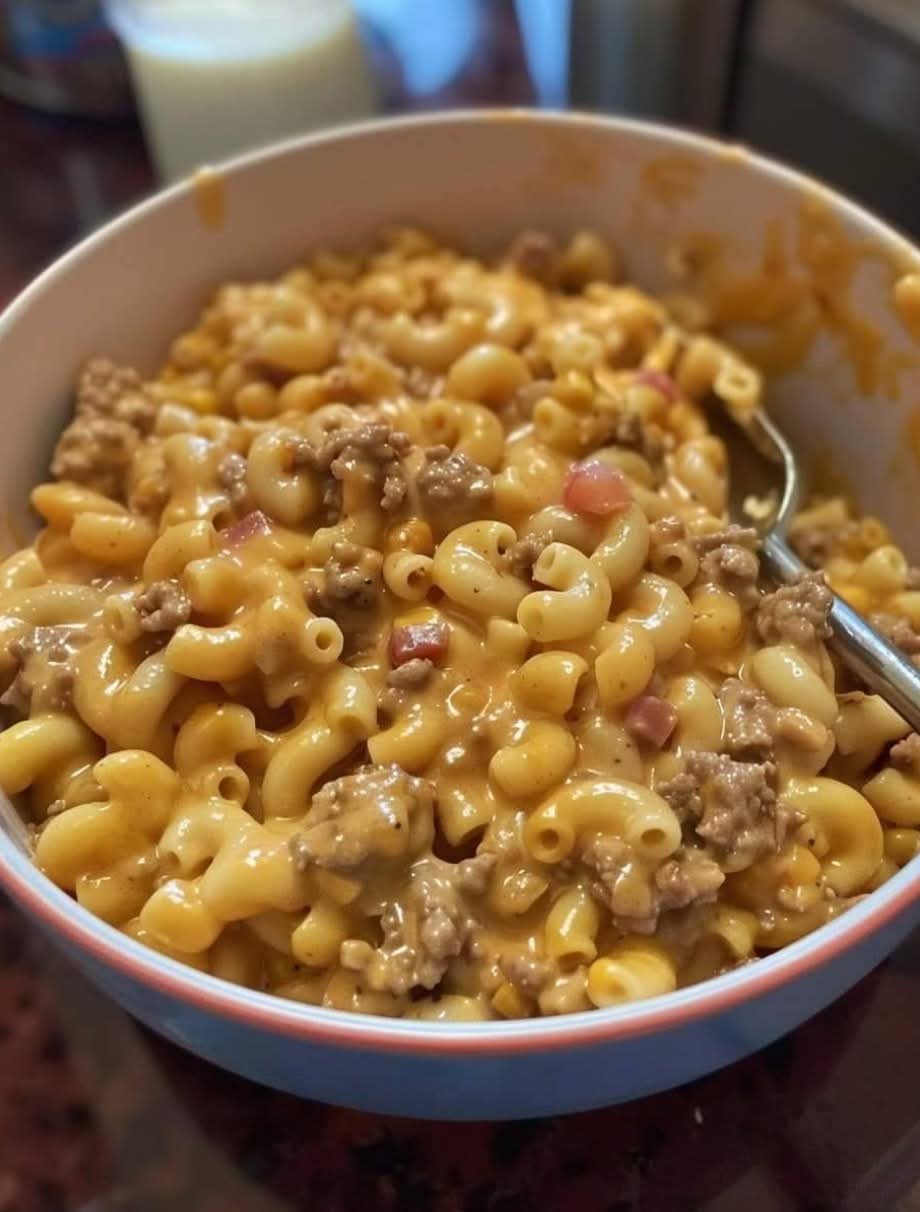
Taco Mac and Cheese is a delightful symphony of textures and tastes that combines the best elements of its parent dishes into one irresistible meal. Tender pasta shells or elbows are generously enveloped in a velvety, golden-orange Velveeta cheese sauce that clings to every curve and crevice, creating satisfyingly long cheese pulls with each fork twirl.
Throughout the creamy base, you’ll find savory crumbles of taco-seasoned ground beef that add hearty protein and robust, spiced depth, complemented by juicy bursts of diced tomatoes and mild green chilies from the Rotel that provide bright tang and a gentle heat. The overall flavor profile is a perfect harmony: the mild, nostalgic comfort of classic mac and cheese elevated by earthy cumin, garlic, chili powder, and onion from the taco seasoning, with the Rotel’s acidity cutting through the richness.
It’s mildly spicy by default (easily adjustable with Rotel variety or extra toppings), deeply satisfying from the beef, and utterly addictive in its sauciness. The dish presents as a vibrant, cohesive mix with flecks of red and green against the cheesy backdrop, inviting you to dig in immediately.
Mouthfeel-wise, it’s luxurious—smooth and saucy with occasional chew from the beef and pops of moisture from the tomatoes—making it true comfort food redefined: familiar enough to please children, bold enough to satisfy adults, and evoking the joy of both taco nights and macaroni dinners in a single, comforting bowl.
Nutritional Information
Nutritional values for Taco Mac and Cheese can vary depending on exact brands used, portion sizes, and any optional additions, but here is an approximate breakdown per serving based on 6 servings using standard ingredients (2 boxes Velveeta Shells & Cheese, 1 lb 80/20 ground beef, 1 can original Rotel, and ¾ cup extra 2% milk).
Per serving: Approximately 580-650 calories, 32-38g total fat (of which 16-20g saturated fat), 55-65g carbohydrates (with 3-5g dietary fiber and 8-12g sugars), 28-34g protein, 1200-1500mg sodium, plus meaningful amounts of calcium (from cheese), iron and B vitamins (from beef), vitamin C and lycopene (antioxidants from tomatoes).
Positive aspects include solid protein content for satiety and muscle support, calcium for bone health, and some vegetable-derived nutrients and antioxidants from the Rotel tomatoes and chilies. It’s energy-dense, making it suitable for active days or growing kids.
Potential drawbacks are the higher levels of calories, saturated fat, and sodium primarily from the processed cheese sauce and seasoning packet, which may warrant moderation for those monitoring heart health, blood pressure, or weight. Processed ingredients also mean it’s not as nutrient-dense as whole-food meals.
For healthier versions, consider using leaner ground meat (turkey or 93/7 beef), adding vegetables like beans or corn for fiber, opting for lower-sodium seasoning, or serving with a large side salad. Always check specific product labels for the most accurate information, and enjoy this dish as part of a varied diet.
Conclusion
Taco Mac and Cheese stands as a shining testament to the beauty of simple, fused flavors creating something far greater than the sum of its individual parts. This dish wraps you in warmth and satisfaction with its ultra-creamy cheese sauce, lively spicy kick, and hearty seasoned beef, leaving you fully content and often reaching for seconds.
From its humble beginnings in home kitchens experimenting with convenience staples to its current status as a beloved modern comfort food staple, it perfectly captures the essence of joyful, no-fuss eating that brings people together. Whether it’s a rushed weeknight dinner, a fun twist on traditional taco Tuesday, or a crowd-pleasing potluck contribution, this recipe reliably delivers delicious results with minimal effort.
It’s living proof that exceptional food doesn’t require complexity or rare ingredients—just quality pantry basics combined with a touch of creativity and care.
Recommendation
I highly recommend making this Taco Mac and Cheese as soon as possible—it’s an absolute crowd-pleaser that’s incredibly forgiving for beginner cooks while still rewarding for those with more experience. Start with the core recipe exactly as written to experience its classic appeal, then branch out on future batches with your favorite optional additions or toppings to truly make it your own signature dish.
It’s especially great for families with varied tastes, as the base is mild enough for kids while adults can amp up the heat with toppings. For individuals or small households, the leftovers reheat beautifully (just add a splash of milk), making meal prep easier.
Pair it with simple sides like a crisp green salad, steamed vegetables, or fresh fruit to round out the meal. Give this cheesy Tex-Mex delight a try—you’ll quickly understand why it’s become a go-to comfort recipe for so many.
Embracing Healthful Indulgence
While Taco Mac and Cheese is undeniably an indulgent treat with its rich cheese and hearty beef, it can absolutely fit into a balanced, healthful lifestyle when enjoyed thoughtfully and in moderation. The substantial protein content helps promote lasting fullness, the tomatoes provide valuable antioxidants and vitamin C, and perhaps most importantly, the pure pleasure of eating such comforting food contributes positively to overall mental and emotional well-being.
Simple modifications—like choosing leaner proteins, incorporating extra vegetables or beans for added fiber and nutrients, using reduced-sodium seasonings, and practicing sensible portion control—allow you to savor every bite without unnecessary guilt. Ultimately, true healthful living isn’t about strict deprivation but about balance, variety, and mindfulness.
Embrace this dish as an occasional joyful indulgence that brings warmth to your table and happiness to those sharing it, remembering that food’s role extends beyond mere nutrition to include connection, tradition, and delight.