
Introduction
Cowboy cookies are a beloved American classic that perfectly capture the spirit of hearty, no-fuss baking with an abundance of flavor and texture in every single bite. These oversized, chewy cookies combine the comforting familiarity of oatmeal cookies with the indulgent richness of chocolate chips, the satisfying crunch of toasted pecans, and the subtle tropical sweetness of shredded coconut, creating a treat that feels both nostalgic and exciting. Often referred to as the ultimate “everything” cookie, cowboy cookies are designed to be substantial and energy-packed, making them ideal for sharing with family, packing in lunchboxes, or simply enjoying as a well-deserved afternoon snack alongside a tall glass of cold milk.
What makes cowboy cookies stand out from ordinary chocolate chip or oatmeal varieties is their generous size, thick texture, and the harmonious blend of multiple add-ins that deliver contrasting sensations in every mouthful. The name itself evokes images of the American West—vast open ranges, rugged cowboys, and long days spent working the land—suggesting a cookie built to sustain and satisfy even the hungriest trail rider. While modern versions have become a staple at bake sales, holiday gatherings, and gourmet bakeries, their roots trace back to practical home baking traditions that prioritized flavor, shelf life, and nutritional density.
In this detailed blog post, we will explore every facet of cowboy cookies, from their mysterious historical origins and deep cultural resonance to precise ingredient measurements, creative optional additions, professional baking tips, step-by-step instructions, vivid sensory descriptions, nutritional insights, and thoughtful conclusions on why they deserve a permanent place in your recipe collection. Whether you are an experienced baker seeking perfection or a beginner eager to try something rewarding, this guide will walk you through the entire process and inspire you to embrace these delightful cookies as a symbol of wholesome indulgence.
Origin
The precise origin of cowboy cookies is somewhat elusive, blending historical practicality with romanticized folklore of the American frontier during the late nineteenth and early twentieth centuries. Many food historians believe these cookies evolved as a durable, high-calorie snack for cowboys on long cattle drives across the Great Plains and Southwest, where fresh food was scarce and energy demands were immense. Ingredients like oats provided sustained carbohydrates, nuts offered protein and healthy fats, dried coconut added sweetness and calories, and chocolate chips (once they became available) contributed quick energy and morale-boosting flavor.
Early printed versions of similar recipes appeared under names such as “Ranger Cookies” or “Trail Cookies” in community cookbooks and Quaker Oats promotional materials as far back as the 1930s and 1940s, reflecting the widespread availability of rolled oats during that era. These predecessors often included corn flakes or rice cereal for extra crunch, but the core concept remained the same: a sturdy cookie that could survive days in a saddlebag without crumbling or spoiling quickly. The shift toward the specific name “cowboy cookies” likely gained traction in the mid-twentieth century, especially in Texas, where pecans—a native nut—became a signature addition.
Chocolate chips, invented in 1938 by Ruth Wakefield of Toll House fame, were gradually incorporated into the recipe as they became household staples after World War II, transforming the cookie from a purely utilitarian trail food into a more decadent treat. Regional variations flourished, with Texas claiming strong ownership due to the prominence of pecans and the state’s enduring cowboy culture. The cookie’s evolution mirrors broader trends in American home baking, moving from necessity-driven recipes during the Depression and wartime rationing to celebratory postwar abundance.
The modern breakthrough came in 2000 when Laura Bush submitted her “Texas Governor’s Mansion Cowboy Cookies” to Family Circle magazine’s presidential spouse bake-off, pitting her recipe against Tipper Gore’s ginger snaps. Laura Bush’s version—loaded with oats, chocolate chips, pecans, coconut, and a hint of cinnamon—won decisively, introducing the cookie to millions of households nationwide and solidifying its place in contemporary culinary lore. Today, cowboy cookies continue to evolve while honoring their rugged, resourceful beginnings.
Cultural Significance
Cowboy cookies occupy a special niche in American food culture, serving as both a tasty dessert and a symbolic link to the mythologized Wild West that continues to captivate the national imagination. In states like Texas, Oklahoma, and Wyoming, these cookies are proudly claimed as regional heritage, often appearing at rodeos, county fairs, chuck-wagon cook-offs, and community potlucks where bakers compete to produce the heartiest, most flavorful batch. Their oversized portions and bold ingredient combinations embody the “go big or go home” ethos associated with cowboy life.
The 2000 presidential bake-off elevated cowboy cookies into the realm of political and pop-culture trivia, demonstrating how something as simple as a cookie recipe can become a lighthearted yet meaningful expression of identity. Laura Bush’s victory was widely covered in the media, with commentators noting the cookies’ “flashy” appeal compared to more restrained rivals, subtly mirroring broader conversations about American excess versus moderation. The recipe’s subsequent publication in countless newspapers and magazines sparked a nationwide baking trend that persists to this day.
Beyond politics, cowboy cookies represent communal generosity and inclusivity—large batches yield dozens of cookies, perfect for sharing at school events, church gatherings, holiday platters, or care packages for college students and military personnel. They bridge generational gaps, with grandparents passing down slightly varied family recipes to grandchildren who then adapt them with contemporary twists. In an era of artisanal bakeries and gourmet desserts, upscale versions featuring high-quality chocolate, toasted coconut, and sea salt flakes have appeared on menus, proving the cookie’s enduring versatility.
Culturally, cowboy cookies also reflect the melting-pot nature of American cuisine, combining Native American nut traditions, European butter-based baking techniques, tropical coconut introduced via trade routes, and industrial innovations like chocolate chips and rolled oats. They remind us that even the most iconic “American” foods are products of diverse influences, much like the nation itself. Ultimately, biting into a cowboy cookie is an act of participating in a shared narrative of resilience, hospitality, and unapologetic enjoyment.
Ingredients Quantity
For a classic batch yielding approximately 36 large cowboy cookies (inspired by Laura Bush’s famous recipe), use the following precise measurements to ensure balanced flavor and perfect texture every time. High-quality ingredients will elevate the final result significantly.
- 3 cups (360g) all-purpose flour
- 1 tablespoon baking powder
- 1 tablespoon baking soda
- 1 tablespoon ground cinnamon (optional but recommended for warmth)
- 1 teaspoon salt
- 1½ cups (3 sticks / 340g) unsalted butter, softened to room temperature
- 1½ cups (300g) granulated sugar
- 1½ cups (330g) packed light brown sugar
- 3 large eggs, at room temperature
- 1 tablespoon pure vanilla extract
- 3 cups (270g) old-fashioned rolled oats (not quick or instant)
- 3 cups (510g) semisweet chocolate chips
- 2 cups (240g) sweetened flaked coconut
- 2 cups (220g) chopped pecans, preferably toasted
Measure flour by spooning it into the cup and leveling off with a knife to avoid packing too densely, which can lead to dry cookies. Pack brown sugar firmly into the measuring cup for accurate sweetness and chewiness. Use real butter rather than margarine for superior flavor and texture, and opt for pure vanilla extract over imitation for depth.
If you prefer smaller cookies or a reduced batch, simply halve all quantities, though the full recipe freezes beautifully for future baking. Fresh, high-quality pecans and coconut make a noticeable difference in the final taste profile
Optional Additions
One of the greatest joys of cowboy cookies is their adaptability, allowing bakers to personalize the recipe while preserving the signature hearty character. Experimentation keeps the tradition alive and accommodates various tastes and dietary needs.
Substitute walnuts, almonds, or hazelnuts for pecans if desired, or omit nuts entirely for nut-free versions suitable for school or allergy-conscious environments. Vary the chocolate by mixing semisweet chips with milk chocolate, dark chocolate, or even white chocolate chunks for contrasting sweetness levels. Dried fruits such as cranberries, raisins, cherries, or chopped apricots introduce pleasant tartness that balances the richness.
For extra decadence, fold in toffee bits, butterscotch chips, or mini peanut butter cups. Salty-sweet fans can add crushed pretzels or a sprinkle of flaky sea salt on top before baking. Spices beyond cinnamon—such as nutmeg, cardamom, or a pinch of espresso powder—can deepen the flavor profile dramatically.
Health-conscious adaptations include reducing sugar by up to one-quarter, swapping some butter for coconut oil, using whole-wheat pastry flour for added fiber, or incorporating seeds like chia, flax, or pumpkin for omega-3 boost. Gluten-free one-to-one flour blends work remarkably well, and vegan versions succeed with plant-based butter, flax eggs, and dairy-free chocolate.
These optional additions ensure that cowboy cookies remain inclusive and exciting for every baker and eater.
Tips for Success
Mastering cowboy cookies requires attention to a few key techniques that separate good cookies from truly exceptional ones. Follow these professional tips for consistently perfect results.
Start with room-temperature butter and eggs to achieve proper creaming and emulsion, resulting in lighter, more tender cookies. Cream the butter and sugars together for a full 4–5 minutes until the mixture is noticeably pale and fluffy—this incorporates essential air for optimal texture. Toasting pecans and coconut in a 350°F oven for 8–10 minutes beforehand intensifies their flavor and adds irresistible crunch.
Avoid overmixing once the flour is added; stir only until just combined to prevent tough, gluten-heavy cookies. Chilling the dough for at least 30 minutes (or up to overnight) helps control spread and yields thicker, more professional-looking cookies. Use a large ice cream scoop or ¼-cup measure for uniform, generously sized portions that bake evenly.
Space dough balls at least 3 inches apart on parchment-lined sheets to allow for spreading, and gently flatten the tops slightly for even baking. Bake until the edges are golden but the centers still look slightly underdone—carryover heat will finish them perfectly for that coveted chewy texture. Cool cookies on the baking sheet for 5 minutes before transferring to a wire rack to prevent breakage.
Store baked cookies in an airtight container at room temperature for up to a week, or freeze unbaked dough balls for fresh cookies anytime. Always use fresh ingredients—stale oats or rancid nuts can ruin an entire batch.
Instructions
Follow these comprehensive step-by-step instructions to bake flawless cowboy cookies from start to finish.
Preheat your oven to 350°F (175°C) and line several baking sheets with parchment paper or silicone mats for easy release. In a medium mixing bowl, whisk together the flour, baking powder, baking soda, cinnamon (if using), and salt until evenly combined and free of lumps.
In a large mixing bowl or the bowl of a stand mixer, beat the softened butter on medium speed for about 1 minute until creamy. Add both granulated and brown sugars and beat on medium-high speed for 4–5 minutes until light, fluffy, and increased in volume. Scrape down the sides of the bowl as needed.
Add the eggs one at a time, beating well after each addition until fully incorporated, then mix in the vanilla extract. Reduce mixer speed to low and gradually add the dry ingredient mixture in three additions, mixing just until no streaks of flour remain—do not overmix at this stage.
Remove the bowl from the mixer and fold in the rolled oats, chocolate chips, flaked coconut, and chopped pecans by hand using a sturdy spatula, ensuring even distribution throughout the dough. Cover the dough and chill in the refrigerator for at least 30 minutes to firm up.
Scoop generous ¼-cup portions of dough (or use a large cookie scoop) and place them 3 inches apart on prepared baking sheets. Gently press each mound to flatten slightly. Bake for 15–18 minutes, rotating sheets halfway through, until edges are golden brown but centers remain soft.
Allow cookies to cool on the baking sheets for 5 minutes before transferring to wire racks to cool completely. Serve warm or at room temperature. The batch yields approximately 36 large cookies.
Description
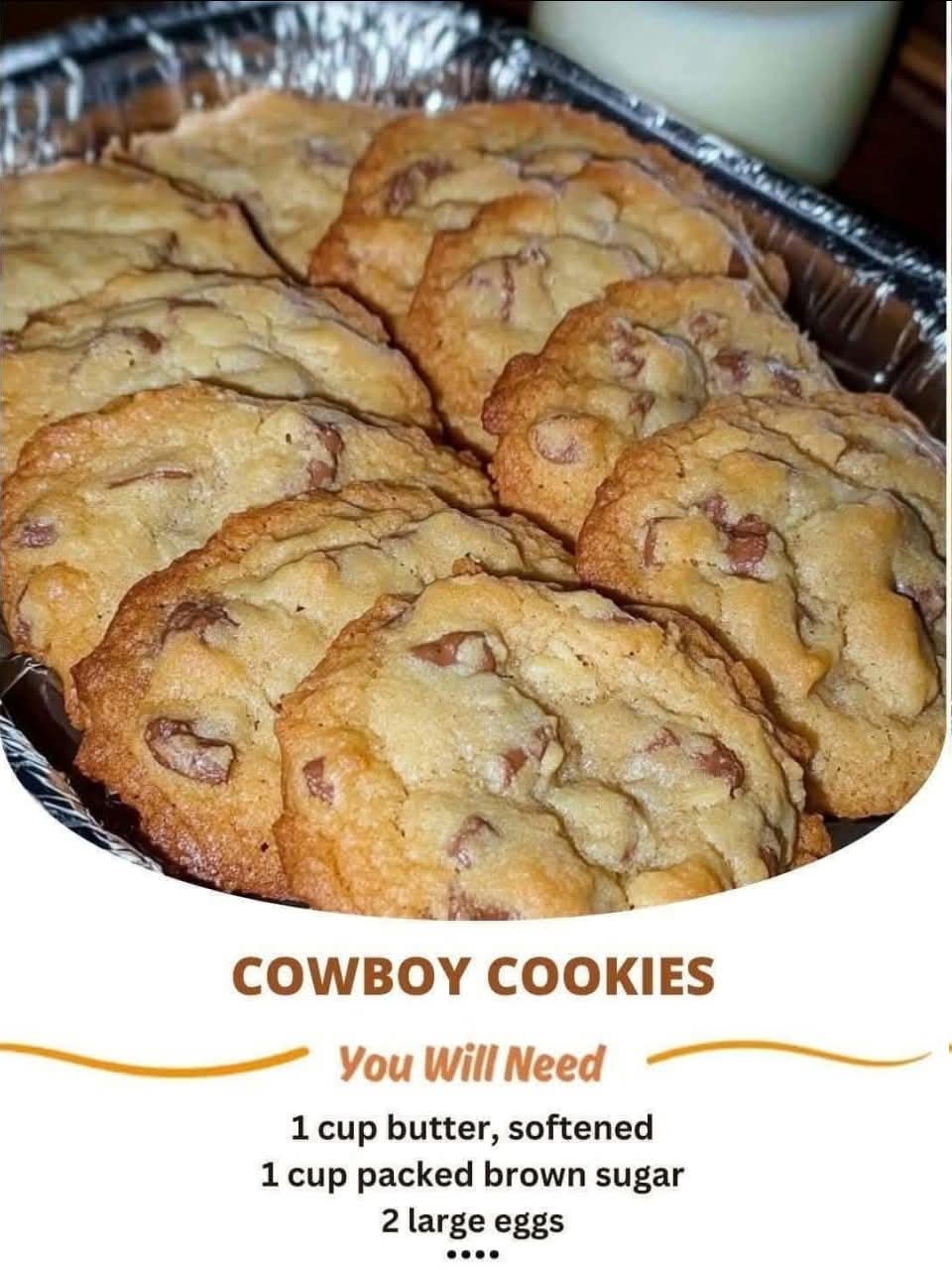
Cowboy cookies are a feast for the senses, offering a captivating visual appeal with their golden-brown edges studded with glistening chocolate chips, toasted coconut flakes, chunky pecan pieces, and visible flecks of hearty rolled oats. Fresh from the oven, they release an irresistible aroma of warm butter, vanilla, toasted nuts, and subtle cinnamon that fills the entire kitchen with comforting anticipation.
Texture is where these cookies truly shine—crisp, caramelized edges give way to thick, ultra-chewy centers that remain soft for days thanks to the brown sugar and oats. Each bite delivers delightful contrast: creamy melted chocolate, crunchy pecans, slightly chewy coconut strands, and substantial oat backbone that provides satisfying substance without heaviness.
Flavor layers unfold gradually—rich buttery dough provides the foundation, brown sugar adds deep molasses notes, chocolate brings bittersweet richness, pecans contribute earthy nuttiness, and coconut lends a gentle tropical sweetness. The overall taste is perfectly balanced between sweet and nuanced, never cloying despite the generous add-ins.
Paired with cold milk, the cookies soften slightly, enhancing their comforting appeal and making them the ultimate dunking treat. Cowboy cookies feel simultaneously rustic and luxurious, evoking both frontier campfires and modern family gatherings.
Nutritional Information
A single large cowboy cookie (approximately 1/36 of the full recipe) contains roughly 320–360 calories, depending on exact ingredient brands and portion size. The primary macronutrients break down as approximately 45–50 grams carbohydrates (largely from sugars, oats, and flour), 18–22 grams fat (mostly from butter, chocolate, pecans, and coconut), and 5–6 grams protein (contributed by eggs, oats, nuts, and minor flour sources).
Fiber content hovers around 3–4 grams per cookie, thanks to the substantial rolled oats and pecans, offering moderate digestive benefits compared to traditional sugar cookies. Micronutrients include small amounts of iron, magnesium, and antioxidants from dark chocolate and nuts, along with vitamin E from pecans.
While undeniably indulgent, cowboy cookies provide more nutritional density than many desserts due to the inclusion of whole-grain oats and heart-healthy monounsaturated fats from pecans. Oats contribute beta-glucan, a soluble fiber known to support healthy cholesterol levels, while pecans offer anti-inflammatory plant sterols.
Enjoyed in moderation—one or two cookies satisfy deeply without excess—these treats can fit into a balanced lifestyle as an occasional energy boost or celebratory reward.
Conclusion
Cowboy cookies represent far more than a simple dessert; they encapsulate generations of American baking wisdom, regional pride, and the joy of creating something delicious from pantry staples. From their practical frontier origins to their triumphant moment in national spotlight, these cookies have proven remarkably resilient and adaptable, winning hearts across demographics and eras.
Baking a batch connects us to shared culinary heritage while allowing personal creativity, fostering memories around the mixing bowl and cooling rack. Their generous nature encourages sharing, strengthening bonds with family, friends, and community through the universal language of warm, homemade treats.
As we conclude this exploration, it becomes clear that cowboy cookies endure because they deliver pure satisfaction—visually appealing, texturally complex, and flavorfully balanced—in a way few other cookies achieve.
Recommendation
I wholeheartedly recommend adding cowboy cookies to your regular baking rotation, starting with the classic Laura Bush-inspired version before branching into personalized variations. They excel during holidays, backyard barbecues, school functions, or quiet weekend afternoons when comfort is needed most.
Package them beautifully for thoughtful gifts that recipients will remember fondly, or keep a stash of frozen dough balls ready for spontaneous fresh-baked warmth. Pair with cold milk, hot coffee, or vanilla ice cream for elevated enjoyment.
Whatever the occasion, cowboy cookies reliably deliver happiness in every substantial bite.
Embracing Healthful Indulgence
In today’s wellness-focused world, cowboy cookies offer a refreshing perspective on treating oneself without guilt by combining indulgence with meaningful nutritional elements. The substantial oat content provides lasting satiety and beneficial fiber, while pecans deliver healthy fats that support cardiovascular wellness and sustained energy.
Dark or semisweet chocolate contributes antioxidants and mood-enhancing compounds, and the overall recipe avoids artificial additives when made from scratch with quality ingredients. Viewing these cookies as occasional fuel rather than empty calories shifts the mindset toward mindful enjoyment.
Baking itself becomes a therapeutic, health-promoting activity—engaging senses, encouraging creativity, and fostering connection when shared. Embrace cowboy cookies as celebration of life’s sweet moments, nourishing both body and spirit through balanced, joyful indulgence.