
Introduction
Traditional beef lasagna is one of the most beloved dishes in Italian-American cuisine, offering layers of tender pasta, rich meat sauce, creamy ricotta filling, and melted cheese that create an unforgettable eating experience. This hearty baked pasta casserole has become a staple for family gatherings, Sunday dinners, and potlucks, providing warmth and satisfaction in every bite. With its origins rooted in ancient history yet adapted over centuries, beef lasagna represents comfort food at its finest, blending simple ingredients into a complex symphony of flavors.
Many people discover lasagna later in life and are instantly hooked by its indulgent texture and taste, often describing it as “unbelievably good” upon first try. The dish typically features soft, layered noodles enveloped in a hearty ground beef marinara sauce, complemented by a creamy cheese mixture and topped with bubbly mozzarella and Parmesan. It’s the ideal main course for cozy meals, feeding a crowd while evoking feelings of home and tradition.
In this comprehensive guide, we’ll explore everything from its fascinating history to precise ingredients, step-by-step instructions, and even nutritional insights. Whether you’re a novice cook or a seasoned chef, mastering traditional beef lasagna will elevate your culinary repertoire. This version stays true to the classic Italian-American style, using readily available ingredients for a dish that’s both authentic in spirit and accessible to make at home.
Origin
The origins of lasagna trace back to ancient times, with evidence suggesting layered pasta dishes existed in Greece and Rome long before the modern version emerged. The word “lasagna” likely derives from the Greek “laganon,” referring to flat sheets of dough, which the Romans adapted into “lasanum,” meaning a cooking pot. Archaeological findings, including Etruscan frescoes from the 4th century BC, depict tools for making pasta and banquet scenes resembling early lasagna.
One of the earliest written references appears in the 1st-century Roman cookbook by Apicius, describing layered dough with meats and cheeses, though without tomatoes, which hadn’t yet reached Europe. By the Middle Ages, recipes for “lasagne” evolved in Italy, with a 14th-century manuscript, Liber de Coquina, detailing boiled pasta sheets sprinkled with cheese and spices. This medieval version was simpler, often eaten with a pointed stick, and reserved for special occasions.
The modern baked lasagna as we know it developed in Italy during the Renaissance and beyond, particularly in regions like Emilia-Romagna and Naples. In Emilia-Romagna, green spinach pasta layered with ragù and béchamel became iconic, while Neapolitan versions incorporated ricotta, meatballs, and hard-boiled eggs for Carnival celebrations. Tomatoes, introduced after Columbus’s voyages, revolutionized the dish in the 16th-17th centuries, adding the signature red sauce.
The beef-focused lasagna popular today is largely an Italian-American adaptation, brought by immigrants in the late 19th and early 20th centuries. It simplified regional variations, emphasizing ground beef in marinara, ricotta filling, and generous mozzarella, making it more accessible with jarred sauces and pre-made noodles. This evolution turned lasagna into a global comfort food, distinct from purist Italian recipes but beloved worldwide.
Debates over origins persist, with some claiming British influences from 14th-century “loseyn,” but consensus points to Italy as the true birthplace of layered baked pasta. Regardless, lasagna’s journey from ancient flatbreads to today’s hearty casserole showcases culinary adaptation across cultures and eras.
Cultural Significance
Lasagna holds profound cultural significance in Italian tradition, symbolizing abundance, family, and celebration. In Italy, it’s often prepared for festive occasions like Christmas, Easter, or Carnival, representing generosity with its multiple layers mirroring life’s richness. Regional variations highlight Italy’s diverse culinary heritage: Bologna’s green pasta with ragù and béchamel embodies northern elegance, while southern styles with ricotta reflect rustic heartiness.
Beyond Italy, lasagna became an emblem of Italian-American identity, featured in family Sunday dinners and community gatherings. Immigrants adapted it to available ingredients, turning it into a symbol of heritage and assimilation. It’s frequently associated with large family meals, where Nonna’s recipe passes down generations, fostering bonds through shared cooking and eating.
In popular culture, lasagna appears in films, books, and even cartoons—think Garfield’s obsession—reinforcing its status as ultimate comfort food. It evokes nostalgia, warmth, and indulgence, often served at potlucks or holidays to feed crowds affordably yet impressively. During challenging times, like the Middle Ages amid plagues, lasagna provided joy and sustenance.
Globally, lasagna transcends borders, with variations in Mexico (using tortillas) or vegetarian twists worldwide. Yet its core remains a dish of togetherness, encouraging slow preparation and communal enjoyment. In modern wellness contexts, it’s embraced mindfully, balancing indulgence with nourishment.
Lasagna’s cultural role extends to literature and poetry; medieval poets praised its deliciousness, and today it’s celebrated in cookbooks dedicated solely to its variations. It represents Italian culinary pride while adapting universally, proving food’s power to connect people across time and place.
Ingredients Quantity
For a traditional beef lasagna serving 8-12 people in a 9×13-inch baking dish, gather these precise quantities to ensure balanced flavors and proper layering.
Pasta and Base:
- Lasagna noodles: 9-12 sheets (about 1 box, preferably oven-ready or regular boiled)
- Olive oil: 1 tablespoon (for sautéing)
Meat Sauce:
- Ground beef: 1 pound (80/20 lean-to-fat ratio for juiciness)
- Small onion: 1, finely chopped (about 1 cup)
- Garlic: 2 cloves, minced
- Marinara sauce: 1 jar (24-28 ounces, high-quality like Rao’s or homemade equivalent)
Cheese Filling:
- Ricotta cheese: 1 container (15-16 ounces, whole milk for creaminess)
- Egg: 1 large (to bind the ricotta mixture)
Toppings and Layers:
- Shredded mozzarella cheese: 2-3 cups (divided for layers and top)
- Grated Parmesan cheese: ½-¾ cup (for richness and topping)
- Salt and black pepper: To taste (about 1 teaspoon salt, ½ teaspoon pepper)
These quantities yield a hearty, layered lasagna with three noodle layers. Use fresh, high-quality ingredients for best results; for example, freshly grated Parmesan melts better than pre-grated.
Adjust for larger crowds by scaling up: double for a deeper dish or crowd of 20. Always have extra sauce on hand for serving.
Optional Additions
While the classic recipe shines in simplicity, optional additions can elevate or personalize traditional beef lasagna without straying too far from tradition.
Common enhancements include adding Italian sausage (½ pound mixed with beef) for deeper flavor and fennel notes. Vegetables like sautéed spinach (10 ounces, drained) or mushrooms (8 ounces) incorporate nutrition and moisture into layers.
For authenticity closer to Bologna, prepare a béchamel sauce (with 4 tablespoons butter, flour, and 3 cups milk) to alternate with meat sauce. Fresh herbs such as basil (¼ cup chopped) or parsley brighten the ricotta mixture.
Other popular options: sliced hard-boiled eggs (2-3) in Neapolitan style, or small meatballs nestled in sauce. Red wine (½ cup) deglazed in the meat sauce adds complexity.
For cheesier indulgence, incorporate provolone or fontina slices. Carrot and celery (finely diced, ½ cup each) in the soffritto base mimic authentic ragù.
Vegetarian twists substitute lentils or eggplant for beef, but for beef lovers, pancetta (4 ounces) crisped with onions boosts umami.
These additions allow creativity while honoring the dish’s layered essence; start small to maintain balance.
Tips for Success
Achieving perfect traditional beef lasagna requires attention to detail; these tips ensure flawless results every time.
First, choose quality ingredients: 80/20 ground beef for juiciness, whole milk ricotta for creaminess, and good marinara to avoid blandness. Don’t overcook noodles if boiling—al dente prevents mushiness during baking.
Drain excess grease thoroughly after browning beef to prevent oily layers. Season generously at each step, tasting sauce before assembly.
Layer thoughtfully: start with sauce on the bottom to prevent sticking, and don’t skimp on cheese for gooey pulls. Use oven-ready noodles for ease, or fresh sheets if available—no boiling needed.
Cover with foil initially to steam layers evenly, then uncover for golden browning. Crucially, rest lasagna 15-30 minutes post-bake; this sets slices neatly.
Make ahead: assemble a day prior and refrigerate, or freeze unbaked for months. Thaw overnight before baking.
Avoid common pitfalls like watery sauce (simmer longer) or dry lasagna (extra sauce helps). Use a deep dish for even cooking.
Finally, broil briefly at the end for extra crispy cheese top if desired.
Instructions
Follow these detailed steps for assembling and baking traditional beef lasagna.
Step 1: Preheat and Prepare Noodles
Preheat oven to 375°F (190°C). Boil lasagna noodles in salted water per package (8-10 minutes al dente), drain, and lay flat on parchment to prevent sticking. Alternatively, use no-boil noodles.
Step 2: Brown the Meat
Heat 1 tablespoon olive oil in a large skillet over medium. Add chopped onion and minced garlic; sauté until translucent (3-4 minutes). Add 1 pound ground beef, breaking it up, and cook until browned (8-10 minutes). Drain excess fat.
Step 3: Build the Sauce
Stir in 24-ounce jar marinara sauce. Simmer 10-15 minutes to meld flavors. Season with salt and pepper. Optional: add herbs or wine here.
Step 4: Prepare Ricotta Mixture
In a bowl, combine 15 ounces ricotta with 1 beaten egg until smooth. Season lightly.
Step 5: Assemble Layers
Spread thin meat sauce layer in 9×13-inch dish. Top with 3 noodles. Spread half ricotta, sprinkle ⅔ cup mozzarella. Add meat sauce. Repeat: noodles, remaining ricotta, mozzarella, sauce. Final: noodles, sauce.
Step 6: Top and Initial Bake
Sprinkle remaining 1-1.5 cups mozzarella and ½ cup Parmesan. Cover with foil (spray to avoid sticking). Bake 25-30 minutes.
Step 7: Finish Baking
Uncover and bake 15-20 more minutes until bubbly and golden.
Step 8: Rest and Serve
Rest 15-30 minutes. Cut into squares; serve with extra sauce and bread.
These steps yield perfectly layered, flavorful lasagna.
Description
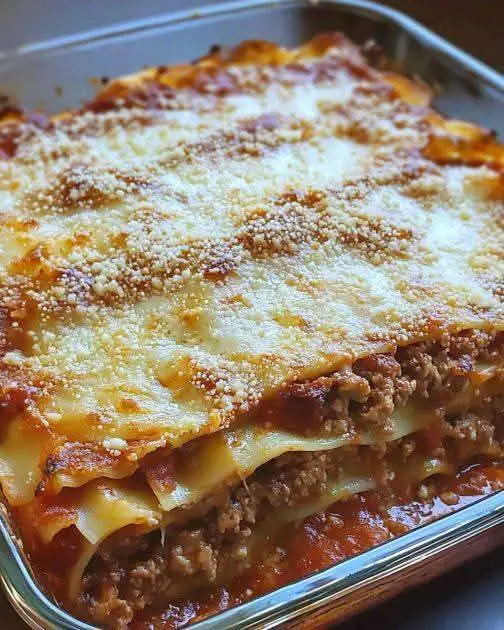
Traditional beef lasagna is a visual and sensory masterpiece: a golden, bubbly top concealing layers of tender pasta, savory meat sauce, and creamy cheese. When sliced, it reveals perfect strata—noodles hugging rich, tomato-infused ground beef ragù, dotted with pockets of smooth ricotta and stretched mozzarella.
The aroma upon baking fills the home with garlic, herbs, and simmering sauce, promising comfort. Texture contrasts delight: crispy edges yield to soft, saucy center, with cheese pulling in long strands.
Flavor profile balances tangy marinara, umami from beef and Parmesan, creaminess from ricotta, and saltiness from mozzarella. Each bite harmonizes savory, cheesy, and slightly acidic notes.
Served hot, it’s hearty yet elegant, pairing with salad or garlic bread. Leftovers reheat beautifully, often tasting better as flavors deepen.
This description captures why lasagna captivates—simple components transformed into indulgent harmony.
Nutritional Information
A standard serving of traditional beef lasagna (about 1/8 of a 9×13-inch pan, roughly 300-400g) provides approximately 400-550 calories, depending on exact ingredients and portion size.
Breakdown per serving:
- Calories: 450 (average)
- Protein: 25-35g (from beef, cheeses)
- Carbohydrates: 40-50g (mainly from noodles and sauce)
- Fat: 20-30g (saturated from cheese and beef)
- Fiber: 3-5g
- Sugars: 8-10g (from marinara)
It’s rich in calcium (from cheeses), iron (beef), and vitamins A/C from tomatoes/onions. However, it’s calorie-dense and higher in sodium/fat.
For healthier tweaks: use lean beef, part-skim cheeses, or add veggies. Moderation allows enjoyment without guilt.
Data varies; consult specific labels for precision.
Conclusion
Traditional beef lasagna endures as a culinary icon, blending history, flavor, and comfort in every layered bite. From ancient origins to modern tables, it embodies shared meals and heartfelt cooking.
Mastering this recipe rewards with a dish that’s versatile, crowd-pleasing, and deeply satisfying. Whether for holidays or weeknights, it creates memories.
In a fast-paced world, lasagna reminds us to slow down—simmer sauce, layer carefully, savor together.
Recommendation
I highly recommend trying this traditional beef lasagna for your next family dinner or gathering—it’s guaranteed to impress and comfort. Start with the basic recipe, then experiment with additions like sausage or spinach.
Pair with a simple green salad, crusty bread, and red wine for a complete Italian-inspired meal. Make double and freeze one for easy future dinners.
Embracing Healthful Indulgence
While indulgent, traditional beef lasagna can fit a balanced lifestyle when enjoyed mindfully. Use quality ingredients, portion control, and vegetable additions for nourishment.
It provides protein for satiety, carbs for energy, and joy for mental well-being. Food like this fosters connection—embrace it as healthful indulgence, celebrating life’s pleasures through delicious, shared meals.