
Classic Homemade Chicken and Rice Soup: The Ultimate Comfort Food Recipe
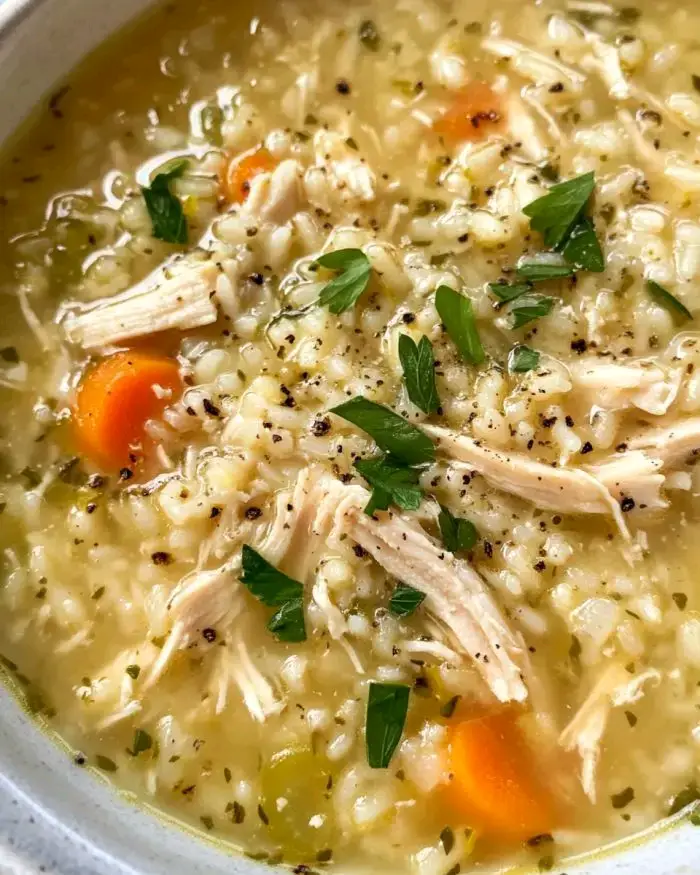
Chicken and rice soup is one of those timeless dishes that evokes feelings of warmth, nostalgia, and pure comfort. It’s a staple in many households, often associated with chilly days, recovery from illness, or simply a hearty family meal. This classic version features tender shreds of chicken, fluffy rice, vibrant carrots and celery, all simmered in a rich, flavorful broth seasoned with fresh herbs and a generous sprinkle of black pepper. The result is a creamy-yet-brothy soup with visible chunks of vegetables, perfectly cooked grains, and garnished with fresh parsley for that bright, herbaceous finish.
What makes this soup so special is its simplicity combined with depth of flavor. Unlike canned versions, homemade chicken and rice soup allows you to control the ingredients, resulting in a fresher, more nourishing bowl. It’s gluten-free (when using appropriate broth), packed with protein and veggies, and incredibly versatile. Whether you’re making it from scratch with a whole chicken or using shortcuts like rotisserie meat, this recipe delivers restaurant-quality results at home.
In this comprehensive guide, we’ll dive deep into the history of chicken soup, explore why rice makes it even better than the noodle variety, share expert tips for perfection, provide a detailed step-by-step recipe, offer variations, troubleshooting advice, nutritional insights, serving suggestions, and storage tips. By the end, you’ll be equipped to make the best chicken and rice soup you’ve ever tasted.
The Rich History of Chicken Soup and Its Rice Variation
Chicken soup has been revered for centuries as a healing elixir. References to chicken broth date back to ancient times, with evidence suggesting that humans boiled poultry as soon as chickens were domesticated during the Neolithic period. In Jewish tradition, it’s famously known as “Jewish penicillin” for its supposed curative properties during colds and flu. Ancient physicians like Maimonides in the 12th century prescribed chicken soup for respiratory ailments.
The modern American version, with its clear broth, root vegetables (carrots, onions, celery—the classic mirepoix), and additions like rice or noodles, evolved from Northern European immigrant recipes brought to the United States in the 19th and early 20th centuries. Canned versions popularized it further in the mid-20th century, making it a pantry staple.
Chicken and rice soup specifically stands out for its heartiness. Rice adds a subtle sweetness and satisfying texture that noodles can’t match. In many cultures, rice-based chicken soups are common: think Greek avgolemono ( thickened with egg and lemon, often including rice), Chinese congee-like variations with ginger and scallions, or Indonesian soto ayam with turmeric and rice. In the U.S., it’s often seen as a comforting alternative to chicken noodle, especially in Midwestern and Southern homes where rice is a go-to grain.
Today, chicken and rice soup remains a global comfort food, adaptable to dietary needs and personal tastes. Its enduring popularity lies in its balance: soothing broth, tender protein, and filling carbs—all in one bowl.
Why Chicken and Rice Soup is Superior Comfort Food
There’s a reason chicken soup with rice often edges out the noodle version in debates. Rice absorbs flavors beautifully without becoming soggy as quickly, and it thickens the broth naturally as starches release during cooking. Long-grain varieties like white or jasmine rice keep their shape, providing fluffy bites amid the savory liquid.
This soup is nourishing on multiple levels. Chicken provides lean protein for muscle repair, vegetables offer vitamins (carrots for beta-carotene, celery for antioxidants), and rice delivers sustained energy from complex carbs. The broth, especially homemade, is hydrating and mineral-rich from simmered bones.
Psychologically, it’s pure comfort. The aroma of simmering herbs and garlic fills the kitchen with homey scents, and each spoonful feels like a hug. It’s gentle on the stomach, making it ideal for upset tummies or post-illness recovery. Plus, it’s economical—stretching a single chicken into multiple meals.
Ingredients: What You’ll Need for the Perfect Bowl
This recipe serves 6-8 people generously, yielding about 12 cups of soup. Use high-quality ingredients for the best results.
For the Broth and Base:
- 1 whole chicken (4-5 pounds), or 2-3 pounds bone-in thighs/breasts for richer flavor
- 10-12 cups water (or a mix of water and low-sodium store-bought broth)
- 1 large onion, quartered
- 3 carrots, roughly chopped (plus more diced for the soup)
- 3 celery stalks, roughly chopped (plus more diced)
- 4 garlic cloves, smashed
- 2 bay leaves
- 1 teaspoon whole black peppercorns
- 1 bunch fresh parsley stems (save leaves for garnish)
- Salt, to taste
For the Soup:
- 2 tablespoons olive oil or butter
- 1 medium onion, finely diced
- 3 medium carrots, sliced into rounds
- 3 celery stalks, sliced
- 4 garlic cloves, minced
- 1 cup long-grain white rice (jasmine or basmati recommended; uncooked)
- 8-10 cups homemade chicken broth (from above)
- 3 cups shredded cooked chicken
- 1 teaspoon dried thyme (or 3 fresh sprigs)
- 1 teaspoon dried oregano
- Freshly ground black pepper, to taste (generous amount for that signature speckled look)
- Salt, to taste
- Juice of 1 lemon (optional, for brightness)
- Fresh parsley, chopped, for garnish
Optional Add-Ins:
- 1/2 cup frozen peas for color and sweetness
- A pinch of red pepper flakes for subtle heat
Step-by-Step Instructions: How to Make It from Scratch
Making chicken and rice soup from scratch takes time but is mostly hands-off. Plan for 2-3 hours total, though active prep is minimal.
Step 1: Make the Homemade Broth (The Flavor Foundation)
Start with the broth—it’s what elevates this soup from good to exceptional.
Rinse the whole chicken under cold water and pat dry. Place it in a large stockpot with the quartered onion, roughly chopped carrots and celery, smashed garlic, bay leaves, peppercorns, parsley stems, and a generous pinch of salt.
Cover with 10-12 cups cold water. Bring to a boil over high heat, then reduce to a low simmer. Skim off any foam that rises to the surface with a spoon—this keeps the broth clear.
Simmer uncovered for 1.5-2 hours, until the chicken is fall-apart tender. Occasionally skim foam and add water if it evaporates too much.
Remove the chicken to a plate to cool. Strain the broth through a fine-mesh sieve into a large bowl, discarding solids. You should have about 10 cups of golden broth. Season with salt if needed.
Once cool, shred the chicken, discarding skin and bones. You’ll have plenty for the soup plus leftovers.
Step 2: Sauté the Aromatics
In the same pot (wiped clean), heat olive oil or butter over medium heat. Add diced onion, sliced carrots, and celery. Sauté for 8-10 minutes until softened and fragrant, stirring occasionally.
Add minced garlic and cook for 1 minute more—don’t let it brown.
Step 3: Build the Soup
Add the uncooked rice to the pot, stirring to coat in the vegetables for 1-2 minutes. This toasts the rice slightly for better flavor.
Pour in 8-10 cups of your homemade broth. Add thyme, oregano, and a generous grinding of black pepper.
Bring to a boil, then reduce to a simmer. Cover partially and cook for 15-20 minutes, until the rice is tender but not mushy. Stir occasionally to prevent sticking.
Step 4: Add the Chicken and Finish
Stir in the shredded chicken (about 3 cups). Simmer for 5 more minutes to heat through.
Taste and adjust seasoning—add salt, more pepper, or a squeeze of lemon for brightness.
If using peas, add them in the last 2 minutes.
Ladle into bowls, garnish generously with chopped fresh parsley and extra black pepper.
Pro Tips for the Perfect Chicken and Rice Soup
Achieving soup perfection comes down to a few key techniques:
- Use Bone-In Chicken: Bones add gelatin for a silky broth texture and deeper flavor. Bone-in thighs are a great shortcut.
- Cook Rice Carefully: To avoid mushy rice or starchy broth, cook it directly in the soup but use long-grain varieties. For leftovers, consider cooking rice separately and adding per bowl.
- Layer Flavors: Sauté vegetables first for sweetness. Toast rice briefly. Use fresh herbs at the end for vibrancy.
- Season Generously: Black pepper is key—don’t skimp. Taste multiple times and adjust.
- Brightness Boost: A splash of lemon juice at the end cuts richness and enhances flavors.
- Don’t Overcook: Simmer gently to keep chicken tender and veggies crisp-tender.
- Skim the Broth: For a clear, professional look.
- Rest for Flavor: Soup tastes even better the next day as flavors meld.
Variations to Suit Every Taste
This recipe is endlessly adaptable:
- Creamy Version: Stir in 1/2 cup heavy cream or a milk-flour roux at the end.
- Wild Rice Twist: Use a wild rice blend for nutty texture (cook longer, about 45 minutes).
- Lemon-Herb: Add lemon zest and dill for a Greek-inspired avgolemono vibe.
- Spicy Kick: Include red pepper flakes or hot sauce.
- Vegetable-Loaded: Add mushrooms, spinach, zucchini, or potatoes.
- Low-Carb: Swap rice for cauliflower rice.
- Asian-Inspired: Ginger, soy sauce, and scallions.
- Quick Rotisserie Shortcut: Use store-bought broth and rotisserie chicken—ready in 30 minutes.
Troubleshooting Common Issues
- Soup Too Thick? Rice absorbs liquid—add more broth when reheating.
- Bland Flavor? Under-seasoned broth is the culprit. Boost with salt, herbs, or bouillon.
- Mushy Rice? Overcooked or short-grain rice. Use long-grain and watch timing.
- Cloudy Broth? Didn’t skim foam or boiled too vigorously.
- Chicken Dry? Overcooked—simmer gently.
Nutritional Benefits and Why It’s Healthy
A bowl of this soup is nutrient-dense: approximately 300-400 calories per serving, with 25g protein, fiber from veggies and rice, vitamins A and C, and anti-inflammatory compounds from garlic and herbs. Homemade avoids excess sodium in canned versions. It’s soothing for digestion and immunity-boosting.
Serving Suggestions and Pairings
Serve with crusty bread, crackers, or a simple green salad. Pair with a light white wine like Sauvignon Blanc or herbal tea. Top with grated Parmesan for extra richness.
Storage, Freezing, and Reheating
Refrigerate in airtight containers for up to 4 days. Freeze (rice separate if possible) for 3 months. Reheat on stovetop with extra broth to loosen.
This classic chicken and rice soup is more than a meal—it’s a tradition in a bowl. Make it once, and it’ll become your go-to comfort recipe. Enjoy the process, savor the aromas, and share with loved ones. Bon appétit!