
Introduction
Buffalo Chicken Alfredo Pasta is a delightful fusion dish that marries the creamy, indulgent essence of traditional Italian Alfredo sauce with the bold, spicy kick of American Buffalo chicken wings. This recipe has gained immense popularity in recent years, appealing to those who crave comfort food with a twist of heat and flavor. Imagine twirling your fork through al dente penne pasta coated in a rich, velvety sauce that’s infused with tangy buffalo sauce and tender shreds of chicken—it’s a meal that satisfies both the soul and the palate on a cozy evening or during a lively gathering.
What makes this dish stand out is its ability to transform simple pantry staples into a gourmet experience without requiring advanced culinary skills. Whether you’re a busy parent looking for a quick weeknight dinner or a food enthusiast experimenting with hybrid cuisines, Buffalo Chicken Alfredo Pasta offers versatility and excitement. In this comprehensive blog post, we’ll dive deep into every aspect of this recipe, from its historical roots to practical cooking tips, ensuring you have all the knowledge to create it perfectly in your own kitchen.
As we explore this recipe, you’ll discover how it embodies the spirit of modern American-Italian fusion cooking, where bold flavors collide to create something entirely new and irresistible. By the end of this post, you’ll not only have a step-by-step guide but also inspiration to customize it to your taste. Let’s embark on this flavorful journey together, starting with the origins that shaped this beloved dish.
Origin and Cultural Significance
The origins of Buffalo Chicken Alfredo Pasta can be traced back to the innovative spirit of American cuisine, where regional specialties are often blended with international classics to create novel dishes. Buffalo sauce itself hails from Buffalo, New York, invented in 1964 at the Anchor Bar by Teressa Bellissimo, who tossed fried chicken wings in a mixture of hot sauce and butter to satisfy late-night cravings. This simple yet revolutionary creation quickly became a staple in sports bars and Super Bowl parties, symbolizing American indulgence and the love for spicy, finger-licking foods that pair perfectly with cold beer and camaraderie.
Alfredo sauce, on the other hand, has its roots in early 20th-century Italy, specifically Rome, where restaurateur Alfredo di Lelio created a creamy pasta sauce using butter, heavy cream, and Parmesan cheese to entice his pregnant wife to eat. This dish, known as Fettuccine Alfredo, crossed the Atlantic in the 1920s, becoming a hit among Hollywood stars and eventually evolving into a comfort food icon in the United States. The fusion of these two—Buffalo’s fiery zest with Alfredo’s silky smoothness—likely emerged in the late 20th or early 21st century in American home kitchens and casual dining spots, reflecting the country’s melting pot culture where immigrants’ traditions mingle with local inventions.
Culturally, Buffalo Chicken Alfredo Pasta represents the broader trend of comfort food hybridization in a fast-paced world, where people seek meals that evoke nostalgia while offering excitement. In the U.S., it’s often associated with game days, family dinners, or potlucks, embodying the communal spirit of sharing bold flavors. Globally, as fusion cuisine gains traction, this dish has found fans in Europe and Asia, where adaptations might include local spices or lighter creams, highlighting how food transcends borders and adapts to diverse palates, fostering cultural exchange through every bite.
Delving deeper, the cultural significance extends to health and lifestyle trends; while indulgent, it can be modified for dietary needs, mirroring society’s shift towards balanced eating without sacrificing pleasure. In literature and media, similar fusions appear in cookbooks like “The Flavor Bible” or TV shows such as “Chopped,” where chefs combine unexpected elements, inspiring home cooks to experiment. This dish’s rise parallels the social media era, where viral recipes on platforms like TikTok and Instagram propel humble creations to stardom, making Buffalo Chicken Alfredo Pasta a symbol of accessible gourmet innovation in contemporary culture.
Historically, the evolution of pasta dishes in America ties back to Italian immigration waves in the late 19th century, bringing staples like penne that later fused with local tastes. Buffalo sauce’s popularity surged in the 1980s with chain restaurants like Buffalo Wild Wings, setting the stage for crossovers. Today, this pasta variant signifies empowerment in the kitchen, allowing novices to blend traditions confidently, and it underscores themes of resilience—much like how Bellissimo turned scraps into a legend, modern cooks transform leftovers into feasts, enriching cultural narratives around food.
Ingredients Quantity
To prepare Buffalo Chicken Alfredo Pasta for about four servings, you’ll need precisely measured ingredients to ensure the perfect balance of creaminess and spice. Start with 8 ounces of penne pasta, which provides the ideal tubular shape to capture the sauce in every bite. This amount cooks up to a hearty portion, allowing for generous servings without overwhelming the dish’s other components.
Next, incorporate 1.5 cups of cooked shredded chicken, which serves as the protein powerhouse, adding substance and a mild flavor base that absorbs the buffalo sauce beautifully. The chicken should be pre-cooked—perhaps from a rotisserie or boiled breasts—to save time and ensure tenderness. Half a cup of buffalo sauce is essential; this tangy, vinegar-based condiment brings the signature heat, and using a store-bought variety like Frank’s RedHot keeps things authentic and convenient.
Two tablespoons of butter form the foundation of the sauce, melting to create a rich, emulsified texture that binds everything together. Accompany this with two cloves of minced garlic, which infuse aromatic depth without overpowering the dish. One cup of heavy cream adds the luxurious creaminess typical of Alfredo, while half a cup of grated Parmesan cheese melts in for that nutty, salty finish that elevates the sauce to restaurant quality.
Seasonings include half a teaspoon each of paprika and garlic powder, which enhance the smoky and savory notes, respectively. Salt and black pepper should be added to taste, starting with a pinch and adjusting as you go to personalize the flavor profile. Finally, fresh chopped parsley for garnish adds a pop of color and freshness, with about a handful being sufficient to sprinkle over the top.
In terms of quantities, these measurements are scalable; for larger crowds, double everything proportionally to maintain harmony. Precision in measuring, especially with the cream and cheese, prevents the sauce from becoming too thin or clumpy. Sourcing high-quality ingredients—like freshly grated Parmesan instead of pre-shredded—makes a noticeable difference in the final taste and texture.
Optional Additions
While the core recipe for Buffalo Chicken Alfredo Pasta is robust on its own, optional additions can elevate it to suit various preferences or occasions. For those who enjoy extra vegetables, consider adding one cup of chopped bell peppers or spinach, sautéed briefly with the garlic to incorporate nutrition and a subtle crunch. These greens not only balance the richness but also add vibrant colors, making the dish more visually appealing.
Cheese lovers might opt for an additional half cup of shredded mozzarella or blue cheese crumbles, stirred in at the end for a gooey, tangy enhancement that complements the buffalo sauce. If you’re aiming for more heat, a dash of cayenne pepper or sliced jalapeños—about a teaspoon or a few rings—can intensify the spice without overwhelming the creaminess. For a smoky twist, crumbled bacon bits, around a quarter cup, provide a salty, crispy element that’s reminiscent of loaded wings.
To make it heartier, incorporate cooked vegetables like broccoli florets or cherry tomatoes, halved and tossed in during the final mix, adding about a cup for freshness and fiber. For dietary adaptations, swap heavy cream with half-and-half or a dairy-free alternative like coconut cream, maintaining the one-cup quantity to preserve the sauce’s consistency. Fresh herbs beyond parsley, such as chives or cilantro, can be chopped and added as a garnish for an aromatic lift.
Protein variations include using shredded turkey or even plant-based chicken substitutes for a vegetarian version, keeping the 1.5 cups measurement. A squeeze of lemon juice—about a tablespoon—brightens the flavors, cutting through the richness. These options allow customization, ensuring the dish remains inclusive and exciting for different tastes and needs.
Experimenting with nuts, like a sprinkle of toasted pine nuts for crunch, or olives for a briny note, adds gourmet flair without complicating the recipe. Remember, optional additions should enhance, not dominate, so start small and taste as you go. This flexibility makes Buffalo Chicken Alfredo Pasta a canvas for creativity in the kitchen.
Tips for Success
Achieving perfection in Buffalo Chicken Alfredo Pasta requires attention to detail, starting with pasta cooking—always use salted water and stir occasionally to prevent sticking, aiming for al dente to avoid mushiness when mixed with sauce. Drain but don’t rinse the pasta; the residual starch helps the sauce cling better, creating a cohesive dish. If the pasta sits too long, toss it with a bit of olive oil to keep it from clumping.
When preparing the sauce, use medium heat to prevent the cream from curdling; gentle simmering is key for a smooth texture. Stir continuously when adding cheese to ensure it melts evenly without forming lumps—patience here pays off in a velvety result. Taste the sauce before adding chicken and pasta, adjusting seasonings incrementally to build flavors harmoniously.
For the chicken, shred it finely for even distribution; if using leftovers, ensure it’s warmed gently to retain moisture. Incorporate the buffalo sauce gradually if you’re sensitive to spice, allowing you to control the heat level. Fresh garlic over powdered yields better aroma, but mince it finely to avoid biting into large pieces.
Garnishing isn’t just aesthetic—fresh parsley adds a herbal contrast that cuts through richness, so chop it just before serving for maximum freshness. If reheating leftovers, add a splash of milk to restore creaminess, as the sauce thickens in the fridge. Pairing with sides like salad balances the meal nutritionally.
Common pitfalls include overcooking the garlic, which turns bitter, so keep sautéing brief. Use a large skillet for tossing to prevent spills and ensure even coating. For best results, serve immediately; this dish shines when hot and fresh from the stove.
Instructions
Begin by cooking the pasta: bring a large pot of salted water to a vigorous boil, then add 8 ounces of penne and cook according to the package directions until it’s al dente, typically around 10-12 minutes. Stir occasionally to ensure even cooking and prevent the pasta from sticking together. Once done, drain the pasta in a colander, reserving a cup of the cooking water if needed to thin the sauce later, and set it aside while you prepare the rest.
Next, prepare the sauce base in a large skillet over medium heat by melting 2 tablespoons of butter until it foams slightly. Add the 2 minced garlic cloves and sauté them for about 30 seconds, stirring constantly to release their fragrant oils without letting them brown or burn. This step infuses the butter with garlic essence, setting a flavorful foundation for the Alfredo.
To create the Alfredo base, pour in 1 cup of heavy cream and allow it to simmer gently for 2-3 minutes, stirring occasionally as it thickens slightly. Gradually stir in the half cup of grated Parmesan cheese, whisking vigorously until the sauce turns smooth and creamy, free of any cheese clumps. If the sauce seems too thick, add a splash of the reserved pasta water to achieve the desired consistency.
Incorporate the buffalo flavor by adding half a cup of buffalo sauce, along with half a teaspoon each of paprika and garlic powder, plus salt and black pepper to taste. Stir everything well until the ingredients are fully combined, creating a vibrant, orange-hued sauce that’s spicy yet balanced. Let it simmer for another minute to meld the flavors thoroughly.
Add the chicken and pasta: introduce the 1.5 cups of cooked shredded chicken to the sauce, cooking for 2-3 minutes until it’s heated through and coated evenly. Then, toss in the drained penne pasta, using tongs to mix until every noodle is generously covered in sauce, absorbing the bold tastes.
Finally, finish and serve by removing the skillet from the heat to prevent overcooking. Garnish with freshly chopped parsley for a burst of color and freshness, and if desired, drizzle with extra buffalo sauce for added kick. Plate immediately while hot, perhaps alongside garlic bread or a crisp salad for a complete, satisfying meal.
Description
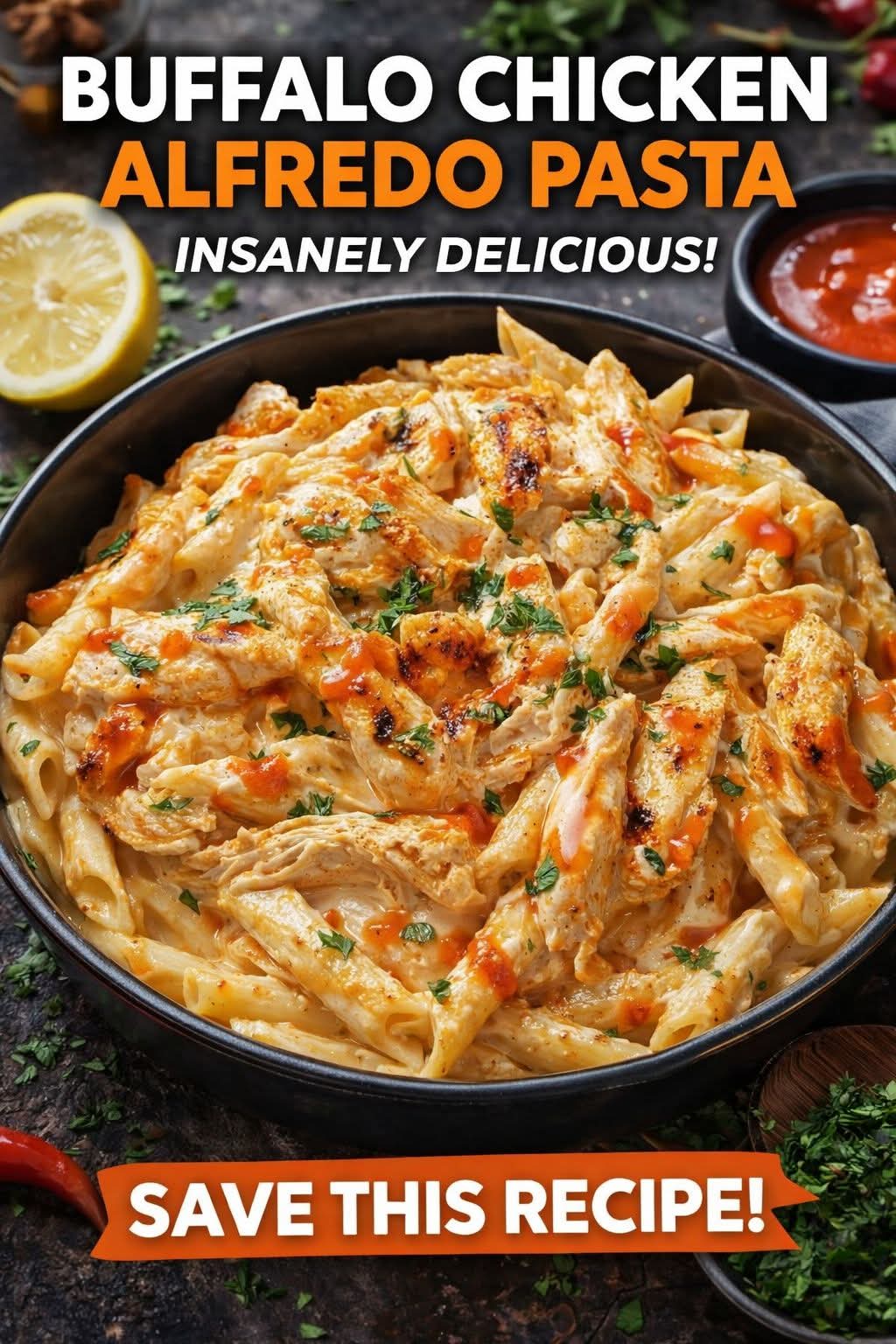
Buffalo Chicken Alfredo Pasta presents itself as a visually striking dish, with penne tubes glistening under a creamy, orange-tinted sauce that hints at its spicy heritage. The shredded chicken peeks through, adding textural interest amid the smooth pasta, while specks of parsley provide a green contrast that makes it Instagram-worthy even without photos. Each forkful delivers a symphony of flavors: the initial creaminess from the Alfredo gives way to the tangy heat of buffalo sauce, balanced by the nutty Parmesan and subtle garlic undertones.
Texturally, it’s a delight—the al dente pasta offers a slight chew, complemented by the tender chicken that melts in your mouth, creating a comforting yet exciting eating experience. The sauce clings perfectly, ensuring no bite is bland, with the optional drizzle adding customizable spice levels for diners. Aroma-wise, the dish fills the kitchen with garlic’s warmth, butter’s richness, and the vinegar-sharp notes of buffalo, evoking memories of wing nights blended with pasta dinners.
In terms of versatility, this pasta adapts seamlessly to seasons: hearty in winter for warmth, or lightened with veggies in summer for refreshment. It’s family-friendly yet sophisticated enough for date nights, bridging casual and elegant dining. The fusion aspect shines through, making it a conversation starter at tables, where guests marvel at the clever marriage of classics.
Beyond taste, the dish embodies indulgence with a kick, satisfying cravings for bold American flavors while nodding to Italian elegance. Portions are generous, often yielding leftovers that reheat well, extending the enjoyment. Overall, it’s a recipe that promises satisfaction, leaving eaters full, happy, and eager for seconds.
Nutritional Information
A single serving of Buffalo Chicken Alfredo Pasta, based on four portions, clocks in at approximately 650-700 calories, deriving mainly from the heavy cream, cheese, and pasta carbs. The macronutrient breakdown includes about 35-40 grams of protein from the chicken and Parmesan, supporting muscle repair and satiety. Carbohydrates hover around 60-70 grams, primarily from the penne, providing sustained energy, while fats total 30-35 grams, with the cream and butter contributing to the dish’s richness.
Vitamins and minerals are present, though modestly; the garlic offers antioxidants like allicin for immune support, and parsley adds vitamin K for bone health. Sodium levels can reach 800-1000 mg per serving due to the buffalo sauce and cheese, so those watching salt intake should opt for low-sodium versions. Fiber is low at 2-3 grams unless veggies are added, but the dish’s protein helps stabilize blood sugar.
For dietary considerations, it’s naturally gluten-containing from the pasta, but gluten-free penne swaps easily maintain the profile. Calorie density makes it indulgent, yet portion control allows integration into balanced diets. Compared to traditional Alfredo, the buffalo addition introduces capsaicin, which may boost metabolism slightly.
Health-wise, while not a superfood, it provides comfort nutrients like B vitamins from chicken for energy metabolism. Moderation is key; pairing with salads boosts overall nutrition. Tracking apps like MyFitnessPal can customize breakdowns further for personalized needs.
Conclusion
In wrapping up our exploration of Buffalo Chicken Alfredo Pasta, it’s clear this dish is more than a meal—it’s a celebration of flavor fusion that brings joy to any table. From its simple preparation to the explosive taste, it encapsulates the best of comfort cooking. We’ve covered every angle, equipping you to recreate it with confidence.
This recipe’s appeal lies in its accessibility, making gourmet dining achievable at home. As you try it, remember the tips and variations to make it your own. Ultimately, it’s a testament to culinary creativity.
Thank you for joining this deep dive; may your kitchen adventures be flavorful and fulfilling.
Recommendation
I highly recommend Buffalo Chicken Alfredo Pasta for anyone seeking a quick, crowd-pleasing dinner that’s both comforting and adventurous. Ideal for weeknights or gatherings, it pairs wonderfully with crisp wines or beers. Experiment with additions to tailor it, and share your versions online for inspiration.
For beginners, start with the basic recipe before tweaking; seasoned cooks will love the fusion potential. It’s budget-friendly and uses common ingredients, making it a staple worth adding to your rotation. Give it a try—you won’t regret the spicy, creamy delight.
Overall, this dish earns top marks for versatility and taste; it’s a must-make for pasta lovers everywhere.
Embracing Healthful Indulgence
Embracing healthful indulgence with Buffalo Chicken Alfredo Pasta means enjoying its richness while making smart tweaks for balance. Opt for whole-grain penne to boost fiber, or use Greek yogurt in place of some cream for lighter calories without sacrificing creaminess. Adding veggies like broccoli increases nutrients, turning indulgence into a well-rounded meal.
Mindful portions allow savoring the flavors guilt-free, perhaps with a side salad to offset heaviness. This approach fosters a positive relationship with food, where treats like this pasta enhance life rather than detract from health goals. Regular exercise complements such meals, maintaining overall wellness.