
Introduction
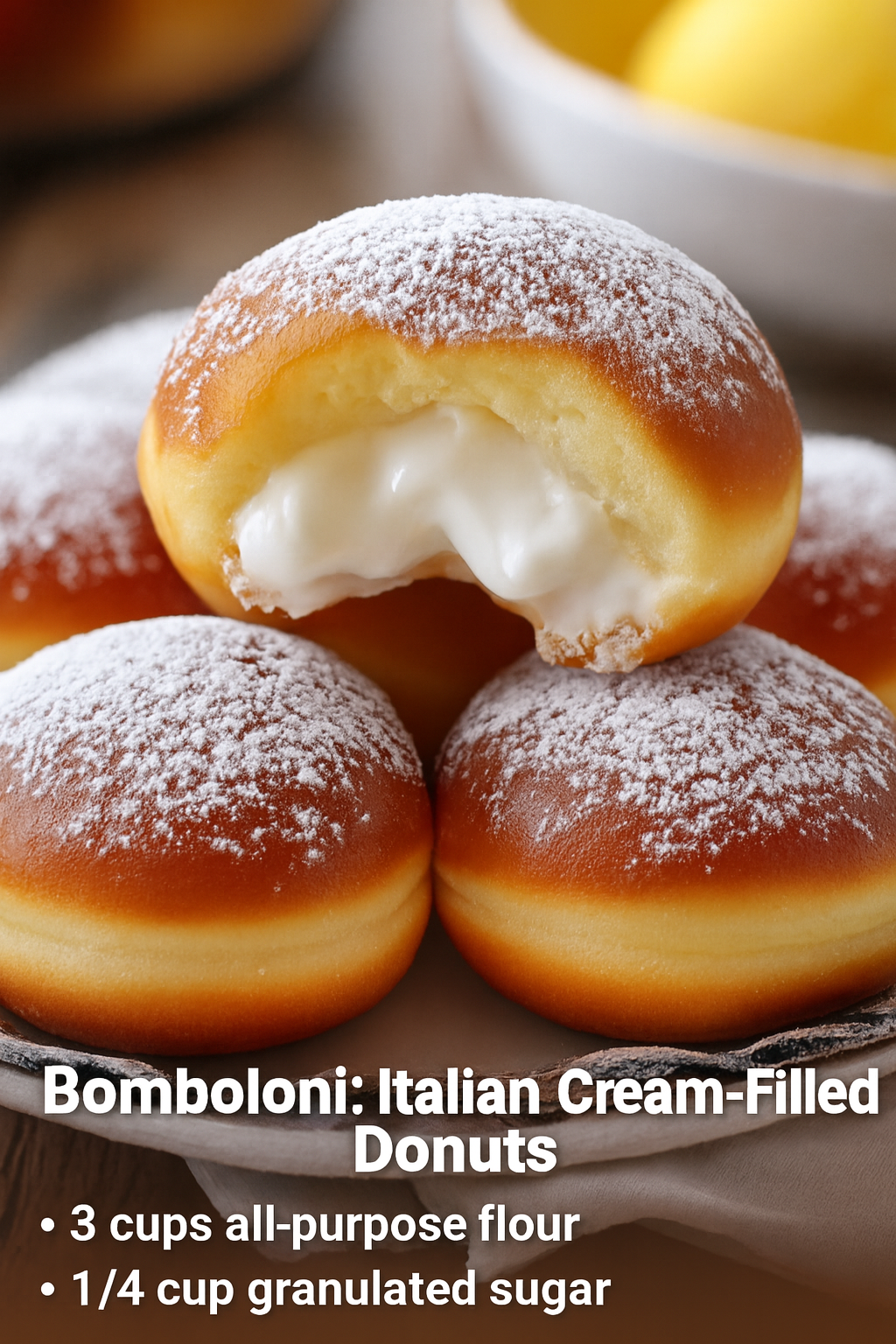
Bomboloni, the cloud-like, cream-filled Italian donuts, represent a culinary experience far beyond the simple concept of fried dough, offering a blissful journey into the heart of Italian pasticceria. This confection is not merely a dessert; it is an institution, a staple of Italian bakeries and breakfast tables, capable of transforming a mundane morning into a moment of pure, unadulterated indulgence. Characterized by their irresistibly soft, slightly chewy texture, a result of a meticulously proofed yeast dough, and their decadent, luscious filling of rich pastry cream (crema pasticcera), Bomboloni stand out in the crowded world of international fried sweets. The final touch, a generous dusting of granulated sugar, often subtly perfumed with a whisper of cinnamon, completes this masterpiece, presenting a treat that is warm, comforting, and deeply satisfying, providing a beautiful balance between the light sweetness of the dough and the sophisticated richness of the vanilla custard, a truly unparalleled delight for the senses.
The sheer joy of biting through the crispy, sugar-coated exterior and reaching the cool, silken center of the crema pasticcera is a defining experience for both tourists and locals across Italy, cementing the Bomboloni’s status as a quintessential representation of Italian culinary artistry and a testament to the country’s profound commitment to high-quality, simple, yet perfect ingredients. Our journey into the world of Bomboloni will delve into its fascinating history, explore its cultural significance from Tuscany to the southern regions, break down the precise alchemy of its ingredients, and provide a masterclass in the techniques required to achieve baking perfection, ensuring that you can recreate this iconic Italian treat in your own kitchen with confidence and spectacular results. By meticulously following this guide, which also includes essential tips and information on nutritional considerations, you will not only be making donuts but also participating in a centuries-old tradition of sweet, joyful living, embodying the Italian spirit of savoring life’s simple, delicious pleasures with family and friends.
Origin
The precise and singular origin of the Bomboloni is, like many beloved traditional recipes, shrouded in the mists of culinary history and regional storytelling, though the most widely accepted and well-supported theory traces its ancestry back to Central Europe, specifically to the famed German and Austrian Krapfen or Berliner Pfannkuchen. This connection is not merely anecdotal but is strongly tied to the historical and cultural exchange that occurred across the borders of the Austro-Hungarian Empire and the Northern Italian regions, particularly during the 18th and 19th centuries, leading to the adaptation and eventual Italianization of the basic concept of a yeasted, fried, and often filled dough. The name itself, “Bomboloni,” is thought to be an onomatopoeic reference to the “bomb-like” or rounded, plump shape of the donut, an affectionate and descriptive term that vividly captures its delightfully inflated appearance after being perfectly fried to a beautiful golden brown color.
While the idea of a sweet, fried dough was imported, the Italian genius lay in the specific and defining transformation of the recipe, giving the Bomboloni its unique identity that sets it apart from its German cousins and other international donuts. Unlike the Berliner, which is often filled before or after frying with jam (such as raspberry or apricot), the traditional Italian Bomboloni is almost exclusively characterized by its generous filling of crema pasticcera, a rich, bright yellow, vanilla-scented custard that distinguishes the Italian preparation and elevates it to a higher level of elegance and flavor complexity. Furthermore, the Italian recipe tends to utilize a dough that is richer in butter and eggs, contributing to a lighter, softer, and more brioche-like texture that is inherently less dense and more porous than many Central European varieties, truly establishing the Bomboloni as a distinct, regional specialty, primarily associated with the region of Tuscany, though enjoyed and adapted across the entire peninsula with various minor local modifications.
Cultural Significance
The Bomboloni holds a significant and cherished place within the tapestry of Italian food culture, extending beyond its role as a simple sweet treat and positioning it as a deeply ingrained element of daily life, memory, and celebration, particularly within the context of the Italian breakfast, or colazione. In Italy, the colazione is a serious yet delightful affair, and the sight of freshly fried Bomboloni, often still warm from the fryer and glistening with sugar, arrayed in a pasticceria or bar (cafe), is an iconic image that signifies the start of a perfect day. Unlike the heavy, savory breakfasts consumed in other parts of the world, the Italian morning meal is typically sweet and light, designed to be enjoyed quickly with a strong espresso or a creamy cappuccino, and the Bomboloni is arguably the most decadent and celebratory option available on the menu, making it a favorite for weekend indulgences.
Moreover, the consumption of Bomboloni is often intrinsically linked to seasonal and celebratory periods, most notably during the festive season of Carnevale, the Italian equivalent of Mardi Gras, a period of feasting and merrymaking before the solemnity of Lent begins, where fried dough in various forms is traditionally consumed in abundance. This association with celebration and joyous indulgence reinforces the Bomboloni’s role as a comfort food, a connection to childhood memories, and a symbol of gathering and shared pleasure within the family and community structure. It is a treat that speaks to the heart of la dolce vita—the sweet life—embodying the Italian philosophy of slowing down, savoring the moment, and appreciating the simple, profound quality of traditional, lovingly prepared food, making it far more than just a donut but a miniature, edible monument to Italian passion and tradition.
Ingredients Quantity
Achieving the perfect Bomboloni requires not just high-quality components but also a precise understanding and adherence to the specified quantities, as the ratio of flour to fats and liquids is crucial for the resulting light and airy structure of the dough, which is the cornerstone of this recipe’s success. For the dough, the base of 3 cups of all-purpose flour provides the necessary structure, while the richness is primarily introduced by 1/4 cup of melted unsalted butter and 2 large eggs, which enrich the dough, improve its texture, and contribute to its characteristic golden color when fried. The hydration and activation of the yeast are achieved with exactly 1/2 cup of warm milk (at the ideal temperature of 110^\circ\text{F} or 45^\circ\text{C}), which works in tandem with the 1 packet (2 ¼ tsp) of active dry yeast to ensure a vigorous and successful first rise, guaranteeing the desirable softness.
The Pastry Cream, or crema pasticcera, demands an equally meticulous approach, as it needs to be thick, smooth, and robust enough to hold its structure without weeping once piped into the hot Bomboloni. The structural integrity of the cream relies on the thickening power of 4 large egg yolks and 1/4 cup of cornstarch, which are carefully cooked into 2 cups of whole milk and sweetened with 1/2 cup of granulated sugar to create the iconic filling. The addition of 2 tbsp unsalted butter is non-negotiable, as it provides a luxurious silkiness and richness to the final cream, while 1 tsp of vanilla extract is the primary flavoring agent, ensuring a classic and fragrant finish that perfectly complements the fried dough. Finally, for the traditional dusting, a simple yet effective mixture of 1/2 cup of granulated sugar is used, often enhanced by an optional but highly recommended 1 tsp of ground cinnamon, which adds a warm, spicy counterpoint to the sweetness.
Optional Additions
While the classic Bomboloni with crema pasticcera is undeniably the gold standard and the purist’s choice, the base recipe is incredibly versatile and lends itself beautifully to a range of optional additions that can customize the flavor profile or enhance the overall sensory experience, allowing for both personal flair and seasonal variations. One of the most popular and simple additions to the dusting sugar is the zest of a citrus fruit, such as a finely grated lemon or orange zest, which can be mixed directly into the granulated sugar for a bright, aromatic lift that cuts through the richness of the fried dough and complements the vanilla in the pastry cream beautifully. Beyond the dusting, the pastry cream itself is an excellent canvas for flavor experimentation; for a gourmet twist, try infusing the milk with a whole, split vanilla bean instead of just using extract, or introduce a complex depth by dissolving a small amount of high-quality espresso powder into the warm milk to create a Tiramisu-inspired crema, appealing directly to coffee lovers.
For those who enjoy fruitier desserts, the Bomboloni can be filled with a variety of rich jams, with apricot, raspberry, or black cherry preserves being the most traditional alternatives to the custard, offering a tart contrast to the sweet dough. However, an even more decadent option is to incorporate a small amount of a rich, high-quality spread, such as hazelnut-chocolate spread (like Nutella) or a homemade pistachio cream, which can be either mixed into the crema pasticcera or used as a sole filling for an ultra-rich, modern take on the classic. Furthermore, once the Bomboloni have cooled, a small addition of a complementary liqueur, such as a splash of limoncello or a hint of rum essence brushed onto the dough before filling, can add a sophisticated, boozy complexity to the final product, transforming the simple donut into an adult dessert suitable for a formal gathering or a special occasion.
Tips for Success
Achieving Bomboloni perfection is a process that relies on careful execution and attention to several key, often overlooked, technical details, making a successful outcome dependent on patience and precision throughout both the dough preparation and the frying stages. The temperature of the milk is perhaps the most critical factor in the dough stage; it must be warm enough (around 110^\circ\text{F} or 45^\circ\text{C}) to properly activate the active dry yeast, but if it is too hot, it will instantly kill the yeast, resulting in a dense, heavy dough that will not rise, necessitating the use of a thermometer for accuracy. For the kneading, ensure the dough achieves an “elastic” texture, meaning it passes the windowpane test—where a small piece can be stretched thin enough to see light through it without tearing—as this indicates excellent gluten development, which is essential for the characteristic light, chewy crumb after frying.
When preparing the Pastry Cream, the crucial step of tempering the eggs must be executed slowly and deliberately; this involves gradually whisking the hot milk into the egg yolk mixture to gently raise their temperature, preventing the yolks from scrambling and ensuring a perfectly smooth base for the custard. During the frying process, the most significant factor is maintaining the oil temperature consistently at 350^\circ\text{F} (175^\circ\text{C}), requiring a deep-fry thermometer and constant monitoring, because oil that is too cool will result in greasy, soggy donuts that absorb excess fat, while oil that is too hot will burn the exterior before the center is fully cooked. A final, often-missed tip is to dust the Bomboloni immediately upon removing them from the oil while they are still hot and slightly tacky, ensuring the sugar coating adheres perfectly and creating the essential sweet crust that contrasts beautifully with the soft interior.
Instructions
Prepare the Dough and First Rise
- Activate the Yeast: In a small, clean bowl, gently pour the 1/2 cup of warm milk (ensuring it is precisely 110^\circ\text{F}) and sprinkle the 1 packet (2 ¼ tsp) of active dry yeast over the top, letting this mixture stand undisturbed for approximately 5 to 10 minutes until a noticeable layer of foam forms, indicating the yeast is active and ready to be incorporated.
- Combine Dry Ingredients: In a very large mixing bowl or the bowl of a stand mixer fitted with a dough hook, whisk together the 3 cups of all-purpose flour, the 1/4 cup of granulated sugar, and the 1/2 tsp of salt, creating a dry, uniform mixture and forming a distinct well in the absolute center of the dry ingredients, ready for the liquids.
- Mix the Dough: Into the well, pour the active, foamy yeast mixture, followed by the 2 large eggs, the 1/4 cup of melted unsalted butter, and the 1/2 tsp of vanilla extract, then use a wooden spoon or the stand mixer on a low speed to gradually combine the wet and dry ingredients until a shaggy, cohesive dough mass forms, scraping down the sides to ensure all flour is incorporated.
- Knead and First Rise: Transfer the shaggy dough to a lightly floured, clean work surface and knead it vigorously by hand for about 5 to 7 minutes (or 4-5 minutes in a stand mixer on medium-low speed) until the dough becomes perfectly smooth, elastic, and no longer sticky, then place the kneaded dough into a lightly greased bowl, cover it tightly with plastic wrap or a damp kitchen cloth, and let it rise in a warm, draft-free place for about 1 hour, or until its volume has visibly doubled.
Prepare the Pastry Cream and Shape the Bomboloni
- Heat the Milk: In a medium, heavy-bottomed saucepan, pour the 2 cups of whole milk and heat it over medium heat, stirring occasionally, until the milk is hot and just begins to form small bubbles around the edges, reaching a gentle simmer but not a rolling boil, then immediately remove the pan from the heat.
- Temper the Eggs: In a separate medium bowl, vigorously whisk together the 4 large egg yolks, the 1/2 cup of granulated sugar, and the 1/4 cup of cornstarch until the mixture is pale yellow and perfectly smooth, then gradually and slowly ladle in about one-third of the hot milk, whisking constantly and rapidly to temper the eggs and prevent them from curdling, before pouring the tempered egg mixture back into the remaining hot milk in the saucepan.
- Cook the Cream: Return the saucepan to medium-low heat and cook the mixture, stirring constantly and scraping the bottom and sides of the pan with a whisk or spatula, for 3 to 5 minutes until the cream visibly thickens into a rich, pudding-like consistency that coats the back of a spoon, then immediately remove from the heat and stir in the 2 tbsp unsalted butter and 1 tsp of vanilla extract until smooth, and transfer the cream to a clean bowl, cover the surface directly with plastic wrap to prevent a skin from forming, and refrigerate until completely cooled and set.
- Shape and Second Rise: Once the dough has doubled, gently punch it down to release the gas, transfer it to a floured surface, and use a rolling pin to roll the dough out to an even thickness of approximately 1/2 inch, then use a 3-inch round cookie cutter or a drinking glass to cut out precise circles, placing the circles on a floured baking sheet, covering them loosely, and letting them rest for a second rise of approximately 30 additional minutes, or until slightly puffed.
Fry, Dust, and Fill
- Fry the Donuts: In a deep pot, Dutch oven, or deep fryer, heat 2 to 3 inches of neutral frying oil (like vegetable or canola oil) until a precise temperature of 350^\circ\text{F} (175^\circ\text{C}) is reached, maintaining this temperature with a thermometer; carefully drop the raised dough circles into the hot oil in small batches (do not overcrowd the pot), frying them for about 1 to 2 minutes on each side until they are a deep, uniform golden brown color, then use a slotted spoon to transfer the fried Bomboloni to a wire rack lined with paper towels to drain excess oil.
- Dust the Bomboloni: While the Bomboloni are still steaming hot from the fryer, immediately and generously roll them in a bowl containing the prepared dusting mixture (1/2 cup granulated sugar and the optional 1 tsp of ground cinnamon), ensuring they are completely coated on all sides, then allow them to cool completely on the rack.
- Fill and Serve: Transfer the chilled pastry cream to a piping bag fitted with a long, thin piping tip, or use a small paring knife to carefully cut a small slit into the side of each cooled Bomboloni, and then gently insert the piping tip into the slit and squeeze the bag to generously fill the center with the creamy crema pasticcera until a small dollop begins to emerge from the hole, signifying a perfect, luscious filling, and serve immediately for the best flavor and texture.
Description
The Bomboloni, in its finished and perfected form, is an aesthetic and textural triumph, a study in comforting contrast that captivates the eye and the palate with its simplicity and richness. Visually, the donuts are plump, perfectly spherical, and boast a magnificent golden-brown crust that speaks to a quick and successful deep-fry, often exhibiting a pale “white ring” around their equator, a prized feature known as the anello that signifies a perfect rise and optimal frying temperature, indicating a light and airy interior. This exterior is not glossy but is instead generously and uniformly coated with a sparkling, coarse granulated sugar, which adheres to the warm surface, creating a delicate, slightly abrasive sweet shell that immediately gives way to the softer texture beneath.
Upon slicing or biting into the Bomboloni, the true artistry of the pastry is revealed as the airy, brioche-like interior is exposed, displaying a fine crumb and a beautiful structure that is surprisingly light despite the richness of the dough. The dramatic, sensory peak is the emergence of the crema pasticcera, a vibrant, vanilla-flecked, pale yellow custard that should be thick, smooth, and cool, providing a decadent, contrasting temperature to the still-soft, slightly warm dough. The flavor profile is an immediate and intense rush of comfort; the initial taste is of pure, caramelized sugar and a hint of warm spice from the cinnamon dusting, which quickly blends with the deep, yeasty sweetness of the fried dough, all of which is expertly cut by the luxurious, bright, and deeply satisfying vanilla flavor of the cool pastry cream filling, culminating in a dessert that is a perfect harmony of texture and flavor, leaving a lasting impression of rich, sweet elegance.
Nutritional Information
While the Bomboloni is undeniably an indulgent treat, understanding its nutritional profile is part of embracing a balanced enjoyment of la dolce vita, recognizing that this is a dessert to be savored mindfully rather than consumed as a daily staple. The inherent richness of the Bomboloni stems from its primary components: the enriched dough, the high-fat dairy in the filling, and the frying process. Fats and Calories are the most dominant macronutrients, largely contributed by the butter and eggs in the dough, the whole milk and egg yolks in the pastry cream, and the oil absorbed during the deep-frying process, which significantly increases the overall caloric density compared to a baked sweet. A single, standard-sized Bomboloni is estimated to contain a range of approximately 300 to 450 calories, though this can vary wildly based on the size of the donut and, more importantly, the generosity and richness of the pastry cream filling, which can often be the single greatest source of fat and sugar.
The Bomboloni is also significantly high in refined carbohydrates from the all-purpose flour and the substantial amount of granulated sugar used in both the dough and the external dusting, which provides a quick source of energy but contributes to the treat’s high glycemic index. Protein is present, primarily from the eggs and milk in both the dough and the custard, offering a small amount of building blocks, and the eggs also contribute to a modest amount of Vitamins A and D, and some essential B vitamins, particularly riboflavin. However, it is fundamentally low in dietary fiber, vitamins, and minerals typically found in whole foods, confirming its status as a delicious, high-energy, occasional indulgence. For those concerned with intake, minor modifications such as using a lower-fat milk option for the custard or utilizing an air fryer (though this changes the traditional texture) can slightly reduce the fat and calorie count, but the true pleasure lies in embracing the authentic recipe and enjoying it in moderation.
Conclusion
The journey of creating and ultimately savoring the Bomboloni is a deeply rewarding culinary endeavor that extends far beyond the final bite, representing a profound connection to the time-honored traditions of Italian pasticceria and the simple, enduring joy of a perfectly executed sweet. From the moment the warm milk activates the yeast, signaling the beginning of the dough’s transformation, through the careful tempering of the eggs for the silken crema pasticcera, to the dramatic, beautiful process of deep-frying the dough to a perfect golden puff, every step in this recipe is a testament to the fact that the most comforting foods are often those that require patience and precise, loving attention. The Bomboloni is not a hurried confection; it is a slow food that demands respect for its dual-rise process and the delicate balance of temperatures, rewarding the patient baker with an ethereal lightness and a depth of flavor that a store-bought donut simply cannot replicate.
This sweet, cream-filled treasure stands as a powerful symbol of Italian hospitality and the spirit of celebration, whether it is enjoyed as a lavish weekend breakfast, a mid-afternoon pick-me-up (merenda), or as the centerpiece of a festive holiday table during Carnevale. By mastering the techniques outlined in this guide, particularly the crucial temperature control during the two proofing stages and the precise frying, you have not merely baked a donut but have successfully channeled a piece of Tuscan culinary history right into your kitchen. We encourage you to embrace the joy of this process, to share these warm, sugar-dusted, and generously filled delights with loved ones, and to fully immerse yourself in the rich, delicious tradition that the Bomboloni embodies, allowing this golden-hued, vanilla-scented confection to bring a little piece of la dolce vita into your everyday routine.
Recommendation
For the most authentic and truly sublime Bomboloni experience, the absolute recommendation is to commit fully to the traditional filling of homemade Crema Pasticcera, as its rich, smooth, and aromatic vanilla notes are the perfect, classic foil to the slightly salty, yeasty sweetness of the fried dough, creating the quintessential flavor profile. Furthermore, do not skip the subtle yet transformative addition of cinnamon to the dusting sugar, as the minute spice it imparts adds a layer of warmth and complexity that elevates the simple sugar coating from merely sweet to exquisitely fragrant, providing a lovely aromatic prelude to the soft interior. When serving, Bomboloni are unparalleled when enjoyed freshly made and still slightly warm—the contrast between the warm, soft dough and the cool, chilled custard is a key textural element that is lost once the donuts have fully cooled, making the experience truly transcendent in the moments immediately following the filling process.
To truly honor the Italian tradition, pair your Bomboloni with a perfectly prepared, strong beverage, such as a rich, dark espresso or a creamy, well-foamed cappuccino, as the bitterness and heat of the coffee provide a sharp, clean contrast that beautifully balances the intense sweetness and richness of the fried treat. Finally, if you are looking to impress or simply to indulge in an even richer version, consider the advanced technique of incorporating a high-quality vanilla bean (using the scraped seeds) into the milk for the crema pasticcera instead of the extract alone, as this will infuse the custard with a far deeper, more complex, and naturally floral vanilla flavor that takes the filling from delicious to truly extraordinary, ensuring an unforgettable dessert.
Embracing Healthful Indulgence
Embracing the concept of “healthful indulgence” when it comes to a decadent sweet like the Bomboloni is not about stripping away the richness or the joy, but rather about a conscious, mindful shift in perspective that prioritizes quality over quantity and centers around the principles of balance and occasion. Acknowledge the Bomboloni for what it is—a magnificent, high-calorie, and high-fat dessert—and reserve its enjoyment for special occasions, treating it as a celebratory treat rather than a casual, everyday snack, thereby transforming it from a potential dietary concern into a genuine, highly-anticipated reward. The principle of healthful indulgence demands that when you choose to eat a Bomboloni, you fully commit to the experience: savor every bite slowly, appreciate the texture, the warmth, the aroma, and the depth of flavor, making the consumption a mindful experience that satisfies a craving completely, thereby requiring less to feel truly gratified.
From a practical standpoint, the concept encourages the use of the highest quality ingredients possible, such as fresh, local eggs, full-fat organic milk, and pure, non-GMO vanilla, because superior ingredients not only yield a vastly superior flavor that is more deeply satisfying, but they also contribute better, less-processed nutrients compared to cheaper alternatives. Furthermore, consider a minor adjustment to the filling by prioritizing a protein-rich crema pasticcera (which can be achieved by slightly increasing the egg yolk proportion) or using fresh fruit purees as a partial filling mixed with the cream, adding a small boost of essential vitamins and natural fiber to the indulgence. Ultimately, healthful indulgence is a philosophy: it means making the choice to enjoy a single, flawlessly made Bomboloni with deep appreciation, balancing its consumption with a week of nutritious, whole foods and regular physical activity, proving that true wellness is not about deprivation but about the joyful and deliberate integration of life’s most delicious pleasures.