
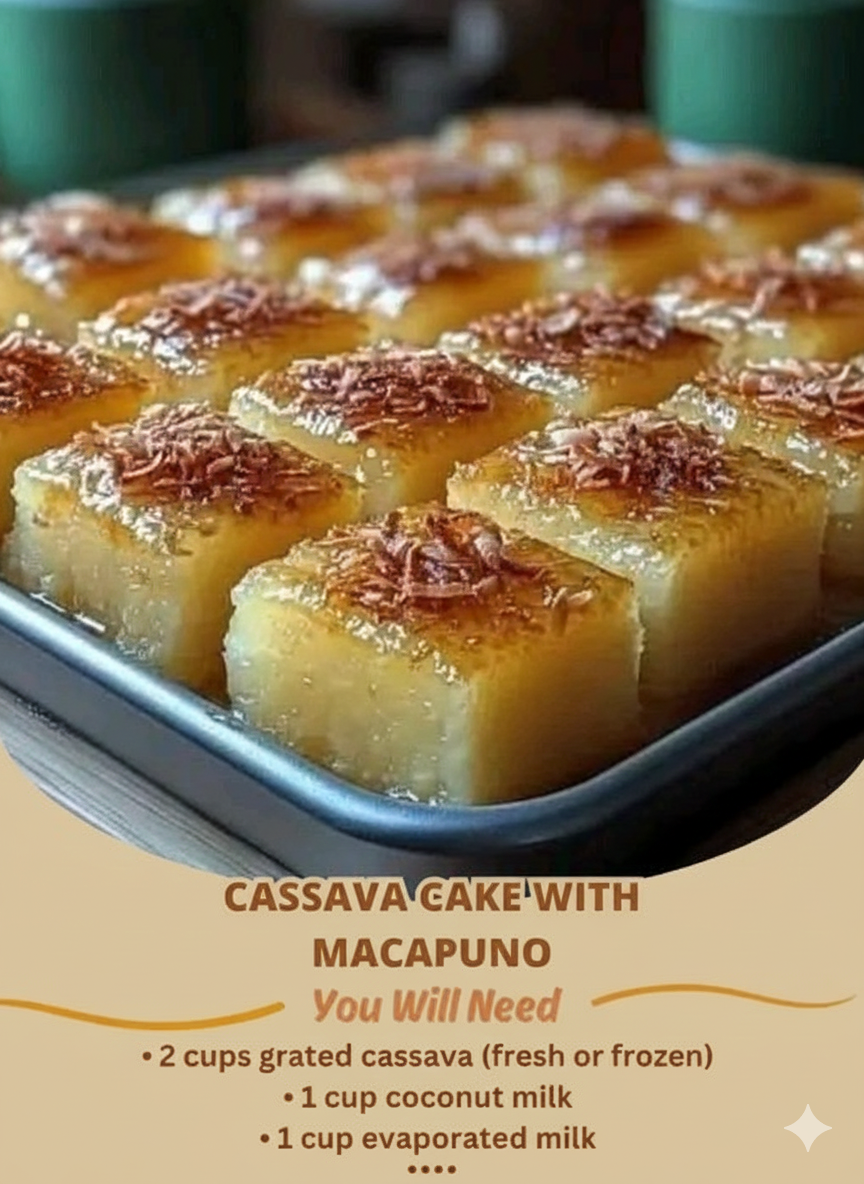
Cassava Cake with Macapuno
Cassava Cake with Macapuno is one of those treasured Filipino desserts that carries the warmth of family gatherings, the soft hum of shared stories, and the comforting richness of ingredients rooted deeply in tradition. It is a dish that has traveled from humble home kitchens to festive banquet tables, becoming a symbol of hospitality and celebration. This particular version, enriched with macapuno, offers a delightful twist on the classic cassava cake, giving it a luxurious texture and sweetness that turns every slice into a moment worth savoring. What makes cassava cake special is its remarkable ability to feel both rustic and elegant at the same time. Cassava, also known as yucca or manioc, is a staple root crop commonly used throughout Southeast Asia and many other regions of the world. When grated and combined with coconut milk, condensed milk, and eggs, it transforms into a tender, custard-like dessert with a subtly chewy texture and deeply comforting flavor. Adding macapuno—a soft, gelatinous coconut variety—introduces a silky richness that pairs beautifully with the cassava base. The result is a dessert that feels nostalgic yet elevated, simple yet indulgent, and endlessly customizable to different tastes or occasions. This extended guide is designed to offer not just a recipe but an immersive, informative culinary experience. Whether you are making cassava cake for the first time or revisiting a beloved family tradition, the detailed instructions, tips, and insights below will ensure that your cassava cake turns out perfectly every time. Each step has been thoughtfully explained so that even beginner bakers can confidently create a dessert that looks stunning, tastes exceptional, and carries the comforting spirit of Filipino home cooking. Before diving into the recipe, it is worth appreciating the functional beauty of the ingredients involved. Cassava provides structure, firmness, and a faint earthy sweetness. Coconut milk contributes richness and aroma. Condensed milk and sugar offer sweetness while also helping the cake set into its signature creamy texture. Evaporated milk gives body and depth. Butter adds flavor and tenderness. Eggs bind everything together, ensuring a smooth, cohesive bake. When these ingredients come together, each plays a vital role in creating the harmonious, delightful dessert we know as cassava cake. The inclusion of macapuno elevates this harmony to another level. Macapuno has a texture unlike regular coconut; it is soft, stretchy, and decadent without being heavy. When folded into cassava cake batter, macapuno adds smoothness and a special kind of melt-in-the-mouth effect that makes each bite memorable. Many modern versions of the recipe include macapuno because it adds a luxurious touch without complicating the preparation. Whether it is served during holidays, parties, potlucks, or even casual afternoon merienda, cassava cake remains a dependable crowd-pleaser.
Below is the complete, expanded recipe for a website-ready format.
Ingredients:
2 cups grated cassava, fresh or thawed if frozen
1 cup coconut milk
1 cup evaporated milk
1 cup condensed milk
3/4 cup granulated sugar
1/4 cup melted butter
2 large eggs
1 cup macapuno strings
Instructions:
Preheat your oven to 350°F (175°C). Prepare a baking dish, preferably an 8×8-inch or similarly sized pan, by greasing it lightly with butter or lining it with parchment paper to ensure easy removal once the cake is done. Set the pan aside while you prepare the batter. In a large mixing bowl, combine the grated cassava, coconut milk, evaporated milk, and condensed milk. Stir until the mixture becomes thick and cohesive, ensuring all ingredients blend together evenly. Add the sugar and melted butter, mixing again until everything is fully incorporated. Crack the eggs into a separate bowl and whisk until smooth. Add the beaten eggs to the cassava mixture, stirring to combine. The batter should now be creamy, slightly thick, and uniform in texture. Gently fold in the macapuno. Avoid overmixing to prevent breaking the macapuno strands into tiny shreds; keeping some length of the strands helps give the cake a pleasant texture. Pour the mixture into the prepared baking pan, smoothing the surface with a spatula. Bake for 45 to 55 minutes, or until the top becomes lightly golden and the center no longer jiggles when shaken. You may insert a toothpick into the center; if it comes out mostly clean with only a few moist crumbs, the cake is ready. Remove the cake from the oven and allow it to cool for at least 20 minutes before slicing. Cassava cake always tastes better once it has had time to settle, as the custard-like texture becomes firmer and easier to slice.
Serving Suggestions:
Cassava Cake with Macapuno can be served warm, at room temperature, or chilled. Warm slices highlight the custard softness, while chilled slices offer a firmer, denser bite. You can serve each slice plain or add a drizzle of condensed milk, coconut caramel sauce, or a dollop of whipped cream. For a richer finish, top with an additional layer of macapuno once the cake cools.
Storage Instructions:
This cake stores exceptionally well. Cover the cooled cake tightly with foil or plastic wrap and store it in the refrigerator for up to five days. If you wish to freeze it, wrap individual slices in plastic wrap, place them in an airtight container, and freeze for up to three months. Thaw at room temperature or gently warm in the microwave before serving.
Tips for Success:
Always thaw frozen cassava completely and drain any excess liquid before using. Use room temperature ingredients whenever possible to ensure even mixing. Do not reduce the eggs, as they help bind the dense batter. If you prefer a thicker custard-like finish, increase the condensed milk slightly. To achieve a browner top, switch to broil mode during the last two minutes of baking, but watch carefully to prevent burning. If the cake appears too wet after baking, give it additional time; cassava cakes vary in texture depending on the water content of the cassava. Allow the cake to cool partially before slicing to prevent breaking or crumbling.
Flavor Variations:
You can easily personalize this recipe with different mix-ins or toppings. Adding shredded young coconut, jackfruit strips, or a layer of cream cheese topping creates interesting variations. Some bakers like to incorporate a caramelized topping made from coconut cream and sugar, creating a leche flan inspired finish. Others add ube halaya to the batter for a visually stunning purple-and-white marbled effect.
Troubleshooting Guide:
If your cake turns out too runny, it may not have baked long enough or the cassava may have been too watery. Extend the baking time and ensure the cassava is properly drained. If the cake becomes too firm, reduce sugar or bake for a shorter time next round. If it cracks on top, this is usually normal and does not affect flavor. If it sticks to the pan, ensure generous greasing or use parchment next time. If the macapuno sinks, gently fold it in so it distributes evenly before baking.
Why This Recipe Works:
The combination of coconut milk and condensed milk creates a balanced sweetness while maintaining creaminess. Butter provides flavor depth and keeps the cake moist. Using both evaporated and condensed milk prevents the cake from being overly sweet or overly heavy. The eggs provide structure, ensuring the dense cassava mixture sets into a cohesive custard-like form. The macapuno ties everything together with richness and complexity. All these ingredients collaborate to form a dependable, comforting, and unforgettable dessert.
Cultural Notes:
Cassava cake is deeply cherished in Filipino cuisine, commonly found in celebrations such as fiestas, birthdays, holidays, and family reunions. Its affordability and simplicity make it accessible, while its flavor and satisfying texture give it standout appeal. Many households have their own unique version passed down through generations. Some prefer extra chewy cassava, others lean toward a custard-like top layer. This diversity is part of what makes cassava cake endlessly fascinating.
Presentation Ideas:
To elevate the dessert for special occasions, you can top the cake with toasted coconut flakes, dust it with powdered sugar, pipe whipped cream rosettes along the edges, or garnish with strips of preserved jackfruit. For a buffet-style setup, slice the cake into neat squares and place them in cupcake liners for easy serving.
Make-Ahead Option:
Cassava cake is perfect for meal prep or early preparation for events. You can make it a day ahead and refrigerate it; the flavor deepens and the texture improves overnight. You may also prepare the batter ahead of time and refrigerate it for up to 12 hours before baking.
Health and Ingredient Notes:
Cassava is naturally gluten-free, making this dessert ideal for those who avoid gluten. However, it is naturally starchy and calorie-dense. If desired, you may reduce the sugar slightly without altering texture too much. Avoid using low-fat coconut milk because it may affect the richness and final structure. Always ensure cassava is cooked, as raw cassava contains naturally occurring compounds that must be removed through heat.
With all these details in place, you now have not only a recipe but a complete guide to mastering Cassava Cake with Macapuno. Whether you prepare it for a family gathering, a potluck, or an afternoon treat, this recipe promises a dessert that is tender, fragrant, and deeply satisfying. The combination of cassava, coconut, and macapuno creates a timeless flavor experience that resonates with anyone who loves traditional Filipino sweets.