
Classic German Chocolate Cake: A Timeless American Favorite
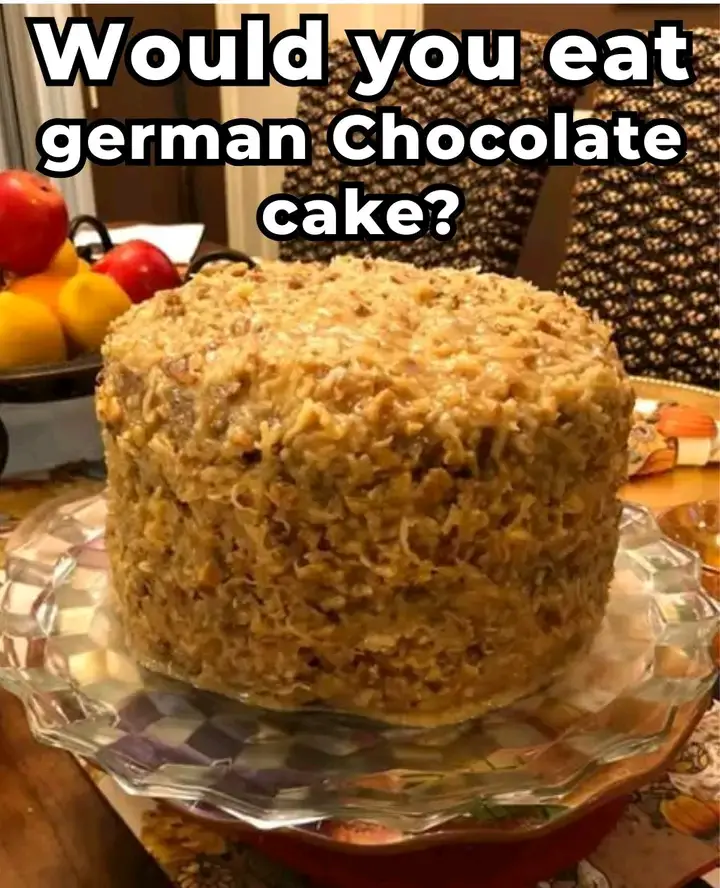
German Chocolate Cake is one of those iconic desserts that evokes nostalgia, celebration, and pure indulgence. With its moist, tender chocolate layers and that irresistible gooey coconut-pecan frosting, it’s a cake that’s beloved across generations. The image you shared captures it perfectly—a tall, beautifully frosted cake topped with that signature shaggy coconut-pecan topping, looking rich, inviting, and utterly delicious. Would I eat it? Absolutely—without hesitation!
Contrary to what the name suggests, this cake has nothing to do with Germany. It’s a purely American creation, and its story is as fascinating as its flavor. In this detailed guide, we’ll dive deep into everything you need to know about making the perfect German Chocolate Cake from scratch. We’ll cover its history, key ingredients, step-by-step instructions, expert tips for success, troubleshooting common issues, delicious variations, serving suggestions, storage advice, and even some nutritional insights. By the end, you’ll have a comprehensive recipe ready for your website—complete, engaging, and optimized for bakers of all levels.
This recipe yields a stunning three-layer 9-inch cake, serving 12-16 people. Prep time is about 45 minutes, baking time 30-35 minutes, and cooling/assembly another hour. Total time: around 2-3 hours.
The Surprising History of German Chocolate Cake
Many people assume German Chocolate Cake originated in Germany, perhaps alongside Black Forest Cake or other European tortes. But that’s a common misconception! The cake is 100% American, born in the mid-20th century.
The story begins in 1852 when Samuel German, an English-American chocolatier working for Baker’s Chocolate Company, developed a new type of dark baking chocolate. It was milder and sweeter than traditional dark chocolate, with about 48% cacao. The company named it “Baker’s German’s Sweet Chocolate” in his honor (note the possessive “German’s”).
Fast forward to 1957. A homemaker named Mrs. George Clay from Dallas, Texas, submitted a recipe called “German’s Chocolate Cake” to the Dallas Morning News as their “Recipe of the Day.” It used that specific Baker’s chocolate and featured layers of mild chocolate cake filled and topped with a rich coconut-pecan custard frosting. The recipe exploded in popularity, boosting sales of Baker’s chocolate by up to 73%. Over time, as it spread through newspapers and Baker’s packaging, the possessive “German’s” was dropped, leading to the name “German Chocolate Cake” we know today—and the false impression of German origins.
This cake quickly became a staple in American kitchens, especially for birthdays, holidays, and special occasions. It’s celebrated annually on National German Chocolate Cake Day (June 11). While traditional recipes stick close to the original, modern bakers have elevated it with richer chocolate flavors or creative twists. But at its core, it’s a comforting, decadent dessert that screams homemade goodness.
Why This Cake is So Special
What sets German Chocolate Cake apart is the perfect balance of flavors and textures:
- Mild chocolate cake: Not overwhelmingly rich or bitter—it’s tender, moist, and subtly chocolatey, thanks to the sweet baking chocolate.
- Coconut-Pecan Frosting: This isn’t a typical frosting. It’s a cooked custard made with evaporated milk, sugar, butter, and egg yolks, thickened on the stovetop and loaded with shredded coconut and chopped pecans. It’s gooey, nutty, caramel-like, and utterly addictive.
- Contrast: The mild cake lets the frosting shine, while the crunch of pecans and chew of coconut add incredible texture.
Many store-bought versions pale in comparison to homemade. Making it from scratch ensures fresh, vibrant flavors and that impressive layered look.
Ingredients: What You’ll Need
For the best results, use high-quality ingredients. This recipe stays true to tradition while incorporating tips from trusted sources like Baker’s original and popular adaptations.
For the Chocolate Cake Layers (makes three 9-inch layers):
- 1 (4-ounce) package Baker’s German’s Sweet Chocolate (or substitute with semisweet if unavailable)
- 1/2 cup water
- 2 cups all-purpose flour
- 1 teaspoon baking soda
- 1/4 teaspoon salt
- 1 cup (2 sticks) unsalted butter, softened
- 2 cups granulated sugar
- 4 large eggs, separated (yolks and whites)
- 1 teaspoon vanilla extract
- 1 cup buttermilk (for moisture and tang)
For the Coconut-Pecan Frosting:
- 1 1/2 cups evaporated milk (not sweetened condensed)
- 1 1/2 cups granulated sugar
- 3/4 cup (1 1/2 sticks) unsalted butter
- 4 large egg yolks, lightly beaten
- 1 1/2 teaspoons vanilla extract
- 2 cups sweetened shredded coconut (or flaked for more texture)
- 1 1/2 cups chopped pecans (toasted for extra flavor)
Optional: Double the frosting if you prefer extra-thick layers or want to frost the sides fully.
Step-by-Step Instructions
Step 1: Prepare Your Pans and Preheat the Oven
Preheat your oven to 350°F (175°C). Grease three 9-inch round cake pans with butter or shortening. Line the bottoms with parchment paper circles and grease the paper. Lightly flour the pans and tap out excess. This prevents sticking and ensures clean layers.
Pro tip: For even baking and flat tops, wrap pans with damp cake strips (or DIY with wet towels pinned around the pans).
Step 2: Make the Chocolate Cake Batter
- Break the German’s Sweet Chocolate into pieces. In a small saucepan over low heat, combine it with 1/2 cup water. Stir constantly until melted and smooth. Set aside to cool slightly.
- In a medium bowl, whisk together flour, baking soda, and salt.
- In a large mixing bowl, cream butter and sugar with an electric mixer on medium speed until light and fluffy (about 3-4 minutes).
- Add egg yolks one at a time, beating well after each. Blend in the melted chocolate and vanilla.
- Alternately add the flour mixture and buttermilk in thirds, starting and ending with flour. Mix just until combined—don’t overmix.
- In a separate clean bowl, beat egg whites to stiff peaks. Gently fold them into the batter with a spatula. This adds lightness and tenderness.
Step 3: Bake the Layers
Divide batter evenly among the three pans (about 2 cups per pan). Bake for 30-35 minutes, or until a toothpick inserted in the center comes out clean. Rotate pans halfway for even baking.
Cool in pans for 10 minutes, then invert onto wire racks. Peel off parchment and cool completely (about 1 hour). If layers dome, level with a serrated knife.
Step 4: Make the Coconut-Pecan Frosting
This is the star—don’t rush it!
- Toast pecans: Spread on a baking sheet and bake at 350°F for 6-8 minutes until fragrant. Cool and chop.
- In a heavy saucepan over medium heat, combine evaporated milk, sugar, butter, and egg yolks. Cook, stirring constantly, for 12-15 minutes until thickened and golden (it should coat the back of a spoon and reach about 170-180°F).
- Remove from heat. Stir in vanilla, coconut, and toasted pecans.
- Cool to room temperature, stirring occasionally. It will thicken as it cools.
Step 5: Assemble the Cake
- Place one layer on a serving plate. Spread about 1 cup frosting evenly over the top.
- Add second layer; spread another cup of frosting.
- Top with third layer; spread remaining frosting on top (traditionally, sides are left bare to show off the layers).
- For extra flair, garnish with whole pecans or coconut flakes.
Let set for 30 minutes before slicing.
Expert Tips for the Perfect German Chocolate Cake
- Room Temperature Ingredients: Eggs, butter, and buttermilk at room temp mix better for a smoother batter.
- Don’t Overbake: Check early—overbaked cake is dry.
- Toast Nuts and Coconut: Enhances flavor; toast coconut lightly if desired.
- Stir Frosting Constantly: Prevents scorching or curdling.
- Make Ahead: Bake layers a day ahead and wrap tightly. Frosting can be made 1-2 days in advance (refrigerate and rewarm gently).
- Substitutions: No German’s chocolate? Use 4 oz semisweet + 1 tbsp sugar. For dairy-free, adaptations exist but alter texture.
- Even Layers: Weigh batter for precision.
- Frosting Thickness: Cook longer for thicker; shorter for gooier.
Troubleshooting Common Issues
- Cake Sinking: Overmixed batter or underbaked—test with toothpick.
- Dry Cake: Measure flour correctly (spoon and level); don’t overbake.
- Runny Frosting: Cook longer next time; chill to thicken.
- Frosting Too Sweet: Use unsweetened coconut or reduce sugar slightly.
- Layers Sticking: Always line and grease pans well.
Delicious Variations to Try
While classic is king, experiment!
- Rich Chocolate Version: Add cocoa powder for deeper flavor; top with chocolate buttercream on sides.
- Upside-Down: Bake frosting on bottom for a gooey twist.
- Inside-Out: Chocolate ganache exterior, coconut filling inside.
- Cupcakes: Bake in liners; top with frosting.
- Bundt: Simpler one-pan version with glaze.
- Sheet Cake: 9×13 pan for easy serving.
- Boozy: Add rum to frosting.
Serving and Pairing Suggestions
Serve at room temperature for best flavor. Pair with coffee, milk, or vanilla ice cream. Ideal for birthdays, holidays, or potlucks—it’s a crowd-pleaser!
Storage and Make-Ahead Tips
- Room temp: 1-2 days covered.
- Refrigerator: Up to 5 days (cover cut edges).
- Freeze: Wrap unfrosted layers up to 3 months; frost after thawing.
Nutritional Information (Per Slice, Approx. 1/14th)
Calories: 550-650 | Carbs: 70g | Fat: 30g | Protein: 7g (varies by exact ingredients).
German Chocolate Cake is a labor of love, but the results are worth every minute. This homemade version will impress anyone—moist cake, decadent frosting, and that perfect nutty crunch. Bake it, share it, and enjoy the compliments. Happy baking!