
Introduction
German Rocks Cookies, also known as Old-Fashioned Spiced Fruit & Nut Cookies, are a delightful embodiment of hearty, rustic baking that evokes the warmth of holiday seasons and family gatherings. These substantial drop cookies are characterized by their dense, chewy texture, packed with chopped dates, crunchy nuts, and warm spices like cinnamon and nutmeg, all bound together in a buttery brown sugar dough. Unlike delicate sugar cookies or crisp shortbread, German Rocks have a rugged appearance and satisfying bite that lives up to their “rock” moniker, resembling small, irregular mounds that are both unpretentious and utterly addictive. Originating from Midwestern American traditions with a nod to German heritage, these cookies have become a beloved treat for those who appreciate flavors that improve with age, much like a fine wine or cherished memory. In today’s fast-paced world, where holiday baking often leans toward elaborate decorations and trendy flavors, German Rocks stand out as a timeless classic that prioritizes substance over show. They are the perfect companion for a cozy afternoon with coffee or tea, providing sustained energy through their nutritious mix of fruits and nuts, making them ideal for busy holiday preparations or outdoor winter activities.
The appeal of German Rocks lies not only in their robust taste but also in their versatility and storability. These cookies soften and meld flavors beautifully over a few days, becoming even more flavorful when stored in an airtight tin, a quality that makes them excellent for gifting or mailing to loved ones far away. For many, biting into a German Rock transports them back to childhood kitchens filled with the aroma of baking spices, or to visits to charming destinations like Frankenmuth, Michigan, where such treats are celebrated. Whether you’re a seasoned baker seeking to recreate a regional favorite or a newcomer exploring old-fashioned recipes, German Rocks offer a rewarding baking experience with minimal fuss—simple ingredients, straightforward steps, and maximum satisfaction. In this comprehensive guide, we’ll delve deep into their origins, cultural importance, precise ingredients, creative variations, expert tips, step-by-step instructions, sensory descriptions, nutritional breakdown, and more, inviting you to embrace this healthful indulgence that bridges tradition with modern mindful eating.
As we explore German Rocks Cookies in detail, you’ll discover why they’ve endured as a holiday staple in certain American households, particularly those influenced by German immigrant communities. Their name might conjure images of hardy German landscapes or sturdy Bavarian fare, but the story is richly American, intertwined with tourism and preservation of heritage in “Michigan’s Little Bavaria.” Prepare to be inspired to preheat your oven and fill your home with the irresistible scent of spiced dough baking to golden perfection.
Origin
The origins of German Rocks Cookies trace back to the Bavarian Inn in Frankenmuth, Michigan, a town affectionately dubbed “Michigan’s Little Bavaria” for its strong German-themed architecture, festivals, and cuisine. Frankenmuth was founded in 1845 by Lutheran missionaries from Bavaria who sought to establish a community rooted in faith and German traditions. Over time, the town evolved into a popular tourist destination, famous for its year-round Christmas spirit, massive Christmas store (Bronner’s), and iconic family-style chicken dinners at places like the Bavarian Inn Restaurant and Lodge. The Bavarian Inn, established in the late 19th century and expanded over generations by the Zehnder family, became renowned not only for its meals but also for its bakery items, including these distinctive cookies.
German Rocks are often credited as a signature treat derived directly from the Bavarian Inn’s recipes, with variations appearing in cookbooks and online sharing the same core ingredients: butter, brown sugar, spices, dates, and nuts. The “rocks” name likely refers to their irregular, mound-like shape and dense, hearty texture, which sets them apart from flatter or more refined cookies. While the name suggests pure German roots, the recipe is more accurately an American adaptation, blending Old World influences with Midwestern practicality. Similar cookies, such as “hermits” (spiced New England drop cookies with raisins and nuts) or “fruitcake cookies,” share parallels, but German Rocks distinguish themselves with dates as the primary fruit and a pronounced spice profile reminiscent of German holiday baking like Lebkuchen or Pfeffernüsse.
Historically, fruit and nut cookies like these emerged from necessity in eras when fresh produce was scarce, especially during winters or long voyages. Dried fruits and nuts provided preservation and nutrition, while spices masked any off-flavors and added luxury. In German-American communities, such recipes were passed down through families or popularized by inns and bakeries catering to visitors seeking authentic experiences. The Bavarian Inn’s version gained wider fame through tourists who tasted them on-site or purchased them from the castle shops bakery, leading to home recreations across the Midwest and beyond. Some variations even include a splash of whiskey for depth, hinting at older “rocks” recipes from the early 20th century. Today, while not as ubiquitously known as chocolate chip or oatmeal raisin cookies, German Rocks hold a special place in regional American baking lore, symbolizing comfort and endurance—much like the “rocks” they resemble.
Cultural Significance
German Rocks Cookies hold significant cultural value within German-American heritage, particularly in communities that celebrate preserved European traditions in the New World. In Frankenmuth, these cookies are emblematic of the town’s commitment to Bavarian culture, even though the recipe itself is a 20th-century American creation inspired by older fruit-nut drop cookies. They represent the fusion of immigrant roots with local innovation, much like how Frankenmuth’s famous chicken dinners blend German techniques with American abundance. During the holiday season, when Frankenmuth transforms into a winter wonderland with lights, glockenspiel performances, and Christmas markets, treats like German Rocks evoke the coziness of German Weihnachten (Christmas) while being firmly rooted in Midwestern hospitality.
Culturally, these cookies signify endurance and sustenance—perfect for harsh Michigan winters or busy holiday schedules. Their long shelf life and improving flavor over time mirror traditions of baking in advance for Advent or Christmas Eve gatherings. In broader American cookie culture, German Rocks align with “hermit” or “rock” cookies popular in New England and Pennsylvania Dutch areas, where German settlers influenced baking with spices and dried fruits. They stand as a counterpoint to overly sweet modern treats, emphasizing natural sweetness from dates and brown sugar, alongside the crunch of nuts. For many families, baking German Rocks is a ritual that connects generations, often shared at church bazaars, potlucks, or as gifts in decorative tins.
In a contemporary context, German Rocks promote mindful indulgence: packed with fiber-rich fruits and protein-packed nuts, they offer a more nutritious alternative to processed snacks. As interest in heritage recipes surges, these cookies are rediscovered on blogs and social media, celebrating regional diversity in American cuisine. They remind us that food is a vessel for story-telling, linking us to places like Frankenmuth’s sister city in Germany and the immigrant dreams that built such vibrant communities.
Ingredients Quantity
To make approximately 36 German Rocks Cookies, gather the following precise quantities of ingredients. This recipe yields hearty, generously sized cookies that are true to the original rustic style.
- 1 cup (226 grams) unsalted butter, softened to room temperature for easy creaming.
- 1 ½ cups (300 grams) brown sugar, packed firmly to ensure richness and moisture.
- 2 large eggs, at room temperature for better incorporation.
- 1 teaspoon pure vanilla extract, for subtle aromatic depth.
- 2 ½ cups (300 grams) all-purpose flour, spooned and leveled to avoid dense results.
- 1 teaspoon baking soda, for the perfect lift without overpowering rise.
- 1 teaspoon ground cinnamon, providing the primary warm spice note.
- ½ teaspoon ground nutmeg, adding earthy complexity.
- ½ teaspoon salt, to balance sweetness and enhance flavors.
- 1 cup (150 grams) chopped dates, pitted and finely diced for even distribution.
- 1 cup (120 grams) chopped walnuts or pecans, toasted if desired for intensified nutty taste.
- 1 cup (150 grams) raisins, optional but traditional for added chewy sweetness and texture.
These measurements are based on standard U.S. baking conventions and have been tested for consistency. Using weight measurements (grams) ensures accuracy, especially with flour and butter, leading to reliably tender yet sturdy cookies every time.
Optional Additions
While the classic recipe shines in its simplicity, German Rocks are highly adaptable, allowing bakers to personalize without straying from tradition. Consider these optional additions to elevate flavor or texture.
A splash of 1-2 tablespoons bourbon or whiskey soaked into the dried fruits beforehand adds a sophisticated, mature depth, common in some vintage variations. For a citrus brightness, incorporate 1 teaspoon grated orange or lemon zest into the dough. Dried cranberries or cherries (½ cup) can substitute or supplement raisins for a tart contrast and festive color. Chocolate lovers might fold in ½ cup semi-sweet chocolate chips for indulgent pockets of melt. To amp up spices, add ¼ teaspoon ground cloves or allspice for a more pronounced holiday profile reminiscent of German gingerbread.
For texture twists, include ½ cup shredded coconut or swap some nuts for almonds or hazelnuts. A light glaze of powdered sugar mixed with milk or orange juice drizzled post-baking provides a sweet finish, though purists prefer them plain to highlight natural flavors. Vegan adaptations could use plant-based butter and flax eggs, while gluten-free flour blends work well with minor adjustments. These options keep the cookies versatile for dietary needs or creative experimentation.
Tips for Success
Achieving perfect German Rocks requires attention to a few key techniques that ensure chewy interiors, crisp edges, and balanced flavors. First, always use room-temperature butter and eggs; this promotes even creaming and prevents greasy or tough dough. Toast nuts lightly in a 350°F oven for 8-10 minutes before chopping—this intensifies their flavor and crunch without burning.
The dough will be thick and sticky due to the fruit and nut load; resist overmixing after adding dry ingredients to avoid tough cookies. If it seems too dry and crumbly, incorporate 1-2 tablespoons milk or fruit juice gradually. Chilling the dough for 30 minutes (or overnight) makes scooping easier and helps cookies hold shape during baking.
Use a cookie scoop for uniform portions, placing them 2 inches apart on parchment-lined sheets to allow spreading. Bake just until edges are golden—overbaking leads to dry rocks! Cool on the sheet for 5 minutes before transferring to racks; this sets the structure. Store in airtight containers at room temperature; flavors peak after 1-2 days as spices meld. For longer storage, freeze baked cookies up to 3 months or dough balls for fresh-baked convenience. Finally, weigh ingredients for precision, and taste dough for seasoning adjustments before baking.
Instructions
Follow these detailed step-by-step instructions for foolproof German Rocks Cookies.
- Prepare the Dough: Begin by creaming 1 cup softened unsalted butter with 1 ½ cups packed brown sugar in a large mixing bowl using an electric mixer on medium speed. Beat until the mixture is light, fluffy, and pale in color, about 3-4 minutes; this incorporates air for tender texture. Add 2 large eggs one at a time, beating well after each addition to fully emulsify. Scrape down bowl sides as needed. Stir in 1 teaspoon vanilla extract until combined.
- Combine Dry Ingredients: In a separate medium bowl, whisk together 2 ½ cups all-purpose flour, 1 teaspoon baking soda, 1 teaspoon cinnamon, ½ teaspoon nutmeg, and ½ teaspoon salt. This ensures even distribution of leavening and spices, preventing pockets of bitterness or uneven rise.
- Mix Wet and Dry: Gradually add the dry mixture to the wet ingredients in three additions, mixing on low speed just until incorporated. Overmixing develops gluten, leading to chewy toughness rather than pleasant density. The dough should be thick but cohesive.
- Add Fruit & Nuts: Gently fold in 1 cup chopped dates, 1 cup chopped nuts, and 1 cup raisins (if using) with a sturdy spoon or spatula. Distribute evenly; the dough will become very chunky—this is the hallmark of authentic German Rocks.
- Chill (Optional but Recommended): Cover and refrigerate dough for at least 30 minutes to firm up, making shaping easier and enhancing flavor melding.
- Preheat and Shape: Preheat oven to 350°F (175°C) with racks in upper and lower thirds. Line baking sheets with parchment paper. Drop dough by rounded tablespoons (or use a #40 scoop for 2-tablespoon portions) onto sheets, spacing 2 inches apart.
- Bake: Bake 10-12 minutes, rotating sheets halfway, until edges are lightly golden and centers appear set but still soft. Do not overbake for chewy results.
- Cool: Let cookies cool on sheets 5 minutes, then transfer to wire racks to cool completely. They firm up as they cool.
Yield: About 36 cookies. Enjoy fresh or aged for deeper flavor.
Description
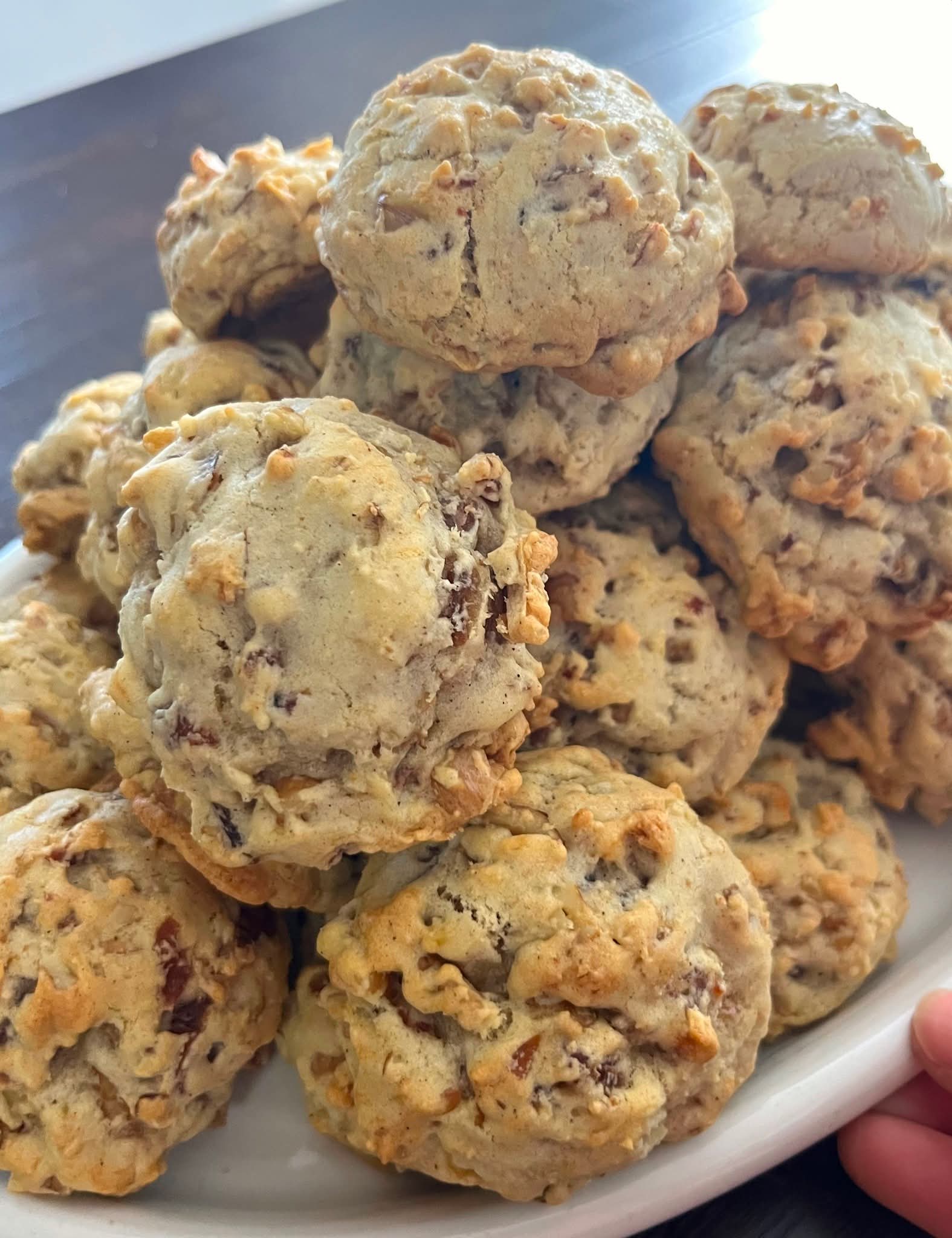
German Rocks Cookies are a sensory delight from the moment the dough hits the oven, filling your kitchen with an intoxicating aroma of warm cinnamon, nutmeg, toasted nuts, and caramelizing brown sugar that evokes holiday nostalgia. Visually, they are unpretentious yet inviting: irregular, mounded drops with craggy surfaces studded with dark date pieces, golden raisin flecks, and nut chunks peeking through a lightly cracked, golden-brown exterior. The edges crisp slightly while the centers remain densely chewy, offering a satisfying contrast in every bite.
Flavor-wise, these cookies strike a perfect balance—not overly sweet, with brown sugar providing molasses depth complemented by vanilla’s subtle warmth. Cinnamon and nutmeg deliver cozy spice without overwhelming, while dates contribute natural, fig-like sweetness and chewiness. Nuts add buttery crunch and earthiness, and optional raisins bring bursts of juicy tang. The overall taste is comforting and substantial, like a portable energy bar disguised as dessert: hearty enough for breakfast alongside coffee, yet indulgent for evening treats. As they age, flavors intensify, spices bloom, and textures soften slightly, making day-old German Rocks even more irresistible. Paired with milk, hot cocoa, or mulled wine, they embody rustic elegance.
Nutritional Information
Per cookie (based on 36 cookies per batch, including optional raisins; values approximate using standard nutritional databases):
- Calories: 140-160 kcal
- Total Fat: 7-9g (Saturated Fat: 3-4g)
- Carbohydrates: 18-22g (Dietary Fiber: 1-2g, Sugars: 12-14g)
- Protein: 2g
- Sodium: 80-100mg
- Key Micronutrients: Good source of manganese from spices, vitamin E from nuts, and potassium from dates.
These cookies offer moderate calories for their satisfying size, with fats primarily from butter and nuts (healthy monounsaturated sources). Fiber from fruits and nuts aids digestion, while natural sugars provide sustained energy. Compared to typical holiday cookies, German Rocks are relatively nutrient-dense, making them a smarter indulgence. Individual values vary with exact ingredients and portion size; consult apps like MyFitnessPal for precise tracking.
Conclusion
German Rocks Cookies encapsulate the essence of heartfelt, unpretentious baking that has warmed generations through cold seasons and joyful celebrations. From their roots in Frankenmuth’s Bavarian Inn to home kitchens across America, these spiced fruit and nut treasures remind us of the simple pleasures in life: a chunky dough scooped onto a sheet, the transformative magic of the oven, and the shared joy of a cookie that tastes better with time. In a world of fleeting trends, German Rocks endure as a testament to tradition, nutrition, and flavor harmony.
Recommendation
I highly recommend baking a batch of German Rocks this holiday season—or any time you crave comforting, energy-boosting treats. Double the recipe for gifting, or halve for a small household. Pair with strong coffee for afternoons or milk for kids. They’re ideal for cookie exchanges, care packages, or simply stocking your tin for impromptu visitors.
Embracing Healthful Indulgence
In an era prioritizing wellness, German Rocks exemplify healthful indulgence: real ingredients, portion-controlled satisfaction, and nutrients from whole foods like dates (rich in fiber and antioxidants) and nuts (heart-healthy fats and protein). Enjoy without guilt, savoring each bite mindfully. These cookies prove that tradition and health can coexist deliciously, encouraging us to bake with intention and indulge with gratitude. Roll up your sleeves, gather your ingredients, and create your own rock-solid memories today.