
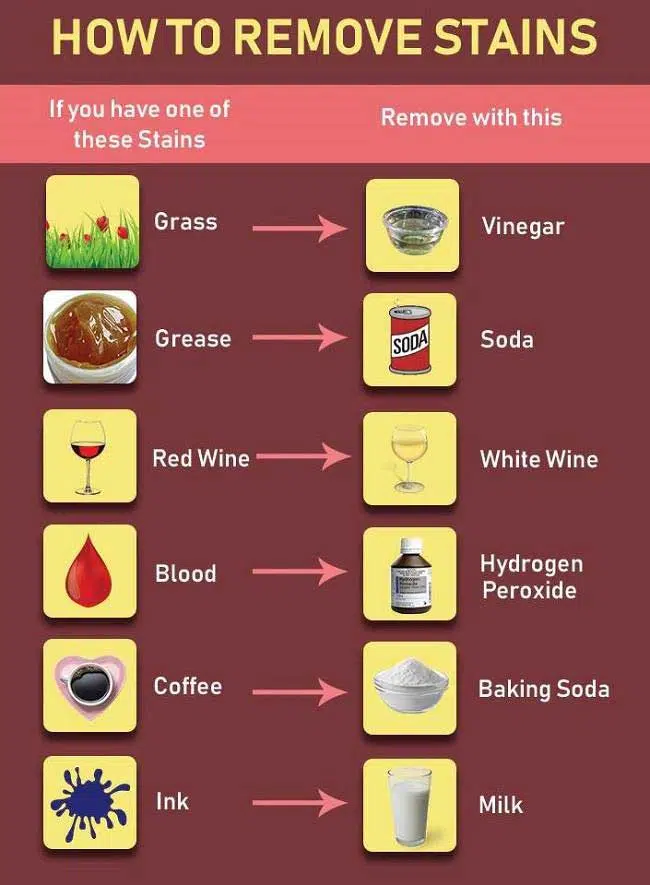
Handy Chart Tells You How To Remove Any Type Of Stain – The Ultimate Guide To Saving Your Clothes, Fabrics, And Household Surfaces
There are few moments more frustrating than the instant you spill something on a brand-new shirt, favorite pair of pants, or a freshly washed piece of fabric. For many people, stains feel like an unavoidable part of daily life. A splash of red wine at dinner, a drop of tomato sauce while cooking, ink marks from a pen at work, grease splatter while frying, or even grass stains after a day outdoors. No matter how careful you try to be, stains happen. The good news is that most stains are not permanent. In fact, the majority of stains can be completely removed with the right method, the right timing, and the right household supplies. The key is knowing what works for each type of stain. That is why a well-designed stain removal chart can be life-changing. It takes the guesswork out of cleaning and gives you immediate answers when a stain emergency happens.
This article provides an in-depth guide to understanding stains, tackling them immediately, and using a practical, easy-to-follow chart that tells you exactly what to use for each type. Whether you are dealing with red wine, ink, grease, mud, coffee, sweat, chocolate, blood, berries, makeup, or anything in between, having a reference chart ensures that you never panic again. The science of stain removal is surprisingly fascinating once you understand that stains fall into categories. Some are protein-based, some are oil-based, some are dye-based, and others are tannin-based. Each category requires a different treatment. For example, a red wine stain behaves differently from an ink stain, and treating an oil stain the same way you would treat a grass stain can actually make it worse. This is why people often struggle with stains, not because they cannot be removed, but because they are treated incorrectly.
A stain removal chart eliminates this problem entirely. It organizes stains into types and pairs each type with the correct cleaning solution. This chart becomes a quick reference tool that can be printed and hung in a laundry room, saved on a phone, or kept in a cleaning binder. With it, you never waste time wondering what to do, and you never end up ruining fabrics by choosing the wrong method.
Why a Stain Removal Chart Is So Useful
Most people panic when they see a stain, especially if it happens on a favorite piece of clothing or something expensive. The instinct is to grab the nearest cleaner, rub the fabric, or throw the item straight into the washing machine. Sadly, these reactions often make stains worse. Rubbing can set the stain deeper. Using the wrong cleaner can cause discoloration. Washing before pretreating can permanently set certain types of stains. A stain removal chart prevents mistakes. It gives a step-by-step reference that you can follow the moment a spill happens. It tells you what works and, just as importantly, what does not.
A chart is also helpful because no one can memorize every stain solution. You might remember that white wine helps lift red wine stains, but you may not know that milk can remove ink, or that baking soda is perfect for sweat stains. You might know that vinegar helps with odors, but not that cold water is essential for blood stains. Having a chart nearby gives you confidence. You know exactly where to look, what to grab, and how to act within seconds.
Immediate Treatment Is Essential
One of the biggest keys to successful stain removal is timing. The longer a stain sits, the harder it becomes to remove. Fresh stains are far easier to treat because the particles have not yet bonded with the fibers. That is why acting quickly makes such a big difference. A stain removal chart also encourages fast action. If a spill happens, you quickly reference the chart and begin treatment rather than delaying or guessing. Acting within minutes can be the difference between saving a fabric and losing it.
The Most Common Types of Stains and How the Chart Helps
A useful stain removal chart typically covers a wide range of common stains. Each stain type has its own behavior and requires a specific method. Below is an overview of the most frequent stains and how a chart helps you remove them.
Red Wine Stains
Red wine is one of the stains people fear most because of its strong color and tendency to spread. The chart usually recommends blotting immediately, never rubbing, and using white wine or salt to neutralize the tannins. Cold water and a gentle detergent finish the job.
Ink Stains
Ink stains are intimidating, but milk is a surprisingly effective solution. Soaking the stained area in milk helps break down the pigments so they lift away easily. Rubbing alcohol is another option. A stain chart clarifies which method to use based on the type of fabric.
Grease and Oil Stains
Grease stains from cooking oil, butter, or food splatter need something that can cut through oil. Soda water is one solution, while dish soap is another, because it breaks down oils. The chart reminds you never to use hot water at first, as it can set the stain.
Tomato Sauce Stains
Tomato-based sauces contain both oil and pigment, making them tricky. A stain chart advises using a mixture of cold water, dish soap, and sometimes baking soda. Quick blotting is essential. The chart also explains that tomato stains require patience and multiple rounds of treatment.
Coffee and Tea Stains
These are tannin-based stains. The chart typically recommends cold water flushing followed by mild detergent or vinegar. For older stains, a paste of baking soda can help lift discoloration.
Chocolate Stains
Chocolate contains both fat and cocoa solids. A chart instructs you to gently remove excess chocolate, rinse with cold water, and apply dish soap. Hot water should be avoided initially because it melts the fats into the fibers.
Blood Stains
This is one of the most important stains to treat correctly. A stain chart emphasizes the use of cold water only. Hot water sets blood permanently. Hydrogen peroxide may be recommended for light-colored fabrics. A chart prevents costly mistakes.
Grass Stains
Grass stains contain chlorophyll, which acts like a natural dye. The chart usually suggests a mixture of vinegar or rubbing alcohol to break down the green pigments.
Sweat Stains
These stains often appear on white shirts and can cause yellow discoloration. Baking soda paste, vinegar, and hydrogen peroxide are typical recommendations. The chart explains safe quantities to avoid fabric damage.
Makeup Stains
Foundations and lipstick are oil-based, while powders are pigment-based. A stain removal chart helps classify each one and gives the best cleaning agent, often including dish soap or rubbing alcohol.
Why Every Home Should Have a Stain Removal Chart
A stain removal chart is a practical tool for every household. Families with children especially benefit from having one because spills are inevitable. The chart empowers parents, teenagers, and even older kids to handle stain emergencies properly. It also saves money by reducing the number of clothing items ruined by incorrect treatment. In a world where people are increasingly conscious about sustainability, reducing waste and extending the life of clothing is more important than ever. A stain chart supports this effort.
Additionally, a stain chart reduces stress. When you know that you have a reliable guide, you never panic about spills on carpets, couches, bedding, shirts, or tablecloths. You simply check the chart, follow the steps, and the problem is resolved.
How to Use and Store Your Handy Stain Chart
Once printed, the stain removal chart should be placed in a practical location. The best spot is inside a laundry room, near the washing machine, or attached to a wall for quick access. Some people laminate the chart so it resists moisture and lasts longer. Others keep a digital version on their phone. The important thing is accessibility. A stain chart needs to be easy to reach at the moment of a spill.
Creating Good Habits for Stain Prevention
While spills cannot always be avoided, adopting small habits can make a difference. Wearing aprons during cooking, teaching children to remove clothing after outdoor play, checking pockets for pens, using lids for drinks, and avoiding eating in a rush all reduce stain risk. The chart serves as a backup plan when accidents do happen.
Final Thoughts
Understanding how different stains work and having a reliable reference to treat them correctly transforms frustrating accidents into manageable moments. The handy stain removal chart is more than a cleaning tool; it is a practical guide to protecting your clothes, saving money, reducing waste, and bringing peace of mind. Whether you are dealing with a stubborn red wine spill, a pen that leaked in a pocket, a grease splatter from dinner, or a mysterious stain that appeared from nowhere, this chart becomes your trusted companion. Keeping a printed copy in your laundry room ensures you are always prepared, and once you begin using it, you will wonder how you ever lived without it.