
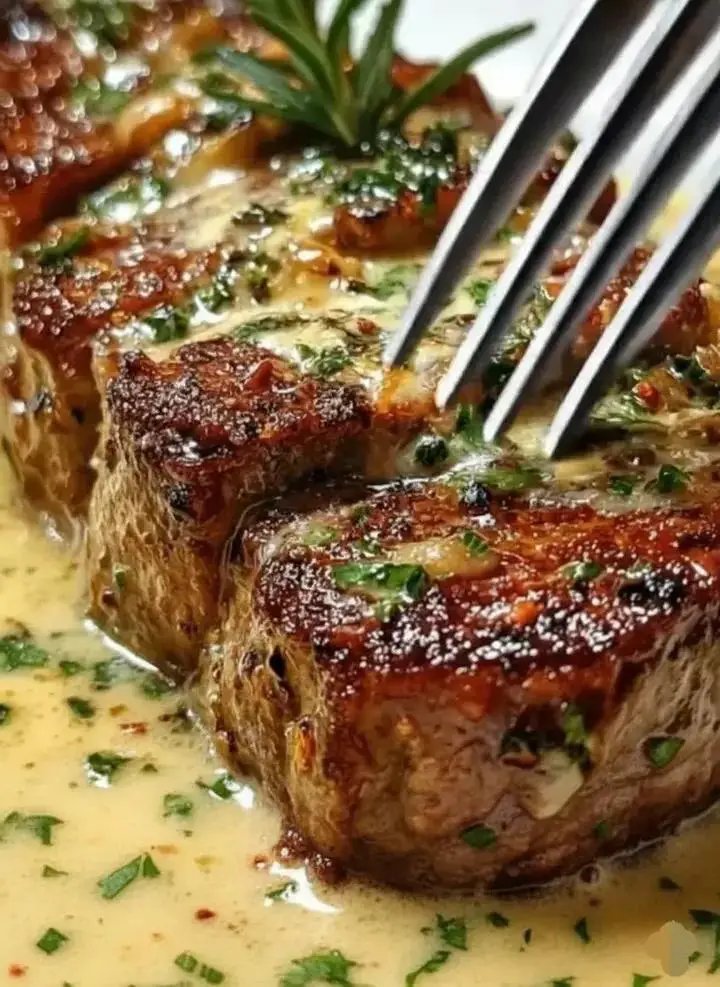
The Definitive Guide to Herb Butter Steak with Creamy Garlic: A Masterclass in Flavor, Technique, and Tradition
The steak is more than just a meal; it is a culinary icon. Across the globe, from the bistros of Paris to the high-end steakhouses of New York City, the combination of high-quality beef and aromatic fats is considered the gold standard of cooking. Among the various preparations, the Herb Butter Steak with Creamy Garlic stands out as the ultimate expression of balance. It combines the primal, charred notes of seared protein with the sophisticated, velvety richness of an emulsified garlic-butter sauce.
In this exhaustive guide, we will explore every facet of this dish. We will go beyond the simple list of ingredients to understand the “why” behind every movement in the kitchen. Whether you are a novice looking to impress or a seasoned home cook seeking to refine your sear, this guide provides the depth and detail necessary to master the art of the steak.
The Philosophy of the Ingredients
To understand this recipe, one must first respect the components. With only a handful of ingredients—beef, oil, butter, and garlic—there is nowhere for poor quality to hide.
The Beef: Ribeye vs. Sirloin
The recipe calls for two thick-cut steaks, specifically suggesting ribeye or sirloin. The choice here dictates the entire sensory experience of the dish.
The Ribeye is the connoisseur’s choice for luxury. Derived from the rib section of the cow, it is characterized by its heavy marbling—the intramuscular fat that looks like white lace against the red meat. During the cooking process, this fat melts (or “renders”), basting the meat from the inside out. This results in a steak that is incredibly juicy and carries a buttery mouthfeel even before the actual butter is added.
The Sirloin, particularly the Top Sirloin, offers a different profile. It is leaner and firmer. While it lacks the decadent fat of the ribeye, it possesses a deep, “beefy” flavor that many purists prefer. Because it is leaner, the technique of butter-basting (Arrosé) is even more critical here, as the butter provides the moisture and fat that the cut naturally lacks.
The Fat: A Dual-Stage Approach
We use both olive oil and unsalted butter. This is not redundant; it is a tactical necessity. Olive oil (or a neutral oil like avocado oil) has a higher smoke point, allowing us to achieve the initial high-heat sear without the fat breaking down and releasing toxic smoke. Butter, however, contains milk solids and water. If used at the start, these solids would burn, turning black and bitter. By adding the butter halfway through, we capture its nutty, browned-butter (beurre noisette) qualities without the acridity of burnt milk.
The Garlic: A Study in Aromatics
Garlic is a transformative ingredient, but its flavor profile changes based on how it is handled. In this recipe, we use two methods:
- Crushed Cloves: By smashing the cloves but leaving them mostly whole, we allow the oils to infuse into the butter gently. This creates a background note of garlic that permeates the meat without the risk of small bits of garlic sticking to the steak and burning.
- Minced Cloves: These are saved for the “Creamy Garlic” finish. Because they are finely chopped, they release more allicin, providing a sharper, more immediate garlic punch that forms the heart of the pan sauce.
Pre-Cook Preparations: The Foundation of Success
The most common mistakes in steak cooking happen before the pan even touches the stove.
The Tempering Process
Taking your steaks out of the refrigerator at least 45 to 60 minutes before cooking is non-negotiable. This is called “tempering.” A steak that is 40°F in the center will not cook evenly when hit with a 450°F pan. The outside will be charred to a crisp by the time the internal temperature reaches a safe medium-rare. By bringing the meat closer to room temperature, you ensure a uniform heat transfer from the surface to the core.
The Importance of Surface Moisture
If there is one “secret” to a restaurant-quality crust, it is a dry surface. Moisture is the enemy of the Maillard reaction. When a wet steak hits a hot pan, the heat is immediately used to evaporate the water. This creates steam, which “boils” the surface of the meat, leading to a grey, unappetizing exterior. You must use paper towels to pat the steaks dry on all sides—including the edges—until the paper no longer picks up moisture.
Seasoning Strategies
Salt is the only seasoning that can actually penetrate the fibers of the meat. We recommend using Coarse Kosher salt. The larger grains allow for better control and create a beautiful texture on the crust. Salt your steaks heavily. Much of the salt will fall off in the pan or be left in the fat, so do not be afraid to season more than you think is necessary.
The Cooking Process: A Step-by-Step Masterclass
Phase 1: The Initial Sear
Choose a heavy-bottomed pan, ideally cast iron. Cast iron has high thermal mass, meaning it won’t drop in temperature when the cold meat is added.
Place the pan over high heat until the olive oil begins to shimmer and produce a tiny wisps of smoke. This is your signal. Lay the steaks into the pan, laying them away from your body to prevent hot oil splashes. Press down lightly with a spatula to ensure the entire surface of the meat is in contact with the metal.
Leave them alone. For 3 to 4 minutes, do not move, poke, or flip the steaks. You are waiting for the Maillard reaction to work its magic, creating a complex layer of toasted sugars and proteins.
Phase 2: The Flip and the Butter Baste
Once you flip the steaks, you will see a mahogany-brown crust. Now, we move into the “Flavor Phase.”
Lower the heat slightly to medium-high. Add two tablespoons of the butter and the two crushed garlic cloves. As the butter melts and begins to foam, it will pick up the essence of the garlic. Tilt the pan slightly so the butter pools at one end. Use a large spoon to scoop this bubbling, aromatic gold and pour it repeatedly over the steaks. This is called Arrosé. The hot butter cooks the top of the steak while the pan cooks the bottom, and the garlic-infused fat seeps into every crevice of the meat.
Phase 3: The Creamy Garlic Finish
After the steaks have reached your desired internal temperature, remove them from the pan. They must rest.
While they rest, look at your pan. It is filled with “fond”—the brown bits of concentrated flavor stuck to the bottom. Add the remaining tablespoon of butter and the minced garlic. The garlic will sizzle and turn golden in seconds. Because the pan is already seasoned with the steak juices and the crushed garlic, this creates a concentrated “Creamy Garlic” effect. If you desire a thicker sauce, a teaspoon of heavy cream added at this stage will emulsify with the butter to create a pourable silk.
The Resting Period: Molecular Science at Work
Resting the meat is as important as searing it. Inside a cooking steak, the muscle fibers are tightening and pushing the juices toward the center. If you cut the steak immediately, these juices will rush out, leaving the meat dry and tough.
By resting the steak for 10 minutes on a warm plate or wooden board, you allow the temperature to equalize and the muscle fibers to relax. The juices redistribute throughout the cut, ensuring that every bite is as moist as the last. During this time, the internal temperature will also rise by about 5 degrees—this is called “carry-over cooking.”
Comprehensive Troubleshooting
Why is my steak tough?
Toughness usually comes from one of two things: the quality of the cut or overcooking. If you chose a sirloin, ensure you are cutting “against the grain” (perpendicular to the muscle fibers) when serving. This shortens the fibers and makes the meat easier to chew.
Why did my garlic burn?
Garlic has a high sugar content and a low water content, making it very susceptible to burning. If your pan is too hot when you add the minced garlic, it will turn black and bitter. Always lower the heat or even remove the pan from the burner for a few seconds before adding the minced garlic.
How do I achieve a perfect medium-rare?
Stop relying on the “touch test.” The only way to be 100% certain is a digital meat thermometer. For a perfect medium-rare, pull the steak off the heat when it hits 130°F (54^\circ C). The carry-over cooking during the rest will bring it to the ideal 135°F (57^\circ C).
Conclusion
The Herb Butter Steak with Creamy Garlic is a testament to the power of technique over complexity. By understanding the physics of heat, the chemistry of the Maillard reaction, and the importance of ingredient quality, you can transform a simple piece of beef into a world-class meal. This recipe is a journey of the senses—the sizzle of the pan, the aroma of browning butter, and the sight of a perfectly rested, ruby-red steak.