
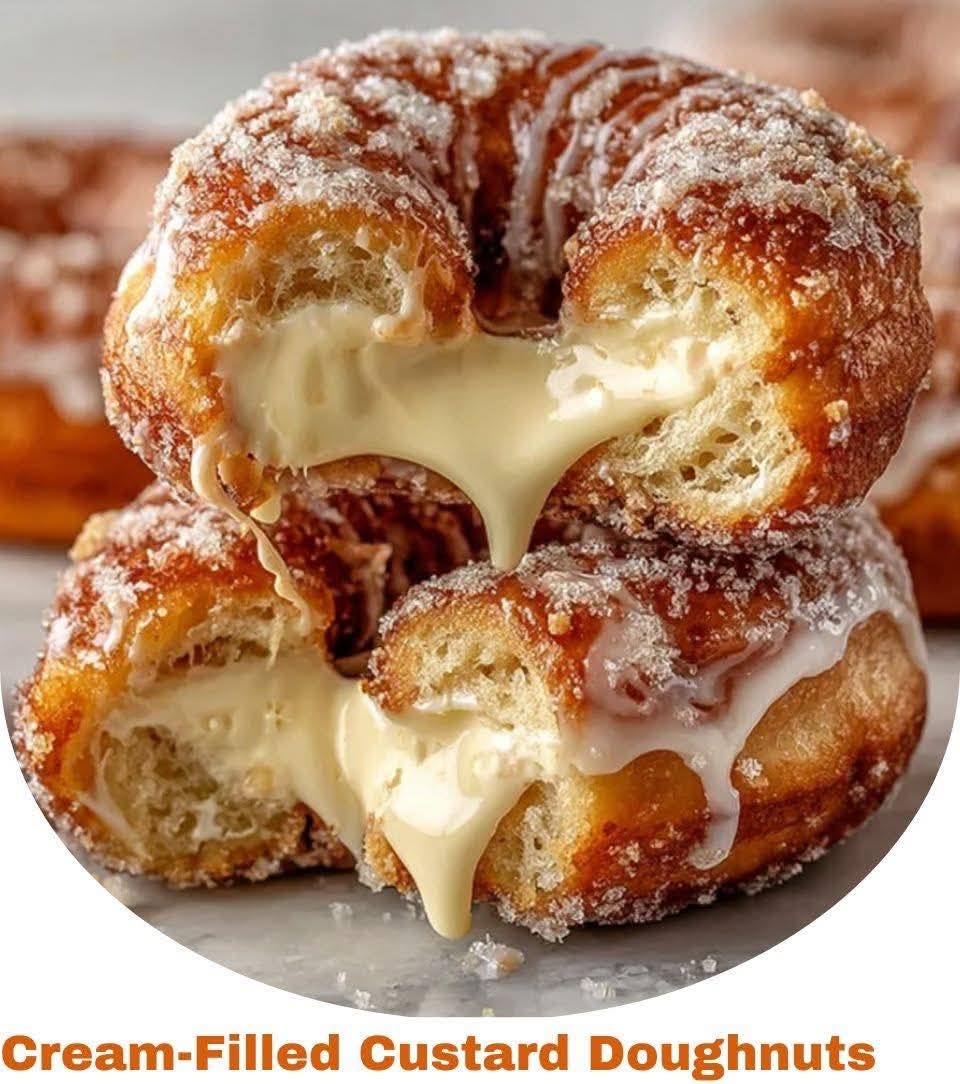
Soft, pillowy fried doughnuts filled with silky vanilla custard and topped with glossy chocolate glaze—a classic bakery favorite made at home. These treats combine tender yeast dough, rich creamy filling, and decadent chocolate for an unforgettable indulgence. Perfect for special occasions or whenever you crave something truly special.
Introduction
Homemade cream-filled custard doughnuts, inspired by the iconic Boston cream style, bring the magic of a professional bakery right into your kitchen. The process starts with a light and airy yeast dough that rises beautifully, creating pockets of softness ready to be fried to golden perfection. Once filled with smooth, chilled vanilla custard and dipped in shiny chocolate glaze, they become irresistible bites of heaven.
Making these doughnuts from scratch is a rewarding experience that connects you deeply with the art of baking. Unlike store-bought versions, homemade ones offer fresher flavors, customizable sweetness, and that satisfying pride of creation. The aroma of frying dough mixed with vanilla and chocolate will fill your home, drawing everyone to the kitchen in anticipation.
This recipe yields 12 to 14 generous doughnuts, enough to share with family or friends during gatherings. While it involves multiple steps and some waiting time for rising and chilling, each phase builds toward an exceptional result. Whether you’re an experienced baker or trying fried doughnuts for the first time, the effort pays off in every delicious bite.
These doughnuts represent more than just a dessert—they evoke comfort, nostalgia, and celebration. Enjoy them warm and fresh for the ultimate texture contrast between crisp exterior and creamy interior. They remind us why certain classics never fade, delivering joy with every indulgent mouthful.
Origin
The journey of the Boston cream doughnut begins with the Boston cream pie, a dessert invented in 1856 at the historic Parker House Hotel in Boston, Massachusetts. Created by Armenian-French chef M. Sanzian, this innovative treat featured layers of sponge cake sandwiched with vanilla custard and finished with a chocolate glaze. At a time when chocolate toppings were rare in American desserts, this combination was revolutionary.
The name “Boston cream pie” is somewhat misleading because it’s actually a cake baked in pie tins, a common practice in 19th-century kitchens lacking specialized cake pans. It evolved from earlier filled cakes like the American pudding-cake pie or Washington pie. The Parker House, now known as the Omni Parker House, continues to serve the original recipe, maintaining its legacy as a cornerstone of American culinary history.
The transformation into a doughnut form came later in the 20th century, adapting the cake’s elements into a portable fried pastry. Filled with the same rich vanilla custard and topped with chocolate, it became a handheld version of the beloved pie. Bakeries across New England embraced this innovation, turning it into a regional specialty.
In the mid-20th century, chains like Dunkin’ Donuts popularized the “Boston Kreme” doughnut nationwide, making it accessible to millions. This exposure elevated it from local treasure to American icon. Today, it stands alongside other filled doughnuts but remains distinctive for its custard and chocolate combination.
Official recognition came in 2003 when Massachusetts declared the Boston cream doughnut the state doughnut, complementing the pie’s status as state dessert since 1996. This honors its deep ties to Boston’s food heritage and enduring popularity.
Cultural Significance
The Boston cream doughnut holds profound cultural meaning in American food traditions, especially in New England where it symbolizes innovation and comfort. As Massachusetts’ official state doughnut, it represents regional pride and the state’s rich history of culinary contributions. From luxury hotel origins to everyday treats, it bridges social classes through shared enjoyment.
In popular culture, it’s inextricably linked to Dunkin’ Donuts, a Massachusetts-founded chain that turned it into a national staple. The “Boston Kreme” became synonymous with quick breakfasts, coffee breaks, and road trips across the country. For many, biting into one evokes childhood memories of bakery visits or family traditions.
Beyond the Northeast, it appears in bakeries and home kitchens throughout the U.S. and Canada, embodying the American affinity for indulgent yet approachable desserts. Its presence in media, cookbooks, and social sharing highlights its role in modern food culture. Often featured in “best doughnut” lists, it competes with jelly-filled or glazed varieties while maintaining unique appeal.
The doughnut distinguishes itself culturally from similar pastries like Bavarian cream (typically powdered) or European cream-filled versions. Its chocolate glaze sets it apart, creating a signature look and taste that people instantly recognize. During holidays or events, it frequently appears as a festive treat, reinforcing its place in celebrations.
Ultimately, the Boston cream doughnut celebrates accessible luxury in American cuisine—a reminder that great flavors can come from simple, well-executed ideas. It fosters connections, sparks joy, and continues evolving while honoring its roots.
Ingredients Quantity
Doughnuts (Makes about 12-14)
The foundation starts with 3½ cups (440g) of all-purpose flour, plus extra for dusting surfaces during rolling and shaping. This provides the structure and chew essential for classic doughnut texture. Combined with ¼ cup (50g) granulated sugar for subtle sweetness and yeast activation.
Next, 2¼ teaspoons (7g) instant yeast, equivalent to one standard packet, acts as the primary leavening agent. A ½ teaspoon of salt balances flavors and strengthens gluten development. The liquid components include ¾ cup (180ml) whole milk warmed to about 110°F (43°C) for optimal yeast activity.
Richness comes from ¼ cup (57g) unsalted butter, melted and cooled to avoid killing yeast. Two large eggs at room temperature bind everything while adding tenderness and color. Finally, about 2-3 quarts of neutral vegetable oil like canola or peanut for frying ensures clean flavor and high smoke point.
Vanilla Custard Filling
The creamy heart requires 2 cups (480ml) whole milk as the base for smoothness and richness. Sweetened with ½ cup (100g) granulated sugar that also aids thickening. Four large egg yolks contribute velvety texture and golden hue.
Thickening relies on ¼ cup (30g) cornstarch for a firm yet silky set that pipes beautifully. Two tablespoons (28g) unsalted butter stirred in off-heat adds gloss and flavor depth. Flavoring comes from 2 teaspoons pure vanilla extract, or alternatively one split and scraped vanilla bean for authentic specks and aroma.
Chocolate Glaze
The crowning touch uses 1 cup (170g) semi-sweet chocolate chips or finely chopped chocolate for balanced cocoa intensity. Combined with ½ cup (120ml) heavy cream to create a luxurious ganache consistency. Two tablespoons (28g) unsalted butter enhances shine and mouthfeel.
Optional 1 tablespoon light corn syrup prevents crystallization for professional gloss. A pinch of salt heightens chocolate notes without overpowering sweetness. These precise measurements ensure harmony across all components.
Optional Additions
While purity defines the classic Boston cream doughnut, thoughtful additions can elevate or personalize without straying too far. For the custard, infusing the milk with a cinnamon stick or coffee beans during heating introduces warm or mocha undertones. A splash of rum or bourbon adds sophisticated depth for adult versions.
In the dough, incorporating a teaspoon of nutmeg or cardamom brings subtle spice that complements vanilla beautifully. Orange zest mixed into the dough offers bright citrus notes contrasting the richness. Some bakers add a tablespoon of sour cream for extra tenderness.
The glaze invites creativity—stir in espresso powder for intensified chocolate flavor or peanut butter for a decadent twist. Dusting filled doughnuts with cocoa powder instead of glaze creates variety. Mini chocolate chips sprinkled on wet glaze add texture.
For seasonal flair, pumpkin puree or spices in fall custard variations maintain creaminess while celebrating holidays. Berry reductions swirled into custard provide fruity brightness. These options encourage experimentation while respecting tradition.
Always taste and adjust gradually to preserve balance. Optional additions should enhance rather than dominate the core flavors of vanilla, chocolate, and fried dough.
Tips for Success
Success with these doughnuts hinges on careful technique throughout each stage, starting with custard preparation. Make it a full day ahead to ensure proper chilling and firmness for piping. Constant whisking during cooking prevents lumps or scorching—patience here yields silkiness.
For dough, accurate milk temperature is crucial—use a thermometer to hit 110°F precisely. Knead thoroughly until the dough passes the windowpane test, indicating strong gluten for light texture. Allow full rising time in a warm environment; rushing leads to dense results.
When shaping, roll evenly and cut cleanly to promote uniform frying. Avoid overworking scraps to prevent toughness. During the second rise, watch for puffiness without overproofing, which causes oil absorption or collapse.
Frying requires vigilance—maintain oil temperature strictly between 350-360°F. Use a deep-fry thermometer and fry in small batches to avoid drops. Drain thoroughly on racks rather than paper towels for crispness.
Filling works best with a proper Bismarck tip; insert gently and fill until resistance builds. Glaze while slightly warm for smooth coverage. Consume fresh for peak enjoyment—these shine brightest on preparation day.
Clean workspace and organized mise en place streamline the multi-step process. Practice builds confidence, especially with frying safety.
Instructions
Step 1: Prepare the Vanilla Custard Filling (Best done in advance)
Begin by heating 2 cups whole milk in a medium saucepan over medium flame until small bubbles form at edges—avoid boiling. In a separate bowl, vigorously whisk egg yolks, sugar, and cornstarch until pale and ribbon-like. This incorporates air for smoother final texture.
Gradually temper by pouring half the hot milk into the egg mixture while whisking constantly to prevent curdling. Return everything to the saucepan and cook over medium heat, stirring without pause. The mixture will thicken dramatically and bubble gently within minutes.
Remove immediately from heat and incorporate butter and vanilla until fully melted and combined. For ultimate refinement, strain through a fine sieve to eliminate any cooked egg bits. Cover surface directly with plastic wrap and refrigerate until completely cold and set.
Step 2: Make the Dough
In a large bowl or stand mixer, combine 3 cups flour with sugar, yeast, and salt. Add warmed milk, cooled melted butter, and room-temperature eggs. Mix until a shaggy dough forms, then knead intensively.
Incorporate remaining flour gradually during 8-10 minutes of kneading until smooth, elastic, and slightly tacky. Test by stretching a small piece thinly—if it forms a translucent window without tearing, it’s ready. Place in greased bowl, cover, and rise 1-1½ hours until doubled.
Step 3: Shape the Doughnuts
Deflate risen dough gently to release gas pockets. Roll on floured surface to ½-inch thickness, maintaining even pressure. Cut rounds with 3-4 inch cutter, avoiding twists that seal edges.
Transfer to parchment-lined sheets with ample spacing. Re-roll scraps once only. Cover loosely and proof 30-45 minutes until visibly puffy and delicate to touch.
Step 4: Fry the Doughnuts
Heat 3 inches oil in heavy pot to 350-360°F, monitoring constantly. Fry 2-3 doughnuts at once, turning once midway, for 1-2 minutes per side until deep golden. Adjust heat to maintain temperature stability.
Remove with slotted spoon to wire rack for thorough draining. Cool completely before proceeding—warm doughnuts cause runny filling.
Step 5: Make the Chocolate Glaze
Place chocolate in heatproof bowl. Heat cream and butter to simmering, then pour over chocolate. Wait one minute before whisking from center outward until glossy and uniform.
Add optional corn syrup and salt, stirring well. Maintain gentle warmth for easy dipping consistency.
Step 6: Assemble the Doughnuts
Fill piping bag with chilled custard and long narrow tip. Insert into cooled doughnut side and pipe generously until heavy and custard peeks slightly. Repeat for all.
Dip filled tops into warm glaze, allowing excess to drip cleanly. Rest on rack until glaze firms, about 10-15 minutes.
Description
These homemade Boston cream-style doughnuts present an exquisite sensory experience from first glance to final bite. Golden-brown exteriors gleam subtly from frying, with characteristic slight cracks revealing tender interior. The chocolate glaze cascades smoothly over rounded tops, setting to a shiny shell.
Cutting reveals abundant pale yellow custard filling that oozes invitingly, contrasting the fluffy white dough. Aromas blend warm fried dough, intense vanilla, and deep chocolate in perfect harmony. The first bite delivers crisp exterior yielding to ethereal softness.
Custard bursts forth—cool, creamy, and luxuriously smooth against the warm dough. Chocolate glaze provides bittersweet balance, melting slightly on tongue and fingers. Each element complements the others, creating layered flavors and textures that demand another taste.
Visually appealing with custard peeking from filling holes and glaze dripping elegantly. They embody comfort food elevated to artistry—simple ingredients transformed into something extraordinary. Sharing them creates moments of pure delight.
Nutritional Information
Each homemade Boston cream doughnut typically contains 320-380 calories depending on exact size and frying absorption. Carbohydrates dominate at 45-50 grams primarily from flour and sugars in dough, custard, and glaze. Fats contribute 16-20 grams from oil, butter, cream, and chocolate.
Protein ranges 5-7 grams thanks to eggs and milk components. Key micronutrients include calcium from dairy, iron from flour fortification, and small amounts of vitamins A and D. Sodium stays moderate around 250-350mg.
Compared to commercial versions like Dunkin’ (approximately 300 calories), homemade offers similar profile but potentially higher quality ingredients. Frying method affects final fat content—proper draining minimizes excess. Custard and glaze add significant saturated fats.
While undeniably indulgent, they provide energy from balanced macros. Enjoying occasionally within varied diet allows appreciation without guilt. Portion awareness enhances mindful consumption.
Conclusion
Crafting homemade Boston cream-style doughnuts culminates in profound satisfaction—from planning ingredients to final glazing. This journey through history, technique, and flavor reaffirms why certain desserts endure across generations. The results transcend ordinary baking, delivering professional quality in home setting.
Each component—fluffy dough, silky custard, glossy glaze—harmonizes beautifully when executed with care. Fresh preparation elevates them far above store versions, highlighting the magic of handmade food. Sharing these treats creates lasting memories and connections.
The process teaches patience, precision, and joy in creation. Whether recreating tradition or adding personal touches, the recipe empowers confident baking. Ultimately, these doughnuts celebrate life’s sweet moments made extraordinary through effort and love.
Recommendation
This recipe earns enthusiastic recommendation for any baking enthusiast seeking a challenging yet rewarding project. Ideal for weekends when time allows full attention to rising and frying stages. The impressive results make perfect gifts or party contributions.
Beginners should follow instructions closely while experienced bakers can experiment confidently. Pair with fresh coffee, tea, or milk for classic accompaniment. Store properly but prioritize same-day enjoyment for optimal texture.
Overall, the effort-to-reward ratio proves exceptional—few homemade treats match this level of indulgence and sophistication. Try it once, and it will become a cherished recipe in your collection.
Embracing Healthful Indulgence
Boston cream doughnuts exemplify how indulgence and mindfulness can coexist beautifully in balanced eating. Savoring them occasionally as special treats nourishes emotional well-being alongside physical needs. Quality homemade versions using real ingredients often satisfy more deeply than frequent processed alternatives.
Mindful preparation—choosing good chocolate, pure vanilla, fresh eggs—enhances both flavor and slight nutritional benefits. Portion control comes naturally when appreciating labor involved. Pairing with fruit or protein creates more complete enjoyment.
Viewing such desserts as celebration foods rather than daily staples preserves their magic. Physical activity and varied nutrition throughout the day provide context for guilt-free pleasure. These doughnuts remind us that joy in eating includes occasional decadence.
Embracing them wholeheartedly within moderation fosters positive food relationships. They teach that healthful living encompasses pleasure, not restriction alone. Ultimately, life’s sweetness includes treats like these shared with gratitud