
Avocados are no longer a casual grocery item—they are a premium fruit, often purchased with specific meals and nutritional goals in mind. Cutting into an avocado only to discover brown flesh, an unpleasant smell, or a mushy texture is frustrating and costly. Even worse, many perfectly edible avocados are thrown away simply because they are misunderstood.
We believe that knowing how to tell if an avocado is safe to eat is an essential kitchen skill. With proper evaluation, we can reduce food waste, save money, and enjoy avocados at their peak flavor and nutritional value. This comprehensive guide explains exactly how to assess avocado ripeness and safety using texture, appearance, aroma, and taste, without guesswork.
Understanding How Avocados Ripen
Avocados are unique because they do not ripen on the tree. Ripening begins only after harvesting, which means the fruit continues to change dramatically from the moment it reaches the store.
Once ripe, an avocado remains at peak quality for a very short window—typically two to three days at room temperature. Refrigeration can slow this process, but timing remains critical. Understanding ripening behavior allows us to judge whether an avocado is underripe, perfectly ripe, overripe, or spoiled.
The Gentle Squeeze Test: The Most Reliable Indicator
Why Texture Matters More Than Color
Color varies by variety and growing conditions, making it unreliable on its own. Firmness, however, tells the true story.
How to Perform the Test Correctly
Hold the avocado in the palm of your hand and apply gentle, even pressure. Avoid pressing with fingertips, which can bruise the flesh and create false softness.
What Firmness Tells Us
- Rock hard and unyielding
The avocado is underripe. It is safe to eat but unpleasant in texture and flavor. Leave it at room temperature for 2–5 days. - Slightly soft with gentle give
This is perfectly ripe. Ideal for slicing, dicing, salads, and toast. - Soft with minor indentations
This avocado is very ripe and best suited for guacamole, spreads, or blending. - Mushy with deep dents that remain
Likely overripe. Further inspection is required before consumption.
Reading the Skin: What the Exterior Reveals
Hass Avocados: The Most Common Variety
Hass avocados change color as they ripen:
- Bright green and bumpy – underripe
- Dark green to purplish-brown – ripe
- Nearly black and very soft – overripe
Wrinkled or sunken skin often indicates internal breakdown.
Green-Skin Varieties: Fuerte, Bacon, Zutano
These varieties remain green even when ripe, making texture the primary indicator. Never rely on color alone when evaluating green-skin avocados.
The Stem Cap Test: A Quick Visual Clue
Remove the small stem nub at the top of the avocado.
- Green underneath – ripe and safe to eat
- Yellowish – nearing ripeness
- Brown or black – likely overripe or spoiled
If the stem resists removal, the avocado is usually underripe.
Inspecting the Flesh After Cutting
Once sliced open, the interior provides definitive answers.
Safe and Fresh Avocado Flesh
- Uniform light green to pale yellow color
- Smooth, creamy texture
- No unpleasant odor
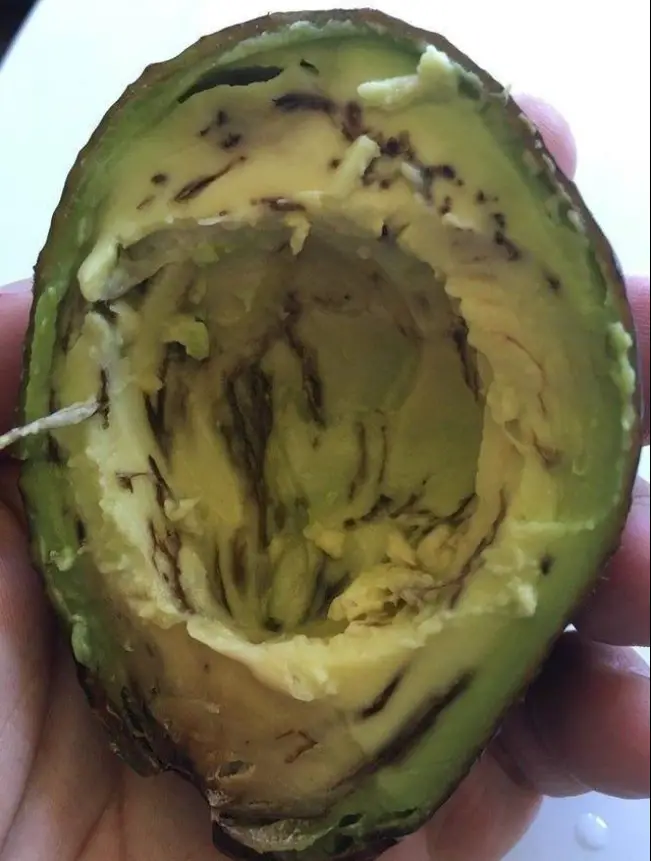
Still Edible with Minor Imperfections
- Small brown spots
- Thin dark streaks near the pit
- Slight discoloration caused by bruising
These areas can be safely trimmed away.
When to Discard Immediately
- Extensive brown or black patches
- Gray or watery flesh
- Excessively stringy texture
- Mold growth near the pit or skin
If discoloration runs deep throughout the flesh, the avocado is no longer safe to eat.
Smell Test: Identifying Spoilage Instantly
A fresh avocado has a subtle, nutty aroma. Any strong or unpleasant smell is a warning sign.
Discard the Avocado If It Smells Like:
- Sour or fermented food
- Vinegar
- Chemicals or plastic
- Rotten oil
These odors indicate rancid fats or bacterial spoilage.
Taste Test: The Final Confirmation
If the avocado looks and smells fine but doubt remains, a tiny taste can confirm safety.
- Mild, buttery flavor – safe to eat
- Bitter or sour taste – discard immediately
Never consume more than a small nibble if uncertainty exists.
Brown Flesh: Dangerous or Just Oxidation?
Not all browning is spoilage. Avocados oxidize quickly when exposed to air, similar to apples.
Oxidation (Safe)
- Light brown surface
- Appears shortly after cutting
- No smell or texture change
Spoilage (Unsafe)
- Dark brown or black flesh
- Mushy consistency
- Unpleasant odor
Oxidized avocados are safe if the flesh underneath remains green and firm.
Proper Storage to Extend Avocado Freshness
Storing Whole Avocados
- Unripe: Room temperature
- Ripe: Refrigerate to extend freshness by 2–3 days
Storing Cut Avocados
- Leave the pit intact
- Brush exposed flesh with lemon or lime juice
- Wrap tightly or store in an airtight container
- Refrigerate immediately
These steps slow oxidation and bacterial growth.
Health Risks of Eating Spoiled Avocados
Consuming spoiled avocado may cause:
- Nausea
- Stomach cramps
- Food poisoning symptoms
Moldy avocados should never be eaten, even after trimming, as mold can penetrate deeper than visible areas.
Quick Reference Table: Is Your Avocado Safe to Eat?
| Condition | Texture & Appearance | Safe to Eat? |
|---|---|---|
| Underripe | Hard, no give | Yes, after ripening |
| Perfectly Ripe | Slightly soft, green flesh | Yes |
| Very Ripe | Soft, minor brown spots | Yes, best mashed |
| Overripe | Mushy, widespread browning | No |
| Spoiled | Sour smell, mold, black flesh | No |
Final Thoughts: Eat Smarter, Waste Less
Understanding how to know if an avocado is safe to eat empowers us to make confident decisions in the kitchen. Texture, smell, and internal appearance provide far more reliable information than color alone. By mastering these simple checks, we reduce waste, protect our health, and enjoy avocados at their absolute best.