
Introduction
Banana bread holds a special place in the hearts of many home bakers around the world, offering a perfect blend of comfort, simplicity, and delicious flavor that makes it an enduring favorite. This moist, sweet quick bread transforms overripe bananas into a delightful loaf that’s ideal for breakfast, snack time, or dessert, evoking warm memories of home kitchens filled with inviting aromas. In this detailed blog post, we’ll explore my personal favorite recipe, which strikes a wonderful balance between richness and lightness through thoughtful ingredients like unsweetened applesauce.
What makes this banana bread stand out is its tender crumb, subtle sweetness, and natural banana essence that shines without overwhelming sugar or fat. It’s a recipe I’ve refined over time, drawing from classic traditions while incorporating modern tweaks for better texture and appeal. Whether you’re a seasoned baker or just starting out, this version is forgiving and rewarding, producing a golden-topped loaf that’s hard to resist slicing into while still warm.
This guide will take you through every aspect of the recipe, from its historical roots to practical tips, ensuring you can recreate it with confidence and perhaps even make it your own family staple. We’ll delve into the origins that tie it to resourceful cooking, its cultural role as a symbol of comfort, and how simple ingredients come together for something truly special. By the end, you’ll not only have a reliable recipe but also an appreciation for why banana bread continues to captivate generations.
Origin
The story of banana bread begins in the early 20th century United States, when bananas became more accessible to everyday households thanks to improved importation and refrigeration techniques. Bananas were first introduced to North America in the late 1800s, but it wasn’t until the 1930s that recipes using mashed bananas started appearing widely in cookbooks. This timing coincided with the widespread availability of chemical leavening agents like baking soda and baking powder, which allowed for the creation of “quick breads” that rose reliably without yeast.
Many historians point to the Great Depression as a key catalyst for banana bread’s popularity, as frugal homemakers sought ways to avoid wasting overripe bananas during times of economic hardship. Rather than discarding spotted fruit, creative cooks mashed them into batters, harnessing their natural sweetness and moisture to stretch ingredients further. This resourceful approach turned a potential waste into a nourishing treat, embodying the era’s spirit of ingenuity.
Corporate influences also played a role, with companies like United Fruit Company (later Chiquita) and baking powder manufacturers promoting banana-inclusive recipes to boost sales of their products. Early printed recipes appeared in publications from Pillsbury and Better Homes and Gardens, solidifying banana bread’s place in American cuisine. Over the decades, it evolved from simple, bran-filled loaves of the 1930s to richer versions in postwar years, reflecting changing tastes and ingredient availability.
Banana bread’s roots trace back even further if considering banana use in baking globally, with influences from Southeast Asia where bananas originated, though the modern loaf form is distinctly American. In places like the Philippines, introduced during the American colonial period, it’s often called banana cake and adapted with local twists. Today, its origin story reminds us of how necessity and innovation can birth beloved classics that transcend time.
The surge in banana bread baking during the 2020 COVID-19 lockdowns highlighted its enduring appeal as a comforting, pantry-friendly activity during uncertain times. This recipe, with its applesauce for added moisture, echoes that tradition of making the most of what’s on hand while delivering exceptional results.
Cultural Significance
Banana bread occupies a unique niche in culinary culture, symbolizing comfort, nostalgia, and homey simplicity across generations and regions. In American households, it’s often associated with family traditions—grandmothers passing down recipes, mothers baking loaves for school lunches, or families gathering around the kitchen as the scent fills the air. This quick bread represents approachable baking, requiring no fancy equipment and forgiving minor mistakes, making it a gateway for novice cooks.
During challenging periods, banana bread emerges as a beacon of solace and resourcefulness. Its Depression-era beginnings tied it to thriftiness, while recent pandemics saw a global resurgence as people turned to baking for stress relief and connection. Social media amplified this, with countless shares of homemade loaves fostering a sense of community even in isolation.
Culturally, banana bread bridges everyday indulgence with subtle health perceptions—using fruit as a base makes it feel virtuous compared to cakes, even if sweetened. It’s a staple in coffee shops, brunch menus, and potlucks, often evoking warmth and hospitality. Variations worldwide reflect local flavors: steamed versions in Asia, nut-heavy in the Caribbean, or spiced in Latin America, showing its adaptability.
In popular media, banana bread frequently appears in stories of domestic life, reinforcing its role as emotional nourishment. National Banana Bread Day on February 23 celebrates this, encouraging bakes that bring joy. For many, it’s more than food—it’s a ritual of care, turning humble ingredients into shared happiness.
This recipe’s inclusion of applesauce nods to healthier modern interpretations, aligning with cultural shifts toward balanced treats without sacrificing pleasure. Banana bread’s significance lies in its ability to comfort, unite, and inspire creativity in kitchens everywhere.
Ingredients Quantity
To make this delightful banana bread, you’ll need the following precise quantities, yielding one standard loaf that serves about 10-12 slices. The measurements ensure a balanced flavor and texture, with ripe bananas providing natural sweetness and moisture.
- 3 ripe bananas (preferably spotted or blackened for maximum flavor and ease of mashing)
- 3 large eggs (room temperature for better incorporation)
- 1/2 cup salted butter (softened or melted for richness)
- 1/2 cup unsweetened applesauce (adds moisture and subtle fruitiness without extra sugar)
- 1/4 cup brown sugar (packed, for depth and caramel notes)
- 1/4 cup white granulated sugar (for even sweetness)
- 1/2 teaspoon cinnamon powder (ground, for warm spice)
- 1/2 teaspoon baking powder (for lift)
- 1/2 teaspoon baking soda (reacts with acids for tenderness)
- 1 1/2 cups all-purpose flour (regular, sifted if possible for lightness)
These quantities create a batter that’s not overly sweet, allowing the bananas to star while the applesauce keeps it exceptionally moist. Using salted butter eliminates the need for added salt, streamlining the process. Always opt for very ripe bananas—they’re key to the bread’s signature taste and help reduce reliance on refined sugars.
Optional Additions
While this recipe shines in its simplicity, optional additions can elevate it to suit your preferences or add exciting textures and flavors. Start with small amounts and adjust to taste, folding them in gently after combining wet and dry ingredients.
Common enhancements include 1/2 to 1 cup of chopped nuts like walnuts or pecans for crunch and nutty depth, complementing the banana beautifully. Chocolate chips—semi-sweet or dark—bring indulgent pockets of melted goodness, turning it into a dessert-like treat.
For fruit twists, try 1/2 cup dried cranberries, raisins, or blueberries for bursts of tartness or chewiness. Shredded coconut adds tropical flair and texture, while a swirl of peanut butter creates a salty-sweet profile.
Spices can be boosted with nutmeg, cardamom, or ginger for warmth. Zest from orange or lemon brightens the loaf, and a topping of streusel (brown sugar, flour, butter, and cinnamon) provides a crunchy crown.
Healthier options like oats for fiber, seeds (chia or flax) for omega-3s, or even grated zucchini for extra moisture work well. These additions keep the bread versatile, allowing personalization without overpowering the core banana essence.
Tips for Success
Achieving the perfect banana bread requires attention to a few key details that ensure moistness, even rise, and golden perfection every time. First, use extremely ripe bananas—the blacker the better—as they mash easily and impart intense flavor and natural sweetness.
Preheat your oven thoroughly to 350°F and prepare a standard loaf pan by greasing it or lining with parchment for easy release. Mix wet ingredients vigorously to emulsify, then gently fold in dry to avoid overdeveloping gluten, which can toughen the loaf.
Don’t overmix the batter; stop when just combined for a tender crumb. For even baking, place the pan in the center rack and rotate halfway if your oven has hot spots.
Test doneness with a toothpick inserted in the center—it should come out clean or with moist crumbs, around 50-60 minutes. Internal temperature of 200-205°F guarantees it’s cooked without drying out.
Let the loaf cool in the pan for 10 minutes before transferring to a rack—this prevents sogginess or breaking. Store wrapped tightly to retain moisture for days.
These tips, honed from experience, transform good banana bread into exceptional, helping you avoid common pitfalls like sinking centers or dry edges.
Instructions
Follow these straightforward steps for flawless results, taking about 10 minutes of prep and 50-60 minutes baking time.
Begin by preheating your oven to 350°F (175°C) and greasing a 9×5-inch loaf pan or lining it with parchment paper for effortless removal.
In a large mixing bowl, mash the 3 ripe bananas thoroughly with a fork until smooth and lump-free, releasing their full flavor potential.
Add the 3 eggs, 1/2 cup softened salted butter, 1/2 cup unsweetened applesauce, 1/4 cup brown sugar, and 1/4 cup white sugar to the mashed bananas, whisking vigorously until fully combined and creamy.
Next, incorporate the dry ingredients: sift or whisk together the 1 1/2 cups flour, 1/2 teaspoon cinnamon, 1/2 teaspoon baking powder, and 1/2 teaspoon baking soda, then add to the wet mixture.
Stir gently with a spatula or wooden spoon until just combined—do not overmix to keep the texture light and tender.
Pour the batter into the prepared loaf pan, smoothing the top evenly for uniform baking.
Bake in the preheated oven for 50-60 minutes, or until the top is golden brown and a toothpick inserted in the center emerges clean.
Allow the bread to cool in the pan for 10-15 minutes, then transfer to a wire rack to cool completely before slicing.
Enjoy warm or at room temperature—the aroma alone will draw everyone to the kitchen.
Description
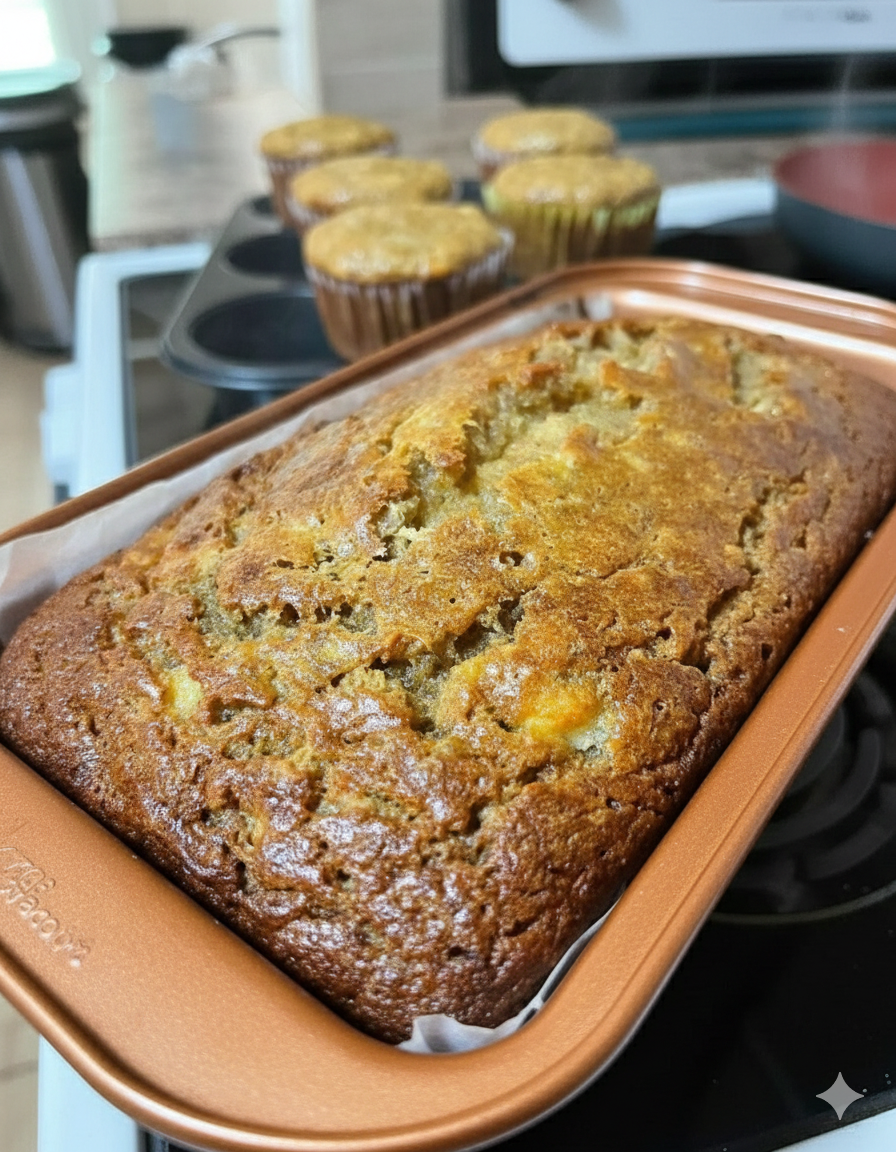
This banana bread emerges from the oven with a beautifully domed, golden-brown crust that cracks invitingly down the middle, signaling its moist interior. The exterior is slightly crisp upon cooling, giving way to a soft, tender crumb that’s densely flavorful yet light on the palate.
Slices reveal a warm, speckled appearance from the mashed bananas, with subtle hints of cinnamon weaving through the rich, buttery base. The applesauce contributes an extra layer of hydration, resulting in a loaf that stays succulent for days without becoming gummy.
Flavor-wise, it’s a harmonious blend: prominent banana sweetness tempered by brown sugar’s molasses notes and a whisper of spice. Not cloyingly sweet, it balances indulgence with restraint, making it versatile for buttered toast or plain enjoyment.
The texture is the star—velvety and moist, almost cake-like but with bread’s satisfying heft. Each bite releases comforting aromas reminiscent of homemade goodness, evoking nostalgia while feeling fresh and modern.
Overall, this banana bread is a sensory delight: visually appealing, aromatically enticing, and texturally perfect, embodying why it’s a perennial favorite.
Nutritional Information
This banana bread offers a more balanced profile than many traditional versions, thanks to applesauce reducing fat and added sugars while boosting moisture. Per slice (assuming 12 slices per loaf), approximate values are: around 220-250 calories, with 30-35g carbohydrates (mostly from bananas and flour), 8-10g fat (from butter and eggs), and 4-5g protein.
Bananas contribute potassium (about 10% daily value per slice), supporting heart health and muscle function, plus vitamin B6 for energy metabolism and vitamin C for immunity. Eggs add high-quality protein and choline for brain health, while cinnamon provides antioxidants with potential blood sugar benefits.
Applesauce brings natural pectin fiber for digestion, and the overall loaf has moderate fiber (2-3g per slice) aiding satiety. It’s lower in saturated fat than butter-heavy recipes but still indulgent.
While not low-calorie, it’s nutrient-dense compared to processed snacks, with natural fruit sugars over refined. Moderation allows enjoyment as part of a healthful diet, providing sustained energy without crashes.
Variations with nuts add healthy fats and minerals; always consult specific calculations for precision.
Conclusion
In wrapping up this exploration of my favorite banana bread, it’s clear why this humble loaf endures as a beloved classic—its simplicity yields profound satisfaction. From historical roots in resourcefulness to modern adaptations like applesauce for enhanced moisture, it adapts beautifully while retaining core charm.
This recipe encapsulates comfort in every slice: moist, flavorful, and forgiving, perfect for busy days or leisurely baking. Whether shared with loved ones or savored solo, it nourishes body and spirit alike.
Banana bread reminds us that great things often come from everyday ingredients transformed with care. I hope this guide inspires you to bake your own loaf, creating new memories around this timeless treat.
Thank you for joining me on this delicious journey—happy baking!
Recommendation
I wholeheartedly recommend trying this banana bread recipe—it’s reliable, delicious, and versatile enough for any occasion. Start with the base for pure banana bliss, then experiment with additions once comfortable.
It’s ideal for beginners due to minimal steps and common ingredients, yet rewarding for experts seeking a go-to standard. Bake it for family breakfasts, gifts, or self-care moments; its aroma alone elevates moods.
Pair with coffee, tea, or as French toast for variety. For health-conscious bakers, the applesauce twist makes it feel lighter without compromise.
This is the banana bread I’ll reach for time and again—give it a whirl and see why it’s my favorite.
Embracing Healthful Indulgence
Banana bread exemplifies healthful indulgence: enjoying sweetness mindfully with nutrient-rich elements. Bananas provide natural energy and minerals, applesauce adds hydration sans excess calories, and moderate sugars satisfy without overload.
This approach allows treats within balanced eating—savoring flavors while fueling well. It’s about joy in moderation, turning baking into wellness ritual.
Embrace this banana bread as permission for delicious self-care, blending pleasure with nourishment for a happier, healthier life.