
Introduction
In the realm of confections, where subtlety and complexity often reign, there exists a bold and unapologetic classic that commands attention with a single, fiery note: the Red Hot Cinnamon Hard Candy. This iconic treat is a symphony of pure, unadulterated heat and sweetness, a vibrant red jewel that promises an intense sensory experience from the very first glance. Its creation is a thrilling alchemy of sugar and spice, transforming humble granulated crystals into a glossy, glass-like substance that crackles between the teeth before releasing a wave of warm, nostalgic cinnamon spice. This recipe is an invitation to step back in time, to the era of old-fashioned candy kitchens and holiday tins brimming with homemade sweets, offering a hands-on journey into the precise and rewarding art of sugar work. To craft these candies is to wield the elements of heat and timing, to dance at the edge of the hard crack stage, and to emerge with a jar of dazzling, potent candies that embody the very spirit of celebration and warmth.
There is a unique magic to creating hard candy at home, a process that feels both primal and scientific. Watching a simple syrup of sugar and water ascend through the temperature stages—from thread to hard crack—is to witness a fundamental culinary transformation. The addition of cinnamon extract or oil, and the daring option of red pepper flakes, elevates this candy from a simple sweet into a memorable experience, one that clears the sinuses and warms the soul. These candies are more than just a confection; they are a holiday tradition, a nostalgic nod to Christmases past, and a vibrant, spicy counterpoint to richer, creamier seasonal desserts. They sparkle with a dusting of powdered sugar like a frost-kissed windowpane, their fiery heart hidden beneath a deceptively sweet, snowy coat. This guide will walk you through every critical step, demystifying the candy thermometer and empowering you to create a treat that is as stunning to look at as it is exhilarating to taste.
Beyond the mere instructions, this endeavor is a celebration of bold flavor and culinary courage. We will explore the careful balance required to achieve the perfect brittle snap without venturing into burnt sugar territory, the importance of preparation in the fast-paced final moments of candy making, and the cultural footprint of these iconic red spires of spice. From selecting the right tools to understanding the exact moment to pull the syrup from the heat, you will gain the confidence to master this classic technique. Whether you intend to fill festive jars as heartfelt gifts, create a striking centerpiece for your holiday table, or simply conquer the challenge of sugar work, this journey into the heart of cinnamon fire is designed to ignite your passion for traditional candy crafting. Let us begin this exciting process, where caution yields to creation and the result is a beautiful, incendiary treasure.
Origin & History
The story of cinnamon hard candy is deeply intertwined with the history of medicinal lozenges and the global spice trade. For centuries, apothecaries would combine sugar—then a rare and expensive commodity—with potent herbs and spices like cinnamon, ginger, and peppermint to create “electuaries” or lozenges intended to soothe sore throats, aid digestion, or simply sweeten the breath. Cinnamon, in particular, was prized not only for its warm, familiar flavor but also for its perceived warming and restorative properties. As sugar became more affordable and widespread in the 18th and 19th centuries, these functional confections gradually evolved into purely pleasurable ones. The development of the hard candy, or “boiled sweet,” as we know it, relied on the understanding of sugar concentrations and the invention of reliable thermometers, allowing confectioners to reliably achieve the hard crack stage necessary for a stable, clear candy.
The specific association of red-hot cinnamon candies with the Christmas season is a particularly robust tradition in North America. Their vibrant red color mirrors the traditional hues of the holiday, and their penetrating spice evokes the warmth of hearth and home during the cold winter months. Brands like “Red Hots” or “Cinnamon Imperials” commercialized this flavor in the 20th century, cementing the candy’s status as a seasonal staple. However, the homemade version carries a deeper, more aromatic punch and a satisfyingly rustic charm. The old-fashioned method, using a heavy saucepan and a candy thermometer, connects the modern baker to generations of home cooks who would make such candies for festive gatherings, often using flavoring oils purchased from traveling salesmen or the local druggist. This recipe honors that lineage, prioritizing potent, real cinnamon flavor over artificiality and celebrating the handmade imperfections that give each piece its character.
Culturally, these candies also hold a place in holiday folklore and sensory memory. The sharp, clean scent of boiling cinnamon syrup is, for many, as evocative of the season as pine needles or gingerbread. They are the candy that children cautiously try, eyes widening at the initial burst of heat, and that adults savor for their potent clarity. They are used to stir spicy cocktails, crushed as a topping for desserts, or simply enjoyed one at a time as a bracing, palate-cleansing treat. Making them at home reclaims this tradition, allowing you to control the level of spice—from a warm glow to a five-alarm fire—and to create a gift that is genuinely personal and impressive. In a world of mass-produced sweets, a jar of homemade red hot cinnamon candy is a striking declaration of craft, tradition, and festive spirit.
Cultural Significance & Festive Spirit
The Red Hot Cinnamon Hard Candy is a potent symbol of warmth, celebration, and sensory awakening, particularly during the winter holiday season. Its fiery red color is an instant visual cue for festivity, mirroring traditional Christmas decorations, Santa’s suit, and holly berries. This vibrant hue, especially when achieved with natural food coloring or the boldness of a gel paste, makes the candies a dazzling addition to any dessert table or gift basket, where they glitter like edible rubies amidst other treats. More than just their appearance, the intense cinnamon flavor carries profound nostalgic weight; for many, it is the taste of childhood Christmases, of stockings filled with oranges and simple sweets, and of family kitchens filled with the aromatic promise of baking and candy-making. The candy’s sharp, cleansing spice provides a counterbalance to the overwhelming richness of holiday feasts—butter, cream, and chocolate—offering a refreshing, almost purifying punctuation between bites.
These candies also serve as a universal token of warmth and welcome. A bowl of homemade cinnamon hard candy on a reception desk or in a living room is an open invitation to guests, a small gesture that says, “Stay awhile, and enjoy something sweet.” Their long shelf life and durable nature made them ideal for inclusion in Christmas parcels sent to loved ones far away, a taste of home that could survive the journey. In some traditions, they are symbolic of the “fire” of the holiday spirit—the warmth of generosity, the light in the darkness of winter, and the zest of celebration. The optional addition of red pepper flakes leans into this symbolism even further, transforming the candy from a simple sweet into a daring, adult-oriented treat that sparks conversation and camaraderie. Sharing these candies becomes an act of shared experience, as friends and family compare their reactions to the spicy kick, creating moments of laughter and connection.
Furthermore, the act of making hard candy is a cherished holiday ritual in itself. It is a project that often involves multiple generations, with grandparents teaching grandchildren the precise moment when the syrup reaches the hard crack stage, a lesson in patience and chemistry. The dramatic process—the furious boil, the rising mercury on the thermometer, the careful pour of molten sugar—is a spectacle that captivates and creates lasting memories. The sound of the candy being cracked into pieces is a uniquely satisfying part of the holiday soundscape. In an age of instant gratification, this candy demands attention, timing, and respect for the process, making the final product all the more rewarding. It is a craft that preserves a piece of culinary history, allowing modern kitchens to connect with the pace and practices of a bygone era, all while creating a delicious, spirited emblem of the most wonderful time of the year.
Ingredients & Their Crucial Roles
The perfection of Red Hot Cinnamon Hard Candy hinges on a precise formula and an understanding of how each ingredient functions in the high-heat alchemy of sugar work. Unlike baking, there is no room for improvisation with quantities; the ratios are scientific, ensuring the syrup reaches the correct sugar concentration for a stable, glassy hard crack. Each component plays a non-negotiable role in the candy’s texture, flavor, color, and safety. Let’s examine these pillars of candy-making, appreciating why each one is essential and how substitutions can lead to success or failure. Gathering your mise en place before heating even a single element is the first and most critical step toward a safe and successful batch.
Butter (for greasing): This is your primary release agent. A thin, even coating of softened butter on your baking sheet or molds is crucial to prevent the molten sugar from becoming a permanent, sticky part of your kitchenware. Do not use cooking spray, as it can contain lecithin or other additives that may interfere with the candy’s perfect finish or introduce unwanted flavors. The fat in the butter creates a non-stick barrier, allowing the cooled candy slab to pop off cleanly for easy breaking.
4 cups (800g) granulated sugar: This is the structural skeleton of the candy. Granulated sugar is refined to a consistent crystal size, which ensures even dissolving and melting. When heated with water to 300°F (149°C), the water evaporates, and the sugar molecules break down and re-form into a non-crystalline, amorphous solid upon cooling—this is what gives hard candy its signature clear, glass-like structure and satisfying snap. Reducing the sugar will alter the syrup concentration, preventing it from ever reaching the proper hard crack stage.
1 cup (240ml) light corn syrup: This ingredient is the guardian against crystallization. When sugar syrup is agitated or if a stray undissolved sugar crystal finds its way in, it can act as a “seed,” causing the entire batch to recrystallize into a grainy, opaque, and crumbly mess—a condition known as “sugar sand.” Corn syrup is an invert sugar, meaning it interferes with sugar molecules’ ability to re-crystallize, ensuring your candy remains smooth, clear, and brittle. Do not substitute with other liquid sweeteners like honey or maple syrup, as they have different chemical properties, moisture contents, and burning points.
1 cup (240ml) purified water: Water is the solvent that initially dissolves the sugar, creating a manageable syrup to heat. Using purified or distilled water is a small but valuable step, as tap water can contain minerals that might affect clarity or flavor. All of this water will eventually boil away, but it allows for even heating and prevents the sugar from caramelizing (burning) before it has fully dissolved. The quantity is precise to achieve the correct starting concentration for the target temperature.
1 teaspoon red gel food coloring (optional): While purely aesthetic, the bold red color is iconic. Gel or paste food coloring is highly recommended over liquid. Liquid coloring is mostly water, and adding extra water to your meticulously cooked syrup can cause dangerous splattering and throw off the final temperature. Gel coloring is concentrated and incorporates smoothly without altering the syrup’s chemistry, giving you that classic, vibrant holiday red.
1 teaspoon cinnamon extract (or 1/2 tsp cinnamon oil): This is the soul of the candy. Pure cinnamon oil is highly concentrated and volatile; it is the professional’s choice for an intense, long-lasting flavor that won’t bake out. Extract, which is oil diluted in alcohol, is more accessible and slightly easier to work with but may yield a milder taste. The heat of the syrup will vaporize the alcohol in extract almost instantly. Whichever you use, adding it after removing the syrup from heat is vital to preserve its potent aroma and prevent it from burning off.
1/2 teaspoon red pepper flakes (optional): This is the daring addition for those who truly embrace the “hot” in red hots. The flakes will rehydrate slightly in the hot syrup and become edible, providing pockets of direct, spicy heat that contrast with the pervasive cinnamon warmth. They also add a rustic, speckled appearance. For a smoother candy with heat but no texture, a tiny pinch of cayenne pepper can be stirred in instead.
1/4 cup (30g) powdered sugar (for dusting): Also called confectioners’ sugar or icing sugar, this is your finishing touch. Its primary function is practical: to coat the sticky surfaces of the broken candy pieces and prevent them from fusing together in storage. The cornstarch in most powdered sugar absorbs any residual surface moisture. Secondarily, it gives the candies a charming, old-fashioned, frosty-dusted look, reminiscent of snow or frost.
Essential Equipment & Safety Precautions
Candy making is a high-heat process that demands respect and the right tools. Having the proper equipment prepared before you begin is not just a suggestion—it is a requirement for safety and success. First and foremost, a heavy-bottomed saucepan (at least 3-quart capacity) is non-negotiable. Its thick base distributes heat evenly, preventing hot spots that can scorch the sugar. A candy thermometer that clips to the side of the pan is your most critical tool; do not attempt this recipe without one. Test its accuracy beforehand by seeing if it reads 212°F (100°C) in boiling water. An instant-read thermometer is not a safe substitute, as it cannot be left in the constantly boiling syrup. Have a heat-resistant silicone spatula or wooden spoon ready for initial stirring.
Safety cannot be overstated. Molten sugar is significantly hotter than boiling water and can cause severe, sticky burns. Wear long sleeves and oven mitts when handling the pan. Have a bowl of ice water nearby in case of accidental splashes. Do not allow children or pets in the kitchen during the cooking and pouring stages. Ensure your baking sheet or molds are pre-greased and positioned on a heat-safe surface before you start cooking—you will have no time to search for them once the syrup hits 300°F. Work quickly but calmly during the final stages, and always pour the syrup away from your body. Preparation is your best defense against accidents, turning an exciting process into a controlled and rewarding culinary experiment.
Step-by-Step Instructions: The Alchemy of Sugar & Spice
- Prep Your Workstation (The Critical First Step): Thoroughly grease a large rimmed baking sheet (or silicone candy molds) with softened butter, ensuring every corner is covered. Place it on a heat-safe trivet or cooling rack. If using molds, set them on a baking sheet for stability. Measure out all your ingredients—this is called mise en place—and have them within arm’s reach. Insert the candy thermometer into its clip. This preparation is essential, as the process moves very quickly at the end and there is no time to pause.
- Cook the Candy Mixture (The Patient Watch): In your heavy-bottomed saucepan, combine the granulated sugar, light corn syrup, and purified water. Stir over medium heat only until the sugar is completely dissolved and the mixture looks clear, about 3-5 minutes. Once it begins to boil, stop stirring entirely. Insert the candy thermometer. Let the mixture boil undisturbed. Do not stir, as this can introduce crystals. Wash down any sugar crystals on the side of the pan with a wet pastry brush. Cook until the thermometer reads exactly 300°F (Hard Crack Stage). This can take 15-25 minutes. Be patient; rushing by increasing the heat risks burning.
- Add Flavor & Color (The Swift Transformation): The moment the syrup hits 300°F, immediately remove the pan from the heat. Carefully move it to a prepared heat-safe surface. Quickly but gently stir in the cinnamon extract (or oil) and the red gel food coloring using your heat-resistant spatula. Stand back—the cinnamon vapors are potent and can be overwhelming! If using red pepper flakes, stir them in now. The mixture will bubble and foam vigorously when you add the extracts; this is normal. Stir just until everything is evenly incorporated, which should only take a few seconds.
- Pour & Cool (The Artful Finish): Working swiftly, pour the molten candy onto your prepared, greased baking sheet. Tilt the sheet gently to help the syrup spread into an even layer, or carefully guide it with your spatula. Do not touch or spread it with your fingers. If using molds, carefully pour or spoon the syrup into each cavity. Let the candy cool completely and solidify at room temperature for at least 30-45 minutes. Do not refrigerate, as this can introduce moisture and cause sticking.
- Break & Coat (The Final Reveal): Once the candy slab is completely cool and hard (it should sound like glass when tapped), place it on a clean, hard surface. Using the blunt end of a knife or a small kitchen mallet, tap it to break it into irregular, rustic pieces. For more uniform shapes, score the slab with a knife while still slightly warm, then break along the lines. Place the pieces in a large bowl, add the powdered sugar, and toss gently until each piece is lightly coated. This prevents them from sticking together in storage.
Tips for Candy-Making Success
· Weather Matters: Avoid making hard candy on humid or rainy days. Ambient moisture can cause the finished candy to become sticky and weep.
· The No-Stir Zone: Once boiling begins, resist the urge to stir. Agitation is the enemy of clear hard candy.
· Temperature is Truth: Trust your thermometer, not the clock. The time to reach 300°F can vary based on your stove, pan, and altitude.
· Cleaning Your Pan: To clean the hardened sugar from your saucepan, simply fill it with water and bring it to a boil. The sugar will dissolve.
· Flavor Variations: Once mastered, this base recipe is a canvas. Omit cinnamon and red coloring for clear butterscotch (use 2 tsp butter extract) or vibrant peppermint (use 1 tsp peppermint oil and green coloring).
· Altitude Adjustment: If you live above 1,000 feet, consult an altitude candy chart. You will need to boil the syrup to a temperature 1-2 degrees lower for every 500 feet above sea level to achieve the correct hardness.
Description of the Finished Candy
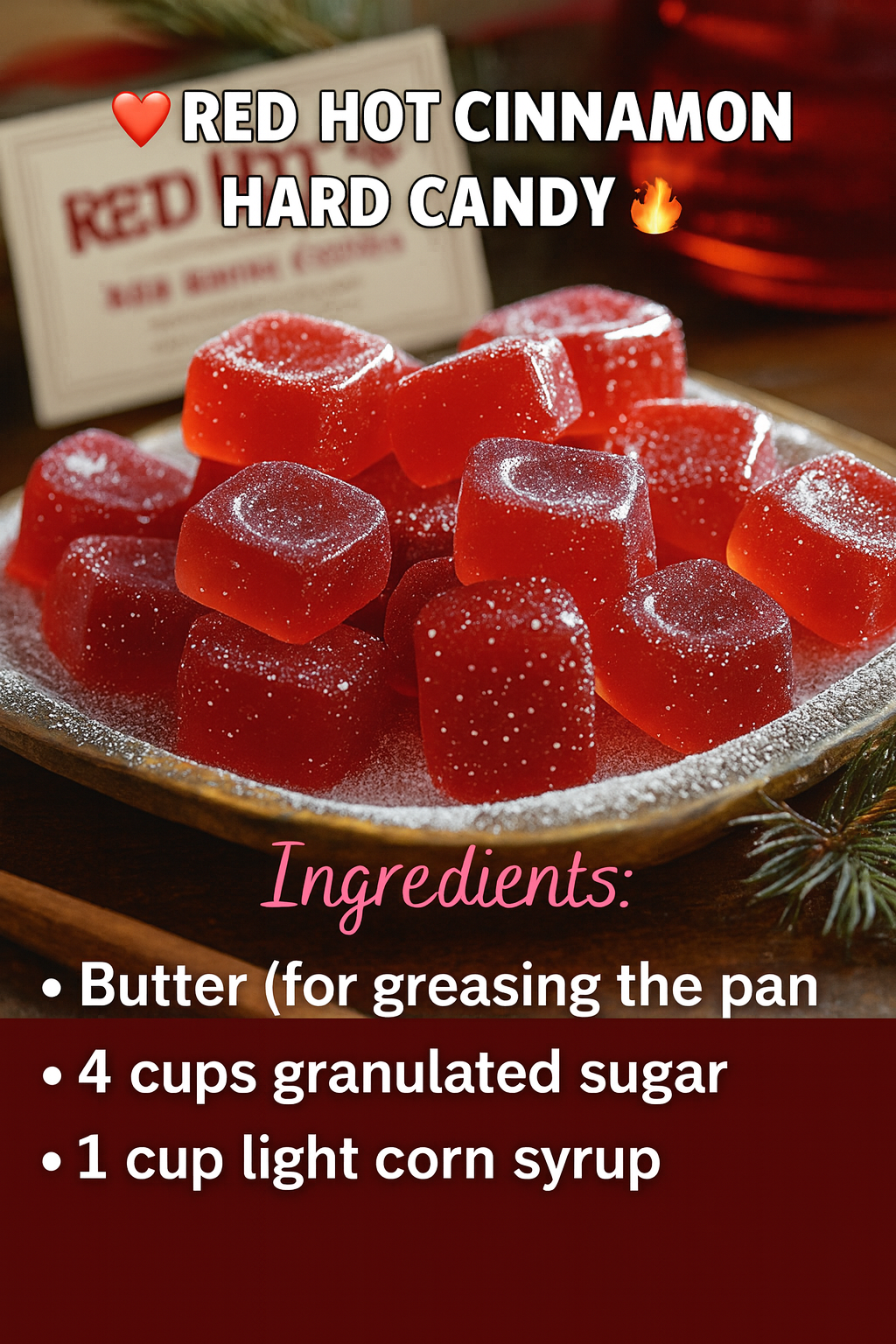
The finished Red Hot Cinnamon Hard Candy is a feast for the senses. Visually, it is stunning: shards and pieces of a deep, translucent ruby red, each one capturing and refracting light like stained glass. A delicate, snowy dusting of powdered sugar clings to its surfaces, enhancing its jewel-like quality and rustic charm. When you pick up a piece, it feels solid and substantial, cool and smooth to the touch, with the slight grit of the sugar coating. The aroma is instantaneous and penetrating—a clean, sharp, and intensely spicy scent of pure cinnamon that promises a potent experience.
Upon placing it in your mouth, the initial sensation is the faint sweet dusting of powdered sugar, which vanishes in an instant. Then, your teeth meet the candy with a definitive, clean SNAP. This satisfying crack gives way as the candy begins to dissolve, releasing an immediate, concentrated wave of sweet heat. The primary flavor is a bold, authentic cinnamon that floods the palate, warming the entire mouth. If red pepper flakes were included, moments later a distinct, sharper heat emerges, creating a delightful two-stage spicy experience. The candy slowly melts away, leaving a lingering, warm glow in the throat and a clean, spicy-sweet aftertaste. It is not a subtle treat; it is a declaration. It is the taste of holiday cheer condensed into a single, fiery, beautiful piece of edible art—a nostalgic thrill that is as exhilarating to make as it is to enjoy.
Storage & Gifting
Store your completely cooled and powdered-sugar-dusted candies in an airtight container at room temperature, in a cool, dry place. Placing a small packet of food-safe silica gel in the container can help absorb any ambient moisture. Properly stored, they will maintain their perfect snap and flavor for up to 2 months. For gifting, small glass jars, cellophane bags tied with ribbon, or vintage-style tins make beautiful presentations. Include a small tag with the candy’s name and a warning about its spicy heat for the uninitiated. A jar of homemade red hot cinnamon candy is a gift of craftsmanship, a splash of vibrant color, and a generous share of festive warmth—a truly memorable offering from your kitchen.
Conclusion & Embracing the Craft
Creating Red Hot Cinnamon Hard Candy is more than following a recipe; it is an engaging act of culinary science and tradition. The process teaches patience, precision, and respect for the transformative power of heat. Holding that first piece of homemade candy, hearing its perfect snap, and feeling the rush of warm spice is an immense reward, a testament to your focus and care. This candy connects you to a long lineage of confectioners and home cooks who have celebrated the holidays with the bold, clear note of cinnamon and sugar. It is a vibrant, spirited, and utterly delicious way to honor the season, share your creativity, and bring a literal spark of fire and joy to your festive table. Enjoy the process, savor the results, and share the warm, spicy glow