
Introduction
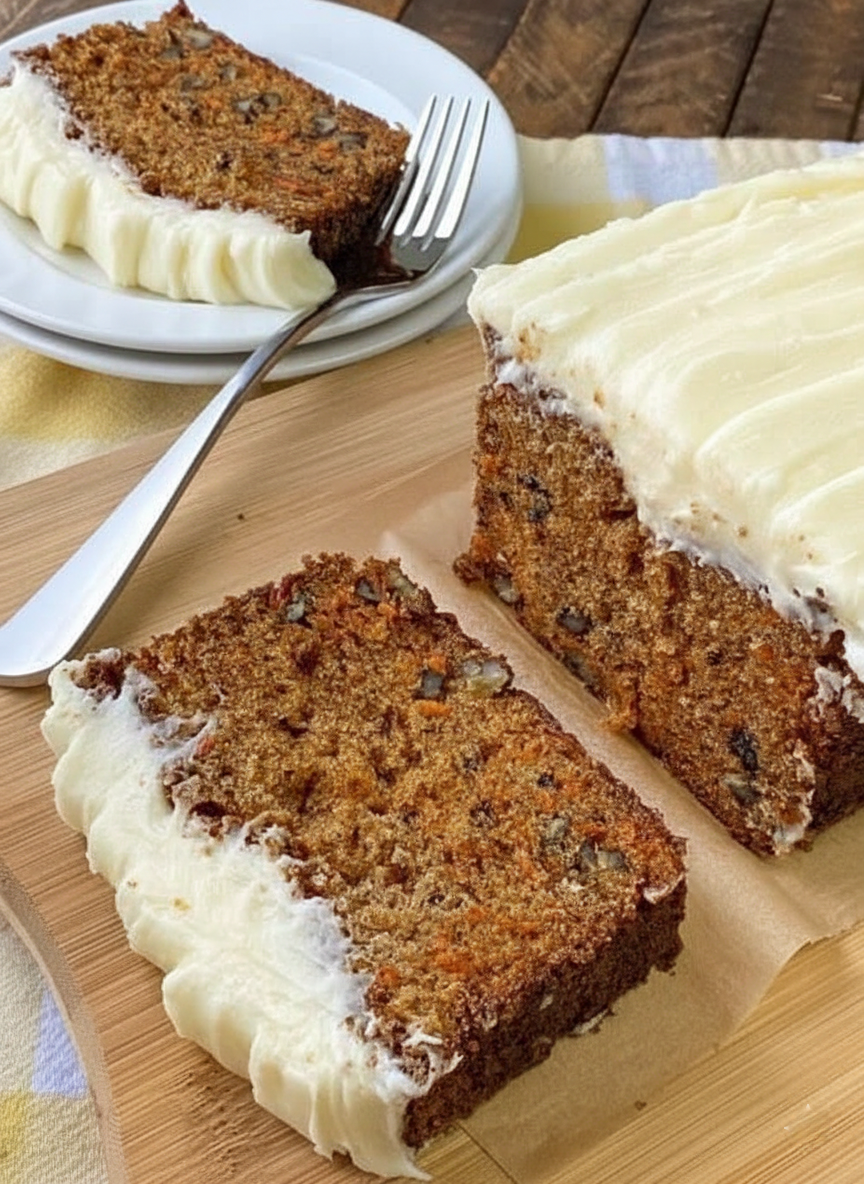
Craving a moist, spiced treat that’s as easy to make as it is delicious? This simple carrot cake loaf is your new go-to—perfectly tender, packed with warm flavors, and ready in no time! 🤤🎅 Whether you’re looking for a cozy breakfast slice, a delightful afternoon snack, or a wholesome dessert that feels indulgent without being overly heavy, this carrot cake loaf delivers on all fronts. Baked in a single loaf pan, it eliminates the fuss of layering and frosting multiple tiers, making it ideal for beginner bakers or busy home cooks who want homemade goodness without spending hours in the kitchen.
What makes this recipe truly special is its balance of simplicity and depth of flavor. The natural sweetness from freshly grated carrots shines through, complemented by a trio of warming spices—cinnamon, ginger, and nutmeg—that evoke the comforting essence of fall and holiday baking. A touch of vanilla extract rounds out the profile, while optional chopped pecans add a subtle crunch and nutty richness. Unlike denser traditional cakes, this loaf stays incredibly moist thanks to the vegetable oil and the moisture released from the carrots during baking, resulting in a texture that’s soft, tender, and almost velvety.
This simple carrot cake loaf is more than just a recipe; it’s a versatile canvas for seasonal enjoyment. Serve it plain for a lighter treat, dust it with powdered sugar for elegance, or slather on a tangy cream cheese frosting for that classic carrot cake experience. It’s perfect for sharing with family during holiday gatherings, packing into lunchboxes for a nutritious pick-me-up, or enjoying solo with a cup of tea on a quiet afternoon. In a world of complicated desserts, this loaf reminds us that the best treats often come from humble ingredients combined with care. Let’s dive into why this timeless bake deserves a permanent spot in your repertoire.
Origin
The story of carrot cake is a fascinating journey through history, rooted in necessity, ingenuity, and cultural evolution. Many food historians trace its origins back to the Middle Ages in Europe, when sugar and other sweeteners were rare and exorbitantly expensive luxuries reserved for the wealthy. Resourceful cooks turned to naturally sweet root vegetables like carrots to add moisture and sweetness to puddings and baked goods. Carrots, abundant and affordable, became a clever substitute, providing both flavor and tenderness without relying on scarce imported sugars.
One of the earliest recorded references appears in a 1591 English recipe for “pudding in a Carret root,” which involved stuffing a carrot with a mixture of shortening, cream, eggs, raisins, spices like clove and mace, and breadcrumbs—a far cry from modern cake but sharing key elements like scraped carrot and sweet-spicy seasoning. Similar carrot puddings were popular across Europe, often steamed rather than baked, reflecting the limitations of medieval ovens. These early versions were more savory-sweet hybrids, sometimes even incorporating meat, but the foundation of using carrots for natural sweetness was firmly established.
By the 18th and 19th centuries, carrot-based desserts evolved further. In 1747, Hannah Glasse’s “The Art of Cookery, Made Plain and Easy” included a carrot pudding pie, and by 1827, a French cookbook published in Britain featured the first known recipe explicitly called “carrot cake.” Antoine Beauvilliers, a chef to Louis XVI, included a “Gâteau de Carottes” in his works, which gained popularity and was copied widely. Across the Atlantic, carrot treats crossed oceans with immigrants; legend even has George Washington enjoying a version at Fraunces Tavern in 1783 to celebrate British Evacuation Day.
The modern resurgence of carrot cake came during World War II, particularly in Britain, where sugar rationing forced bakers to innovate once again. The Ministry of Food promoted carrots as a sweetener, distributing recipes and encouraging home growers to use the vegetable in cakes and biscuits. This wartime necessity revived the medieval practice, turning carrot cake into a symbol of resilience and resourcefulness. Post-war, as sugar became abundant, the cake persisted, evolving with additions like oil for moisture and cream cheese frosting for tang.
In America, carrot cake gained traction in the mid-20th century, with early printed recipes appearing in cookbooks like “The Neighborhood Cook Book” in 1912. By the 1960s and 1970s, amid the health food movement, it was marketed as a “healthier” dessert due to its vegetable content—though the generous sugar and frosting tempered that claim. Variations emerged worldwide: Switzerland’s Rüeblitorte with almonds and kirsch glaze, Brazil’s fluffy bolo de cenoura topped with chocolate ganache. Today, the loaf form—a practical, single-pan adaptation—makes it even more accessible, bridging ancient pudding roots with contemporary convenience.
Cultural Significance
Carrot cake holds a unique place in culinary culture, symbolizing adaptability, comfort, and a touch of wholesome indulgence. Born from times of scarcity, it represents human ingenuity—turning a humble root vegetable into a beloved dessert that transcends social classes. In Britain, its WWII popularity tied it to national resilience, with government campaigns promoting carrots not just for cakes but for vision health (a myth propagated to hide radar technology advancements). This era cemented carrot cake as a nostalgic, patriotic treat in British baking traditions.
Globally, carrot cake reflects cultural diversity. In Switzerland, it’s a cherished children’s birthday cake, often adorned with marzipan carrots, emphasizing joy and tradition. Brazilian versions diverge dramatically, featuring a bright orange sponge drizzled with chocolate brigadeiro topping, highlighting the country’s love for bold, moist cakes. In the United States, carrot cake surged in the health-conscious 1970s, positioned as a “veggie-inclusive” dessert amid rising awareness of nutrition—ironically, often laden with cream cheese icing.
Culturally, it’s associated with spring and Easter, evoking renewal through its vibrant orange hue and carrot symbolism (think Easter Bunny’s favorite snack). Yet it’s versatile year-round: a fall spice staple with cinnamon and nutmeg, or a summer picnic slice. In modern wellness culture, healthier adaptations using whole grains, natural sweeteners, and nuts reinforce its “guilt-free” appeal, though purists argue the classic version’s richness is part of its charm.
Carrot cake also sparks debates—nuts or no nuts? Raisins or pineapple?—reflecting personal and regional preferences. It’s a communal bake, often shared at gatherings, embodying warmth and hospitality. In literature and media, it appears as comfort food, from cookbooks to cafe menus worldwide. Ultimately, carrot cake’s significance lies in its evolution from survival food to celebrated classic, reminding us that great flavors often emerge from constraint and creativity.
Ingredients Quantity
This simple carrot cake loaf serves 8-10 slices and comes together with pantry staples for effortless baking. Here’s the precise breakdown:
Wet Ingredients:
- ½ cup (120 ml) vegetable oil – Provides essential moisture and tenderness without overpowering flavors.
- 1 cup (200 g) granulated sugar – Sweetens the loaf evenly; feel free to substitute with brown sugar for deeper molasses notes.
- 2 large eggs, at room temperature – Bind the batter and contribute to a light, fluffy rise.
- 1 teaspoon pure vanilla extract – Enhances the overall aroma and rounds out the sweetness.
- 1½ cups (about 150 g) finely grated carrots (from 3-4 medium carrots) – The star ingredient for natural sweetness, moisture, and subtle earthy flavor.
- ½ cup (60 g) chopped pecans (optional) – Adds nutty crunch and texture contrast.
Dry Ingredients:
- 1½ cups (190 g) all-purpose flour – Forms the structure; spoon and level for accuracy to avoid density.
- 1 teaspoon baking powder – Helps with even rising.
- 1 teaspoon baking soda – Reacts with the eggs and oil for a tender crumb.
- ½ teaspoon salt – Balances sweetness and amplifies spices.
- 1 teaspoon ground cinnamon – The dominant warm spice for classic carrot cake essence.
- ½ teaspoon ground ginger – Adds a gentle heat and complexity.
- ¼ teaspoon ground nutmeg – Provides nutty depth and aroma.
These quantities yield a perfectly balanced loaf—moist but not soggy, spiced but not overwhelming. Using fresh, high-quality ingredients elevates the results dramatically.
Optional Additions
One of the joys of this carrot cake loaf is its adaptability; optional additions allow you to customize it to your taste or dietary preferences while maintaining its core charm. Start with the base recipe, then experiment:
- Raisins or dried cranberries (½ cup): For bursts of chewy sweetness that complement the carrots beautifully.
- Shredded coconut (½ cup unsweetened): Introduces tropical notes and extra texture.
- Crushed pineapple (½ cup, well-drained): Boosts moisture and tangy sweetness, a classic in many American versions.
- Walnuts instead of pecans (½ cup chopped): Offers a slightly bitter edge for balance.
- Orange zest (from 1 orange): Adds bright citrus notes that cut through the richness.
- Apple sauce (¼ cup, replacing some oil): For a lighter, fruitier twist and reduced fat.
- Chocolate chips (½ cup): For a decadent, kid-friendly variation.
- Ground cloves or allspice (¼ teaspoon each): To intensify the spice profile.
Limit total add-ins to 1 cup to avoid overwhelming the batter. These options make the loaf versatile for seasons—pumpkin spice vibes in fall or tropical in summer.
Tips for Success
Achieving the perfect carrot cake loaf is straightforward with these pro tips. First, always grate carrots fresh using the fine side of a box grater or food processor—pre-shredded are too dry and thick, leading to crunchy bits and less moisture. Aim for finely grated to ensure they melt into the batter.
Room temperature ingredients are key: eggs and oil blend smoother, preventing curdling and promoting even emulsification. Don’t overmix once dry meets wet—stir just until combined to avoid tough, gluten-developed texture. Overmixing activates too much gluten, resulting in density.
Preheat your oven thoroughly and use a light-colored metal loaf pan for even baking; dark pans can cause over-browning. Line with parchment for easy release. Test doneness with a toothpick—it should emerge clean or with moist crumbs, not wet batter. Start checking at 50 minutes, as ovens vary.
For maximum moisture, don’t squeeze grated carrots; their natural juices are essential. Toast nuts beforehand for deeper flavor. Cool completely before slicing to prevent crumbling. Store in an airtight container—flavors deepen overnight. These steps guarantee a tender, flavorful loaf every time.
Instructions
Follow these step-by-step instructions for foolproof results:
- Preheat oven to 350°F (175°C). Grease a 9×5-inch loaf pan and line with parchment paper for easy removal.
- In a large bowl, whisk vegetable oil, granulated sugar, eggs, and vanilla extract until smooth and well-emulsified, about 2 minutes.
- In a separate bowl, sift or whisk together flour, baking powder, baking soda, salt, cinnamon, ginger, and nutmeg.
- Gradually add dry ingredients to wet, stirring gently with a spatula until just incorporated—lumps are okay, but no flour streaks.
- Fold in grated carrots and chopped pecans (if using) until evenly distributed.
- Pour batter into prepared pan, smoothing the top evenly.
- Bake 50-60 minutes, or until a toothpick in the center comes clean. Tent with foil if browning too quickly.
- Cool in pan 10 minutes, then transfer to wire rack to cool fully.
- Optional: Frost with cream cheese icing once cooled, or dust with powdered sugar.
Slice thick for breakfast or thin for snacks—enjoy!
Description
This simple carrot cake loaf is a masterpiece of texture and flavor harmony. Visually, it’s a golden-brown beauty with a subtly cracked top, hinting at the moist interior flecked with orange carrot shreds and optional nut pieces. The aroma alone—warm cinnamon mingling with ginger and nutmeg, accented by vanilla—is intoxicating, filling your kitchen with holiday-like comfort.
Biting in reveals a tender, velvety crumb that’s incredibly moist without being greasy, thanks to the carrots releasing sweetness and hydration during baking. The spices provide cozy warmth: cinnamon dominates with sweet earthiness, ginger adds subtle zing, nutmeg brings nutty depth. Vanilla ties it together, while pecans offer occasional crunch.
Plain, it’s subtly sweet and wholesome; with frosting, it transforms into decadent classic carrot cake. Versatile for any occasion, this loaf tastes even better the next day as flavors meld. It’s comforting yet light, indulgent yet vegetable-boosted—a true crowd-pleaser.
Nutritional Information
This simple carrot cake loaf offers a balanced profile, with carrots providing vitamins amid the treat’s indulgence. Per slice (1/10 of loaf, without frosting):
- Calories: Approximately 300-350
- Total Fat: 15-18g (mostly from oil and optional nuts)
- Saturated Fat: 2-3g
- Carbohydrates: 40-45g
- Sugars: 25-30g (from granulated sugar and carrots)
- Fiber: 2-3g
- Protein: 4-5g
- Key Nutrients: Vitamin A (from carrots, 50-100% DV for eye health and immunity), small amounts of potassium, antioxidants from spices.
With frosting, add 100-150 calories per slice. Compared to traditional cakes, it’s moderately caloric but nutrient-boosted by carrots’ beta-carotene, fiber, and antioxidants; spices like cinnamon may aid blood sugar regulation; nuts add healthy fats. Enjoy in moderation as part of balanced diet.
Conclusion
In wrapping up our exploration of this simple carrot cake loaf, it’s clear why it endures as a beloved bake. From medieval roots to modern kitchens, it embodies timeless appeal—moist, spiced perfection from everyday ingredients. This recipe captures that essence: easy preparation yielding a tender, flavorful loaf suitable for any moment.
Whether plain for wholesome snacking or frosted for celebration, it delivers comfort and joy. Baking this loaf connects us to history while creating new memories. Its versatility, nutritional touches from carrots, and sheer deliciousness make it essential. Thank you for joining this journey—now preheat that oven and bake!
Recommendation
I wholeheartedly recommend this simple carrot cake loaf as your next baking project. It’s beginner-friendly, requires minimal equipment, and yields impressive results with little effort. Perfect for holidays, brunches, or everyday treats.
Pair with cream cheese frosting for classic indulgence, or keep plain for lighter fare. Try variations like adding raisins or pineapple for personalization. Share slices with loved ones—it fosters connection. For healthier twists, experiment with half whole wheat flour or reduced sugar. This loaf will become a staple; bake it soon—you won’t regret it!
Embracing Healthful Indulgence
This simple carrot cake loaf exemplifies healthful indulgence: a dessert that satisfies cravings while incorporating nourishing elements. Carrots deliver beta-carotene for vision and skin health, fiber for digestion, and natural sweetness reducing refined sugar needs. Spices like cinnamon support metabolism and anti-inflammation; optional nuts provide heart-healthy fats, protein, and minerals.
Oil ensures moisture without butter’s saturation. Compared to frosted layer cakes, the loaf form encourages portion control. Mindful enjoyment—savoring a slice with tea—promotes balance. Adaptations like Greek yogurt or applesauce enhance nutrition further. Ultimately, this loaf proves treats can be delicious and body-supportive, encouraging guilt-free pleasure in moderation. Embrace it as reminder: indulgence and health coexist beautifully.