
Introduction
A few years ago, I decided to dive into the world of sourdough, starting my own starter from scratch, and it turned out to be far simpler and more rewarding than I ever imagined. That initial uncertainty quickly transformed into a daily ritual that brought a sense of accomplishment and connection to something ancient and alive. The process of nurturing wild yeast and bacteria into a bubbling, vibrant culture felt almost magical, turning basic flour and water into a living ingredient capable of creating flavorful, nutritious bread.
Sourdough baking has exploded in popularity in recent years, especially as people seek out more natural, healthful foods amid busy modern lives. This revival isn’t just a trend—it’s a return to traditional methods that prioritize fermentation over quick-rise commercial yeasts. Making your own sourdough starter empowers you to control what goes into your bread, avoiding additives and embracing a slower, more intentional approach to eating.
In this comprehensive guide, we’ll explore everything from the ancient origins of sourdough to practical tips for success, detailed instructions, and the science-backed health benefits. Whether you’re a complete beginner hesitant about the commitment or an experienced baker looking to deepen your knowledge, this post will walk you through creating and maintaining a strong starter. By the end, you’ll understand why so many people find sourdough not just a hobby, but a pathway to better nutrition and mindful indulgence.
Origin
The story of sourdough begins thousands of years ago, with evidence pointing to ancient Egypt around 1500 BCE as the cradle of leavened bread. Archaeologists have uncovered residues in pots that, when revived, produced viable starters, proving that Egyptians mastered natural fermentation long before recorded history detailed it. They likely discovered it accidentally when dough left out captured wild yeasts from the air, leading to risen, flavorful loaves that became a staple.
From Egypt, sourdough techniques spread across the Mediterranean, reaching the Greeks and Romans who documented its use extensively. Roman historian Pliny the Elder wrote about leavened breads in the first century CE, and references in the Bible imply sourdough was commonplace by then. This method dominated bread-making for millennia because it was reliable and preserved grains effectively in pre-industrial societies.
By the Middle Ages and into the Renaissance, European bakers refined sourdough, with French artisans perfecting techniques that would later influence global baking. The 19th century brought sourdough to new heights during the California Gold Rush, when French bakers introduced their starters to San Francisco. The unique local microbes, particularly Lactobacillus sanfranciscensis, created the iconic tangy flavor still celebrated today.
In Alaska and the Yukon, prospectors carried starters in pouches around their necks to keep them warm, earning the nickname “sourdoughs.” This hardy tradition underscores how sourdough sustained people in harsh conditions without commercial yeast. Even today, some starters claim lineages tracing back centuries, passed down or revived from historical sources.
Cultural Significance
Sourdough transcends mere food—it’s a cultural artifact woven into human history, symbolizing resilience, community, and tradition across continents. In San Francisco, it’s an emblem of the city’s Gold Rush heritage, with bakeries like Boudin maintaining “mother dough” from the 1800s. The mascot “Sourdough Sam” for the 49ers football team keeps this legacy alive in popular culture.
Globally, sourdough represents shared knowledge: bakers exchange starters like heirlooms, fostering connections in online communities and local groups. During pandemics and lockdowns, sourdough baking surged as a comforting, self-sufficient activity, reconnecting people with ancestral practices amid uncertainty. This revival highlights its role in slow food movements, opposing industrialized bread.
In many cultures, sourdough embodies terroir—the unique environmental influences on flavor, much like wine. Starters from different regions develop distinct profiles due to local microbes, making each one a snapshot of place and time. From European rye sourdoughs to American artisan loaves, it celebrates diversity in baking traditions.
Sourdough also carries symbolic weight in literature and folklore, like Robert Service’s poems about Yukon “sourdoughs.” It evokes pioneering spirit and patience, as nurturing a starter requires daily care, mirroring life’s rhythms. Today, its cultural resurgence promotes mindfulness, sustainability, and a rejection of ultra-processed foods.
Ingredients Quantity
Creating a sourdough starter requires minimal ingredients: just flour and water, with precise quantities ensuring consistent fermentation. A standard approach uses equal weights for simplicity and balance, promoting healthy microbial growth without overwhelming acidity.
For the initial mix and daily feedings, use 100 grams (about ¾ cup) of flour and 100 grams (about ½ cup) of filtered water per day. This 1:1 ratio by weight yields a 100% hydration starter, ideal for most bread recipes and easy management.
Start with whole wheat or rye flour for the first few days, as their nutrients accelerate wild yeast capture—aim for 100 grams rye or whole wheat initially. Transition to all-purpose or bread flour after day 3 or 4 to maintain a milder flavor.
Variations exist: some prefer 50 grams flour and 50 grams water for smaller batches, reducing waste. Others scale up to 200 grams each for larger starters when baking frequently. Consistency in measurement—preferably by weight for accuracy—is key over volume.
Optional initial boosts include a tablespoon of rye for robustness or pineapple juice instead of water on day 1 to lower pH and discourage bad bacteria. Always use non-chlorinated water to avoid inhibiting yeast.
Optional Additions
While purists stick to flour and water, optional additions can enhance flavor, activity, or nutrition without compromising the natural process. Incorporating a handful of organic grapes or raisins on day 1 introduces wild yeasts from their skins, speeding activation in stubborn environments.
For a nutritional boost, mix in spelt, kamut, or einkorn flours alongside rye—these ancient grains add complexity and minerals. A pinch of honey or sugar occasionally can feed yeasts during sluggish periods, though sparingly to avoid imbalance.
Herbs like rosemary or garlic-infused water create flavored starters for specialty breads, infusing subtle notes. Some add yogurt or kefir for probiotic diversity, though this shifts from truly wild fermentation.
Discard from feedings opens creative doors: use it in pancakes, crackers, or muffins with additions like fruits, nuts, or chocolate. These transform “waste” into delicious treats, extending the starter’s utility.
Tips for Success
Success with sourdough starters hinges on consistency, patience, and observing your culture’s cues rather than rigid timelines. Maintain a warm environment around 75-80°F (24-27°C); use a proofing box or oven light if your kitchen is cool, as temperature dramatically affects activity.
Use glass or plastic jars to avoid reactions with acidity, and cover with a breathable cloth to allow gas exchange while blocking contaminants. Mark the jar’s level with a rubber band to track rising easily.
Feed at the same time daily, discarding down to 50-100 grams before adding fresh flour and water—this prevents over-acidification. If hooch (liquid layer) forms, stir it in or pour off; it’s normal in mature starters.
Troubleshoot common issues: no bubbles by day 5? Switch to rye flour or warmer spot. Mold? Discard and start over with cleaner practices. Patience is crucial—starters can take 7-14 days to peak.
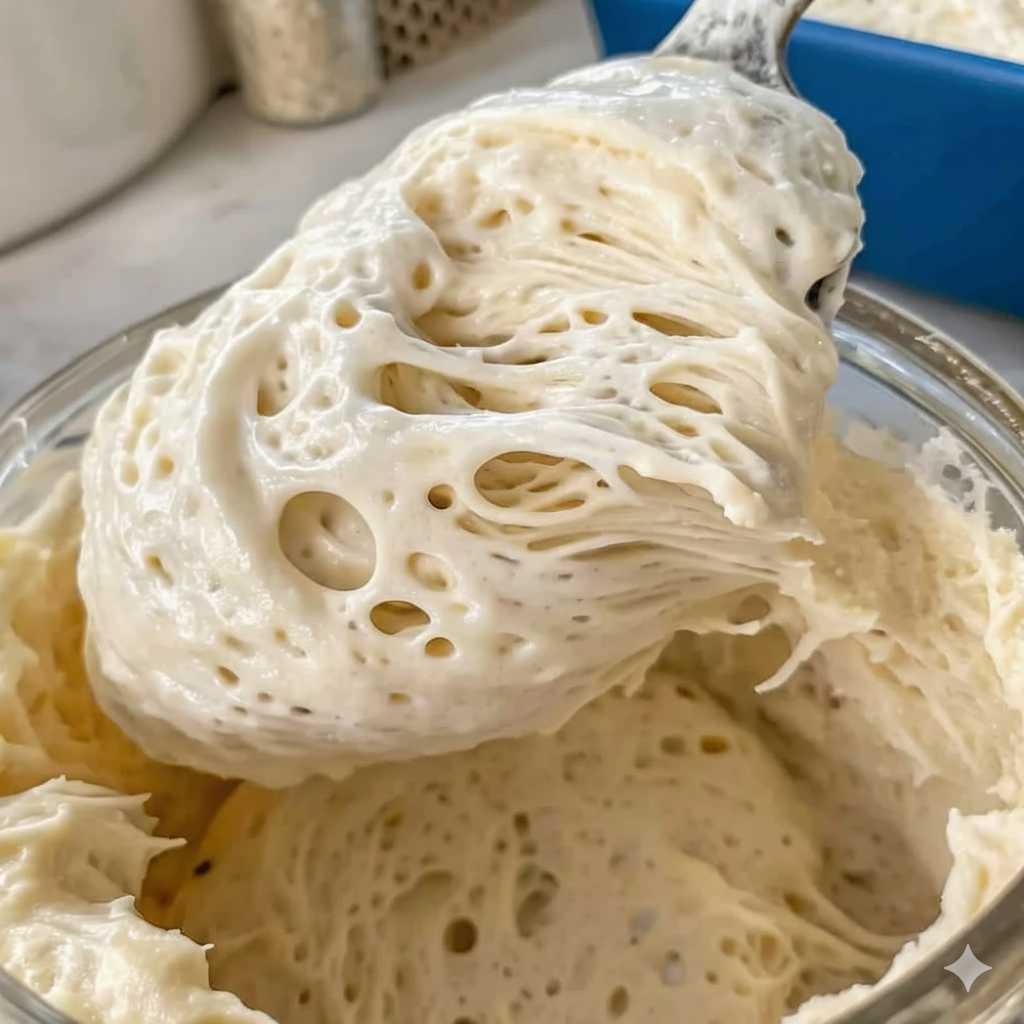
Observe texture: a ready starter should be stretchy, full of holes, and double in volume within 4-8 hours post-feeding, like a webby, cheesy consistency.
Instructions
Follow these step-by-step instructions to create a vibrant sourdough starter in about 7-10 days.
Day 1: In a clean jar, combine 100g whole wheat or rye flour with 100g filtered water at room temperature. Stir until smooth like thick batter, cover loosely, and place in a warm spot. Expect little activity initially—normal for capturing wild microbes.
Day 2: Check for a few bubbles; stir in another 100g flour and 100g water. Mix thoroughly, cover, and return to warmth. The mixture may smell yeasty or fruity as fermentation begins.
Day 3: Activity increases—bubbles and slight rise appear. Discard half (about 100g), then add 100g flour (mix in all-purpose now) and 100g water. Stir well; it should smell pleasantly tangy.
Days 4-7: Repeat daily: discard half, feed 100g flour and 100g water. Watch for consistent doubling, abundant bubbles, and a light, airy texture with holes when scooped. Transition fully to bread flour for strength.
Testing Readiness: Once it reliably doubles in 4-8 hours and floats a teaspoon in water, it’s ready for baking. Maintain with daily room-temperature feedings or refrigerate for weekly.
Description
A mature sourdough starter is a living, dynamic culture: creamy beige, dotted with bubbles of varying sizes, and exuding a tangy, yogurt-like aroma with hints of fruit or beer. When stirred, it reveals a stretchy, gluten-developed web full of air pockets, resembling melted cheese pulled apart.
It rises predictably after feeding, doubling or tripling in volume with a domed surface before slowly deflating. The consistency is pourable yet cohesive, like thick pancake batter at 100% hydration.
Scoop it, and strands stretch elastically, indicating strong fermentation from wild yeasts and lactic bacteria. Over time, it develops unique character influenced by your environment—subtly sour, complex, and alive.
Visually captivating in a clear jar, layers of bubbles rise like champagne, with a frothy top during peak activity. This description matches the stretchy, hole-riddled texture in active starters, signaling readiness for transformative bread.
Nutritional Information
Sourdough starters and resulting breads offer superior nutrition compared to commercial yeasted versions, thanks to fermentation’s transformative effects. The process reduces phytic acid, an anti-nutrient in grains, improving absorption of minerals like iron, zinc, magnesium, and calcium by up to 50%.
Fermentation creates prebiotic fibers that feed gut bacteria, while lowering the glycemic index—sourdough bread often scores 50-60 versus 70+ for white bread, aiding blood sugar stability. It partially breaks down gluten and FODMAPs, enhancing digestibility for sensitive individuals (though not celiac-safe).
A typical slice of whole-grain sourdough provides 3-5g fiber, 4-6g protein, B vitamins from fermentation, and antioxidants from lactic acid bacteria. It resists mold naturally, extending freshness without preservatives.
Compared to regular bread, sourdough boasts higher bioavailable nutrients, probiotic-like properties, and resistant starch for gut health. Exact values vary by flour, but fermentation consistently elevates nutritional profile.
Conclusion
Embarking on sourdough starter creation opens a world of flavor, health, and tradition that enriches daily life profoundly. From ancient Egyptian origins to modern kitchens, this simple mixture of flour and water connects us to millennia of human ingenuity and nourishment.
Nurturing your starter teaches patience and attunement to natural rhythms, yielding breads with unmatched depth and nutrition. The process, though requiring commitment, rewards with tangible benefits—from better digestion to mindful eating.
As you feed and bake, you’ll join a global community preserving this art, one loaf at a time. Sourdough isn’t just bread—it’s a living legacy worth embracing.
Recommendation
I wholeheartedly recommend starting your sourdough journey today—begin with rye flour for quick success and filtered water for purity. Invest in a digital scale for precision; it transforms consistency.
Share your starter with friends to spread the joy, and experiment with discard recipes to minimize waste. For beginners, follow proven methods like 1:1:1 feedings and warm spots.
Pair your bread with wholesome toppings like avocado or nut butter for balanced meals. Ultimately, sourdough fits any lifestyle seeking natural, flavorful food.
Embracing Healthful Indulgence
Sourdough embodies healthful indulgence: enjoying delicious, tangy bread while reaping fermentation’s benefits for gut health, nutrient absorption, and stable energy. It allows guilt-free pleasure, as slower carbs and prebiotics support well-being without deprivation.
In a world of quick fixes, sourdough encourages slowing down—savoring the process and product. Indulge in warm slices slathered with butter, knowing you’re nourishing body and soul.
This balance of tradition, science, and sensory delight makes sourdough a cornerstone of mindful eating. Embrace it for lasting vitality and joy in every bite.