
The Definitive Guide to Marshmallow Swirl Brownies: History, Science, and Perfection
Introduction: A Deep Dive into Decadence
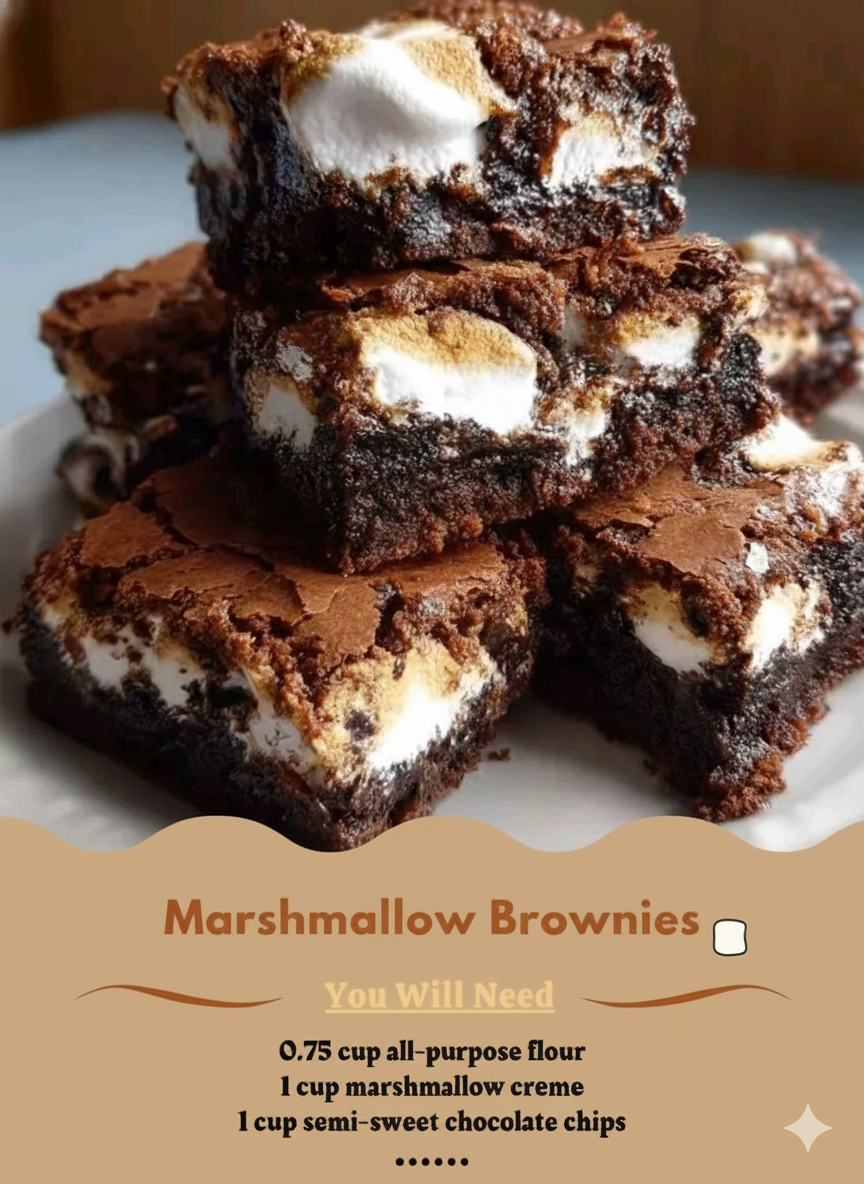
Few desserts hold the universal appeal and comforting familiarity of the classic brownie. But when you introduce the ethereal, cloud-like sweetness of marshmallow creme, you elevate a simple chocolate square into something truly transcendent: the Marshmallow Swirl Brownie. This recipe is not merely a combination of chocolate and sugar; it is a careful balance of textures—the dense, fudgy base; the crispy, flaky top; and the chewy, soft pockets of melted marshmallow—all culminating in a blissful, s’mores-inspired experience without the mess of a campfire.
This comprehensive guide takes you beyond the basic steps, offering a deep exploration into the history of the brownie, the science behind its signature fudgy texture, and the precise techniques required to achieve baking perfection. By understanding the “why” behind every step, you will master the art of the ultimate marshmallow swirl brownie.
Part I: A Journey Through Brownie History and Classification
The brownie, an icon of American baking, has a surprisingly muddled and contested past. Understanding its evolution helps us appreciate the role of modern ingredients like marshmallow creme.
The Origins and Evolution of the Brownie
The first widely recognized printed recipe for a chocolate square appeared in the Boston Cooking-School Cook Book in 1896, but these early versions, known as “Brownie’s Food,” contained no chocolate, relying on dark molasses for their color. The first documented recipe containing melted chocolate emerged around 1906, solidifying the dessert we recognize today.
The introduction of the modern brownie owes much to the famed Palmer House Hotel in Chicago. Legend holds that Bertha Palmer, a prominent Chicago socialite, requested a cake-like dessert, smaller than a piece of cake, that could be included in boxed lunches for the World’s Columbian Exposition in 1893. The resulting creation was a simple bar topped with an apricot glaze—an early precursor, often cited as the brownie’s birthplace.
The Great Debate: Fudgy vs. Cakey
Modern brownies fall into three distinct categories, and the texture is determined entirely by the fat, flour, and leavening ratio:
- Cakey Brownies: These resemble dense chocolate cake. They contain more flour and rely on leavening agents (baking powder or soda) to give them lift. They are often made with oil instead of butter.
- Chewy Brownies: These strike a balance, often achieved through a combination of melted chocolate, cocoa powder, and sometimes an extra egg yolk or a small amount of liquid sweetener (like corn syrup) to inhibit crystallization.
- Fudgy Brownies (Our Focus): This style is defined by its minimal flour content, high fat-to-flour ratio, and reliance on melted chocolate. They contain very little, if any, leavening agent, resulting in a dense, rich, and intensely moist square. Our Marshmallow Swirl Brownie is fundamentally a fudgy brownie to maximize the gooey contrast with the marshmallow.
Part II: The Science of Ingredient Excellence
Every component in this recipe contributes directly to the final flavor and texture. Choosing and preparing them correctly is non-negotiable for perfection.
The Chocolate Complex
We use two forms of chocolate, each serving a unique purpose: - Melted Semi-Sweet Chocolate Chips: Melting the chips directly into the butter provides the primary fat and rich chocolate flavor. Chocolate contains cocoa butter, a pure fat, which creates a lower moisture content in the batter than using cocoa powder alone. This is essential for the fudgy texture. The quality of this chocolate will directly influence the final taste.
- Unsweetened Cocoa Powder: Adding cocoa powder alongside the melted chocolate deepens the chocolate profile without adding excessive fat or liquid. Both Natural Cocoa (acidic, reacts well with baking soda) and Dutch-Process Cocoa (alkalized, smoother flavor) can be used here, but Dutch-process is often preferred for its deep, almost black forest cake flavor, despite the minimal leavening we use.
The Role of Sugar: Structure and Shine
We use both white granulated sugar and brown sugar: - Granulated Sugar: Beyond sweetness, granulated sugar is the secret to the famous “brownie paper” or shiny, flaky crust. When the eggs and sugar are whisked thoroughly into the slightly warm melted butter/chocolate mixture, the sugar granules partially dissolve. As the brownie bakes and cools, this dissolved sugar recrystallizes on the surface, forming that highly desired brittle top layer.
- Light Brown Sugar: The molasses content in brown sugar adds a subtle caramel note and, crucially, retains more moisture than granulated sugar. This aids in achieving the chewy, fudgy consistency that keeps the center ultra-moist.
The Eggs and Emulsification
Eggs are the key binder and texture setter. The technique of adding the eggs is vital for the shiny top: - Room Temperature Eggs: Using room temperature eggs helps them emulsify better with the melted fats and sugars.
- Vigorous Whisking: The process of vigorously whisking the eggs into the slightly cooled sugar and chocolate mixture creates a stable emulsion. This traps air and aids in the formation of the thin protein film on the surface, which bakes into the characteristic crackle.
The Flour Minimum and the Marshmallow Factor - Flour (The Minimalist): We use a low amount of all-purpose flour (0.75 cup). This intentionally keeps the gluten formation low, preventing a tough or cakey structure. Accuracy is paramount; use the spoon-and-level method to measure, as even a tablespoon too much can ruin the texture.
- Marshmallow Creme: This is preferred over miniature marshmallows. Marshmallow creme, or fluff, is a stable foam that, when baked, softens and melts into a gooey, sticky ribbon. Mini marshmallows tend to hold their shape more, creating pockets of tough, chewy sugar. The creme blends seamlessly, delivering a soft, melt-in-your-mouth texture.
Part III: Advanced Techniques for Professional Results
The difference between a good brownie and a truly spectacular one lies in the details of the process.
The Importance of Temperature Management
After melting the butter and chocolate, you must allow the mixture to cool slightly before adding the sugars and eggs. If the mixture is too hot, it will “scramble” the eggs and prevent proper emulsification, resulting in a dry, flat brownie without the shiny top. The mixture should feel warm to the touch, not hot.
Achieving the Perfect Swirl
The marshmallow swirl is a visual and textural focal point. - Layering Strategy: The best results are achieved by pouring roughly 2/3 of the batter into the pan first. This forms the solid base.
- Marshmallow Consistency: If your marshmallow creme is too stiff, microwave it for 5-10 seconds. It should be soft enough to easily dollop but still thick enough to hold some shape.
- The Technique: Dollop the creme over the base batter. Gently pour or spoon the remaining 1/3 of the batter over the marshmallow. Finally, use a knife or skewer and make 2-3 slow “figure-eight” motions across the pan. Limit the movement. Over-swirling will blend the marshmallow entirely into the chocolate batter, and the distinct, beautiful contrast will be lost.
The Baking Environment and Doneness Test - Pan Choice: Use a light-colored metal pan for the most even baking. Dark pans absorb too much heat and can burn the edges before the center is cooked.
- The Bake Time: Brownies are notorious for being tricky to test. The best test for a fudgy brownie is the moist crumb test. Insert a toothpick into the center:
- Wet Batter/Clean Stick: Underbaked.
- Dry/Clean Stick: Overbaked (cakey).
- Moist, Sticky Fudgy Crumbs: Perfect.
The marshmallow swirl will create some very sticky spots; test a spot that looks purely chocolate batter. Baking for 30 to 35 minutes in a 9\times9 pan is typically the sweet spot.
Part IV: Troubleshooting, Storage, and Creative Variation
Even experienced bakers face challenges. Understanding the causes of common brownie mishaps will ensure success.
Troubleshooting Brownie Missteps
| Problem | Cause and Scientific Explanation | Solution |
|—|—|—|
| No Shiny, Crinkly Top | The sugar didn’t fully dissolve (mixture was too cool) or not enough air was incorporated during the egg stage. | Ensure the chocolate/butter mix is slightly warm. Whisk the eggs and sugar vigorously for 30 seconds per egg until the mixture lightens slightly. |
| Brownies Are Cakey/Dry | Too much flour was added, or the batter was over-mixed, leading to excessive gluten development. | Measure flour accurately (spoon-and-level). Mix the flour only until the streaks disappear. |
| Marshmallow Sinks Completely | The batter was too thin or the marshmallow creme was too runny. | Ensure the chocolate batter is not too hot. If using store-bought marshmallow creme, avoid microwaving it unless absolutely necessary to loosen it. |
| Edges Burn Before Center Cooks | Pan material is too dark, or oven heat is inconsistent. | Use a light-colored metal pan. Use an oven thermometer to verify the 350^\circ F temperature. |
Storage and Make-Ahead Brilliance - Cooling (Non-Negotiable): The most critical step. Fudgy brownies must cool completely, and ideally, be chilled, before cutting. The starches, fats, and marshmallow need time to re-solidify and fully set the structure. Cutting warm brownies guarantees a messy, crumbly experience.
- Storing: Store airtight at room temperature for up to 4 days. If keeping longer, the fridge or freezer is best.
- Freezing Baked Brownies: Place cooled, uncut brownies in the freezer for 30 minutes. Wrap the entire slab tightly in plastic wrap, then foil, and freeze for up to 3 months. Thaw overnight at room temperature.
Creative Variation Guide
While the original is sublime, the fudgy base is the perfect canvas for flavor exploration: - Salted Caramel Swirl: Before adding the marshmallow, swirl in 1/4 cup of thick, homemade salted caramel sauce. This adds a layer of complex flavor that cuts through the sweetness.
- Espresso Brownies: Add 2 teaspoons of instant espresso powder to the cocoa and flour mixture. Espresso acts as a natural flavor enhancer, intensifying the chocolate notes without adding coffee flavor.
- Nutty Crunch: Fold 1/2 cup of toasted, chopped walnuts or pecans into the base batter before pouring into the pan. This provides a needed textural contrast to the soft marshmallow.
- Peanut Butter Layer: For a creamy addition, blend 1/2 cup of smooth peanut butter with 1/4 cup of powdered sugar and 1 tablespoon of melted butter. Dollop and swirl this mixture instead of or alongside the marshmallow.