
Introduction
The three-cheese quiche is a timeless savory dish that combines a flaky pastry crust with a creamy, egg-based custard enriched by the bold flavors of Gruyère, Swiss, and Cheddar cheeses. This recipe yields a luxurious, golden-topped tart that bursts with cheesy indulgence in every bite, making it ideal for brunch, lunch, or a light dinner. While quiche is often associated with elegant French cuisine, this version focuses on pure cheese harmony without additional fillings, allowing the trio of cheeses to shine prominently.
What makes this three-cheese quiche particularly appealing is its versatility and ease of preparation, whether using a convenient store-bought crust or crafting a homemade one for extra flakiness. The custard, made from eggs, heavy cream, and whole milk, provides a silky texture that perfectly balances the sharpness of Cheddar, the nutty depth of Gruyère, and the mild creaminess of Swiss. Seasoned simply with salt, pepper, and a hint of nutmeg, it elevates the natural flavors without overwhelming them.
In today’s fast-paced world, this quiche offers a comforting yet sophisticated meal that can be prepared ahead and served warm or at room temperature. It’s a crowd-pleaser for gatherings, family meals, or even meal prep, reheating beautifully for days. As we delve deeper, we’ll explore its historical roots, cultural impact, and practical tips to make your version flawless.
This dish embodies the essence of indulgent yet approachable home cooking, bridging classic techniques with modern convenience. Whether you’re a seasoned baker or a beginner, this three-cheese quiche promises satisfaction and a touch of gourmet flair on your table.
Origin
The origins of quiche trace back to the medieval kingdom of Lotharingia, a region that spanned parts of modern-day France, Germany, and neighboring countries, later renamed Lorraine after French annexation. The word “quiche” itself derives from the German “Kuchen,” meaning cake, reflecting its Germanic roots in the Alsace-Lorraine area where dialects blended French and German influences. Early versions were simple open pies made with bread dough rather than pastry, filled with egg custard and smoked bacon.
Historical records indicate that custard-based tarts similar to quiche appeared in 14th-century English cookbooks like “The Forme of Cury,” featuring eggs and cream baked in pastry with meats or fruits. However, the specific dish we recognize emerged in the 16th century in Lorraine, where a quiche-like preparation was served to nobility, including Charles III, Duke of Lorraine. Originally rustic and peasant fare, it used affordable ingredients like eggs, cream, and lardons to create a hearty, portable meal.
The classic Quiche Lorraine, named after the region, traditionally included only eggs, cream, and bacon or ham—no cheese—in its authentic form, as noted by culinary authorities like Elizabeth David and Julia Child. Cheese additions, particularly Gruyère, became common in the mid-20th century as the dish gained popularity beyond Lorraine. This evolution highlights how quiche transitioned from a humble regional specialty to a French icon.
By the 19th and 20th centuries, quiche spread nationally in France and internationally, with variations incorporating cheese, vegetables, or seafood. Its journey from German-influenced Lothringen to French Lorraine underscores the cultural exchanges in border regions, making it a symbol of culinary adaptation over centuries.
Cultural Significance
Quiche holds a prominent place in French culinary heritage, particularly as a symbol of Lorraine’s rustic yet refined traditions. In its homeland, it’s often enjoyed as a warming winter dish, contrasting its lighter perception abroad as picnic or brunch fare. Organizations in Lorraine even promote the “true” Quiche Lorraine—sans cheese—as intangible cultural heritage, hosting festivals with competitions and processions.
Globally, quiche exploded in popularity during the mid-20th century, becoming a staple in American and British brunch culture. In the U.S., the 1970s and 1980s saw endless variations, from spinach to seafood, though some satirized it as overly trendy in works like “Real Men Don’t Eat Quiche.” Despite this, it represented sophistication and versatility, adapting to diverse palates.
The addition of cheese, as in our three-cheese version, reflects modern innovations while nodding to regional debates—purists insist on no cheese, but Gruyère and Swiss have become beloved enhancements. Culturally, quiche embodies resourcefulness, transforming simple ingredients into elegant meals, and its endless customizability makes it a canvas for seasonal or personal twists.
Today, quiche signifies comfort and conviviality, perfect for gatherings where it pairs with salads or wines. Its evolution from peasant food to global favorite illustrates how regional dishes can transcend borders, influencing cafe menus worldwide and inspiring home cooks to embrace creativity.
Ingredients Quantity
For this three-cheese quiche, precise measurements ensure a balanced custard and flavorful result. The recipe serves 6-8 people in a standard 9-inch pie dish.
Crust:
- Pie Crust (store-bought or homemade): 1 (9 inches)
For the Filling:
- Eggs: 3 large
- Heavy Cream: 1/2 cup
- Whole Milk: 1/2 cup
- Salt: 1/2 teaspoon
- Black Pepper: 1/4 teaspoon
- Nutmeg: 1/4 teaspoon (freshly grated for best flavor)
- Gruyère Cheese: 1/2 cup, shredded
- Swiss Cheese: 1/2 cup, shredded
- Cheddar Cheese: 1/2 cup, shredded (sharp for added tang)
These quantities create a custard that’s rich but not overly heavy, with 1.5 cups total cheese providing gooey pockets without overpowering the egg base. Using high-quality cheeses elevates the dish significantly.
Fresh eggs and full-fat dairy contribute to the signature creaminess. Adjustments can be made for dietary needs, but sticking close to these ratios prevents a watery or rubbery texture.
Optional Additions
While this recipe celebrates pure cheese flavor, optional additions can customize your quiche for variety or seasonality.
Common enhancements include cooked bacon lardons or ham (1/2 cup) for a nod to traditional Quiche Lorraine. Vegetables like sautéed spinach, mushrooms, leeks, onions, or broccoli (up to 1 cup, pre-cooked to remove moisture) add nutrition and color.
Herbs such as fresh chives, thyme, or parsley (1-2 tablespoons chopped) brighten the filling. For extra indulgence, incorporate caramelized onions or roasted garlic.
Other ideas: diced bell peppers, asparagus tips in spring, or tomatoes for summer freshness. Seafood like smoked salmon or crab works elegantly, while goat cheese or feta can substitute or mix in for tang.
When adding ingredients, reduce cheese slightly to avoid overcrowding, and always pre-cook moist items to prevent sogginess. These options transform the quiche into endless variations while maintaining its core appeal.
Tips for Success
Achieving a perfect three-cheese quiche requires attention to key techniques for flaky crust and silky custard.
First, blind-bake the crust: line with parchment and weights, bake partially to prevent sogginess from the wet filling. Chill dough beforehand for better flakiness.
Use room-temperature ingredients for even emulsification in the custard. Whisk eggs thoroughly but avoid overbeating to prevent bubbles.
Grate cheeses fresh for superior melting and flavor—pre-shredded often contains anti-caking agents. Distribute cheese evenly on the crust bottom for balanced bites.
Bake at 375°F initially, then monitor closely: the center should jiggle slightly when done, as carryover heat sets it fully. Overbaking leads to curdling.
Lower oven temperature to 325°F for gentler cooking if needed. Let quiche rest 10-15 minutes post-bake for clean slices.
For make-ahead, assemble and refrigerate overnight, or freeze baked slices. Reheat gently to preserve texture.
Avoid watery fillings by draining additions well. A knife test—clean insertion in center—confirms doneness.
Instructions
Follow these steps meticulously for optimal results.
Prepare the Crust (15 minutes):
Preheat oven to 375°F (190°C). For store-bought crust, pre-bake per package if required. For homemade, roll dough to fit 9-inch dish, transfer carefully.
Blind bake: Line with parchment, fill with weights or beans. Bake 10 minutes, remove weights, bake 5 more until lightly golden. Cool slightly.
Make the Filling (5 minutes):
Whisk eggs, heavy cream, and milk in a bowl until smooth. Incorporate salt, pepper, and nutmeg thoroughly.
Assemble and Bake (50-55 minutes):
Sprinkle Gruyère, Swiss, and Cheddar evenly over pre-baked crust. Pour custard over cheese slowly for even distribution.
Bake 35-40 minutes until set, golden, and knife-clean in center. If browning too quickly, tent with foil.
Serve (10 minutes):
Cool 10 minutes on rack. Slice into wedges. Serve warm with salad, fruit, or vegetables.
These timed steps ensure efficiency and excellence.
Description
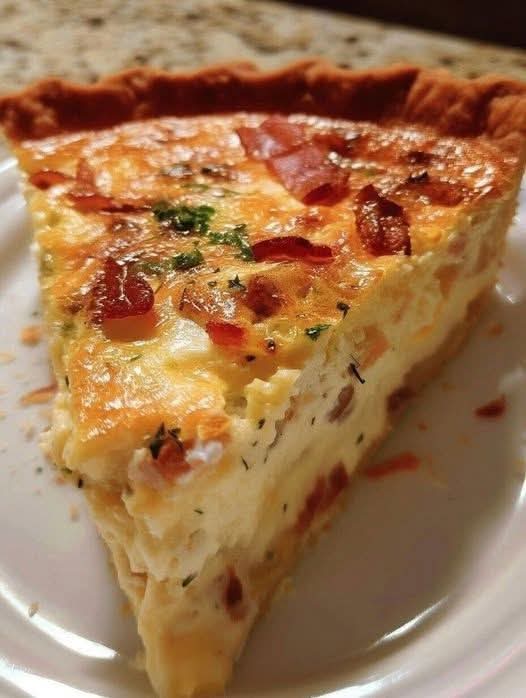
This three-cheese quiche presents a beautiful golden dome with a crisp, buttery crust encasing a velvety custard studded with melted pockets of Gruyère, Swiss, and Cheddar. The aroma upon baking—nutty cheese mingled with subtle nutmeg—fills the kitchen invitingly.
Texture-wise, the exterior crust shatters delicately, yielding to a creamy, quivering interior that’s rich yet light on the palate. Gruyère lends nutty sophistication, Swiss provides mild meltiness, and Cheddar adds sharp tang for depth.
Each bite delivers harmonious cheese flavors elevated by the smooth egg custard, with black pepper offering gentle warmth and nutmeg a whisper of spice. It’s indulgent without heaviness, making it satisfying standalone or paired.
Visually appealing with its puffed top and cheesy edges, this quiche evokes comfort and elegance, perfect for any occasion.
Nutritional Information
A typical serving (1/8 of the quiche) of this three-cheese version contains approximately 350-400 calories, depending on exact cheese brands and crust.
Breakdown per serving: Protein 12-15g (from eggs and cheese), Fat 25-30g (mostly saturated from dairy and cheese), Carbohydrates 20-25g (primarily from crust).
It provides significant calcium (200-300mg, 20-30% DV) for bone health, vitamin B12 for energy, and phosphorus. Eggs contribute choline for brain function.
However, it’s high in cholesterol (150-200mg) and saturated fat, so moderation is key. Opt for low-fat milk or reduced cheese for lighter versions.
Overall, balanced with a salad, it offers nutritious indulgence.
Conclusion
In summary, this three-cheese quiche encapsulates culinary history, versatility, and pure delight in a single dish. From its Lorraine origins to modern adaptations, it remains a beloved classic.
Mastering this recipe rewards with creamy perfection and endless customization potential. Whether for everyday meals or special occasions, it delivers comfort and sophistication.
Embrace its simplicity and richness—your efforts will yield memorable bites.
Recommendation
I highly recommend trying this three-cheese quiche soon, especially for weekend brunches or potlucks where it shines. Pair with a crisp green salad and white wine for elevation.
Experiment with additions like spinach or bacon once mastered. It’s forgiving yet impressive, ideal for all skill levels.
Share with loved ones—its warmth fosters connection.
Embracing Healthful Indulgence
While rich, this quiche can fit balanced lifestyles through mindful portions and tweaks, like using half milk/half cream or adding vegetables for fiber.
Enjoy guilt-free as occasional treat, celebrating quality ingredients. It proves indulgence and nourishment coexist beautifully.
Savor each slice, appreciating the blend of tradition and personal touch. This dish reminds us that healthful eating includes joyful, flavorful moments.